Spanish Civil War 1936–1939
Part 19 1939
(dates below refer to publication dates)
January 7th to April 1939
Illustrated London News Collection
A curated collection of ILN reports and images covering the Spanish Civil War — political background, major battles and key personalities.
The Spanish Civil War (1936–1939) began with a military uprising against the Republican government in July 1936. The conflict rapidly polarised Spanish society and drew international attention — the Nationalists (led by Francisco Franco) were supported by Fascist Italy and Nazi Germany, while the Republicans received aid from the Soviet Union and volunteers from the International Brigades. The war reshaped Spain and had wide-reaching cultural and political consequences across Europe.
On this page you will find ILN scans, captions, short biographies, and selected contextual notes to help readers understand the events and principal actors.
Key figures (brief)
- Francisco Franco — Leader of the Nationalist rebels, later head of state of Spain.
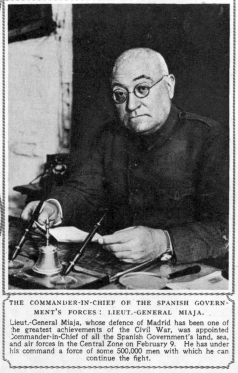
- Manuel Azaña — President of the Spanish Republic (during key periods of the war).
- Dolores Ibárruri (La Pasionaria) — Prominent Republican speaker and symbol of Republican resistance.
- International Brigades — Volunteers from many countries who fought for the Republic.
- General Emilio Mola — One of the main plotters and Nationalist commanders (died 1937).
- Buenaventura Durruti — Anarchist leader who played a role on the Republican side.
(Names and roles are documented in ILN coverage and standard histories of the conflict.)
Key Events
-
July 17-18, 1936 — Military uprising begins
A coup by parts of the military against the Second Spanish Republic starts the civil war. Wikipedia+2spanishcivilwar.ca+2 -
July-Sept 1936 — Nationalists seize large areas
The rebel forces quickly take control of areas like Seville, parts of Morocco, and large swathes of western/central Spain. History of Spain+1 -
Late 1936 — Siege of Madrid and international aid begins
The battle for Madrid becomes symbolically important. Meanwhile the rebel side receives increasing foreign support (Germany, Italy) and the Republic receives Soviet aid. Homeschool Spanish Academy+1 -
April 26, 1937 — Bombing of Guernica
German and Italian air forces bomb the Basque town of Guernica, showing the war’s brutality and foreign involvement. Homeschool Spanish Academy+1 -
Spanish Civil War, 1938
-
January 1938
-
Battle of Teruel continues:
Republicans hold much of the city in bitter winter fighting, but Nationalists counterattack. -
Extreme cold causes significant casualties on both sides.
February 1938
-
Nationalists recapture Teruel (22 February).
A major blow to Republican morale and resources. -
Franco launches a renewed Aragon offensive.
March 1938
-
Aragon Offensive:
Nationalists break through weakened Republican lines. -
Rapid Nationalist advance to the Mediterranean:
Franco’s armies cut Republican Spain in two by reaching Vinaroz about (15 April). -
Republican zones are now split into northern Catalonia and central–southern Spain.
April 1938
-
Nationalists consolidate control of eastern Aragon and the Levante coast.
-
Franco begins planning a major offensive on the River Ebro after consolidating Aragon,
May 1938
-
Bombing of Alicante (25 May) causes large civilian casualties.
-
Fighting intensifies around Valencia as the Nationalists attempt to take the city.
June 1938
-
Collapse of the Republican line around Castellón:
Nationalists capture Castellón de la Plana (14 June). -
Republican forces retreat toward Valencia.
July 1938
-
Start of the Battle of the Ebro (25 July):
The Republic launches its last major offensive, crossing the Ebro River in a surprise attack. -
Initial Republican gains are significant, but Nationalist air superiority soon takes effect.
August 1938
-
Battle of the Ebro intensifies:
Heavy attrition on both sides; Condor Legion and Italian aircraft dominate the skies. -
Republicans struggle to supply forces across the river.
September 1938
-
International Brigades withdrawn by the Republican government (21 September) in an attempt to gain diplomatic favour.
-
Nationalist counteroffensive slowly pushes Republicans back.
October 1938
-
End phase of the Battle of the Ebro:
Nationalists retake most lost territory. -
Republican troops begin a fighting withdrawal.
November 1938
-
Battle of the Ebro ends (16 November):
Decisive Nationalist victory, leaving the Republic exhausted and critically weakened. -
Franco prepares his final offensive against Catalonia.
December 1938
-
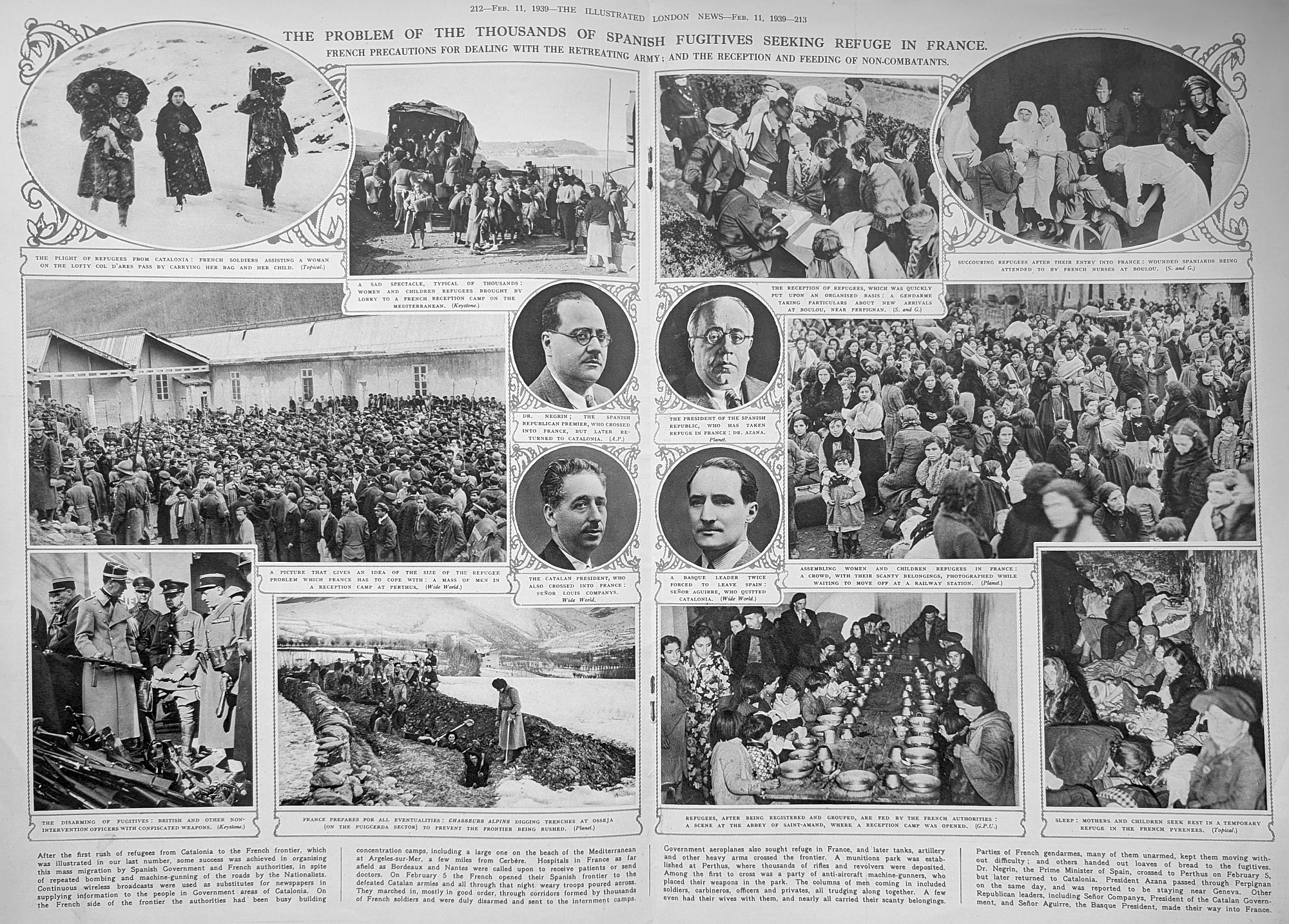
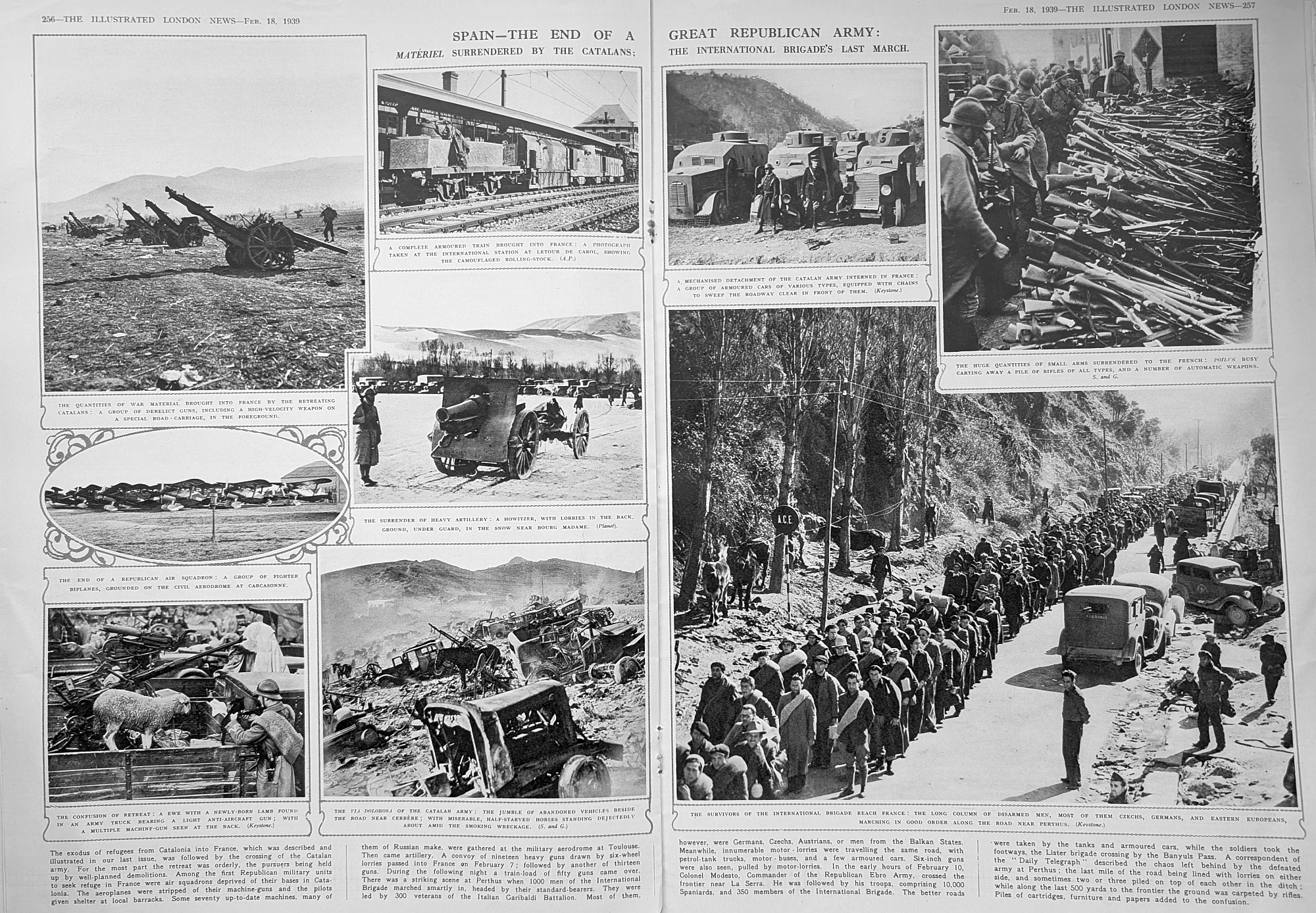
Nationalist Catalonia Offensive begins (23 December):
Massive attack toward Barcelona. -
Republicans unable to hold positions; retreat begins across Catalonia
-
Who Were the Rebels?
The Rebels — later known as the Nationalists — were led by General Francisco Franco and other senior officers who rose in July 1936 against Spain’s elected Popular Front government, the left-wing administration of the Second Spanish Republic. Their ranks included much of the regular army, particularly units from Spanish Morocco, together with monarchists, conservatives, and members of the Falange (Spain’s fascist movement). They received crucial support from Nazi Germany, Fascist Italy, and Portugal.
The opposing Republicans comprised socialists, communists, anarchists, and regional nationalists, supported by the Soviet Union and the International Brigades of foreign volunteers.
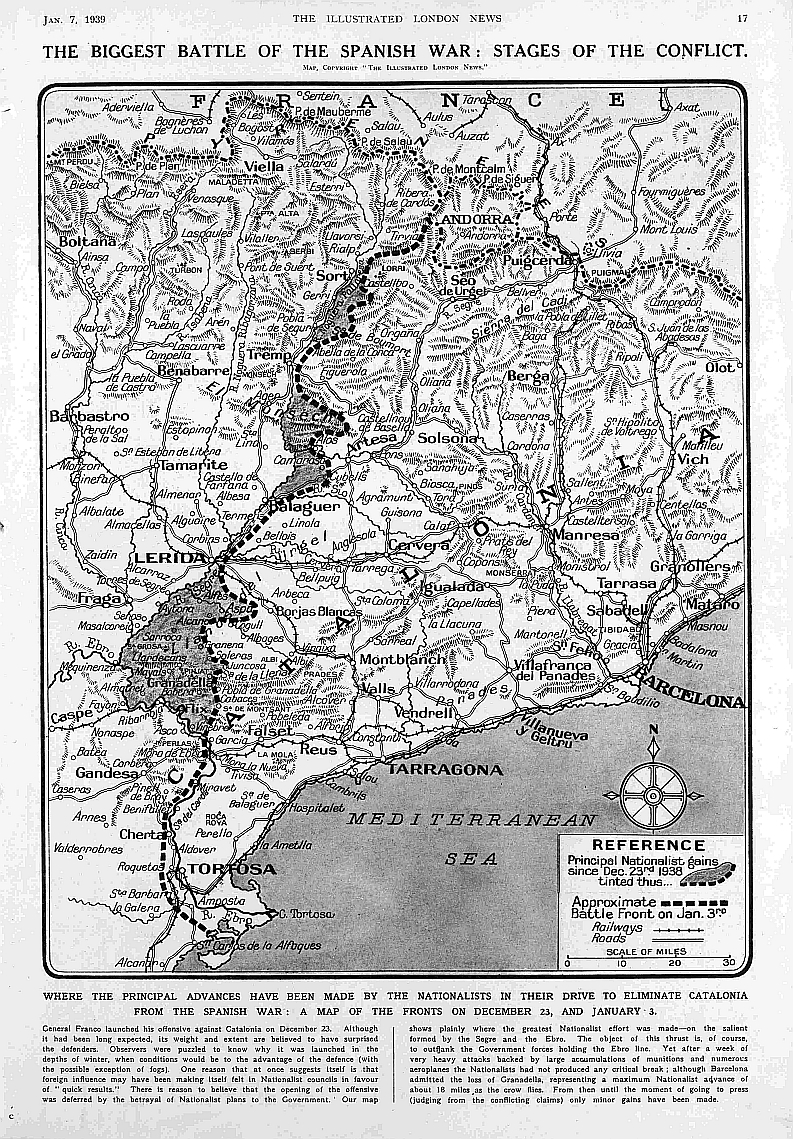
The biggest battle of the War January 7th 1939
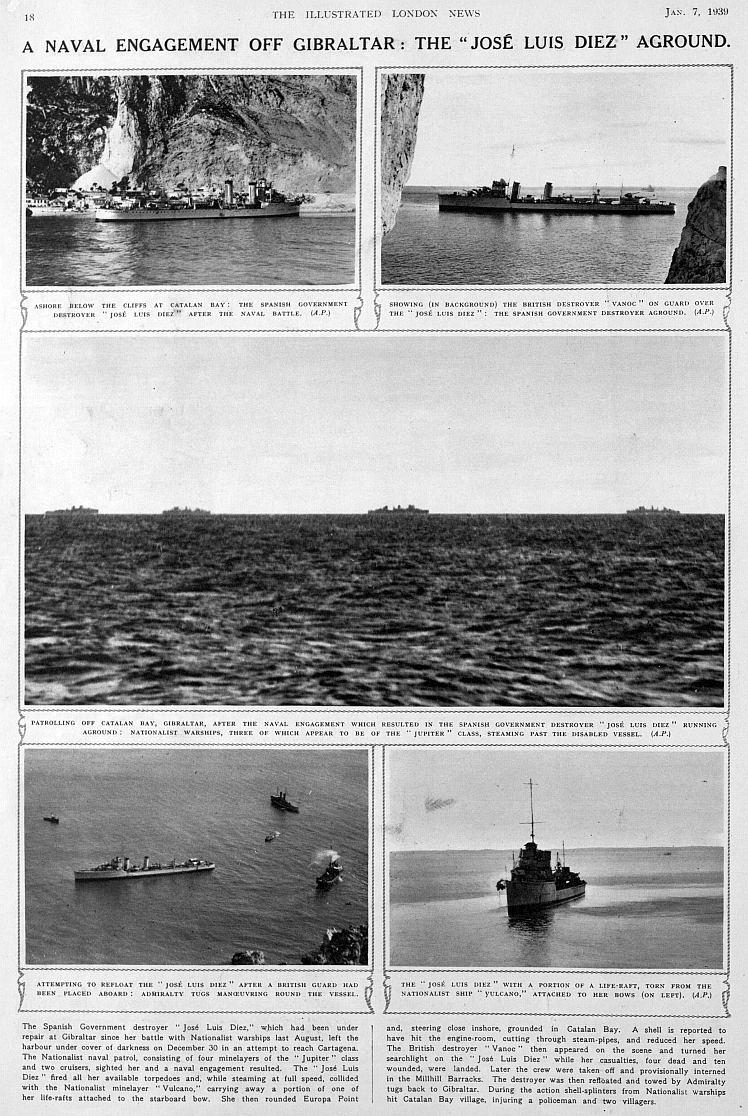
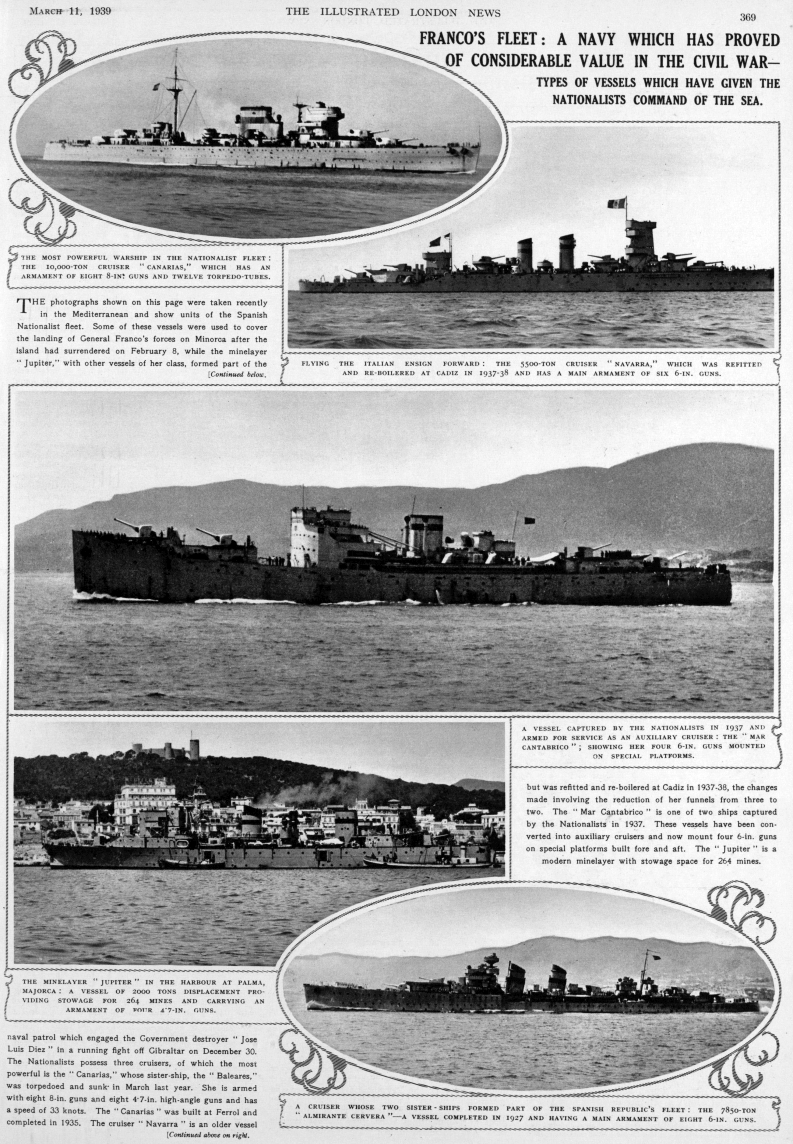
A naval engagement off Gibraltar: The Spanish Government destroyer "Jose Luis Diez" aground
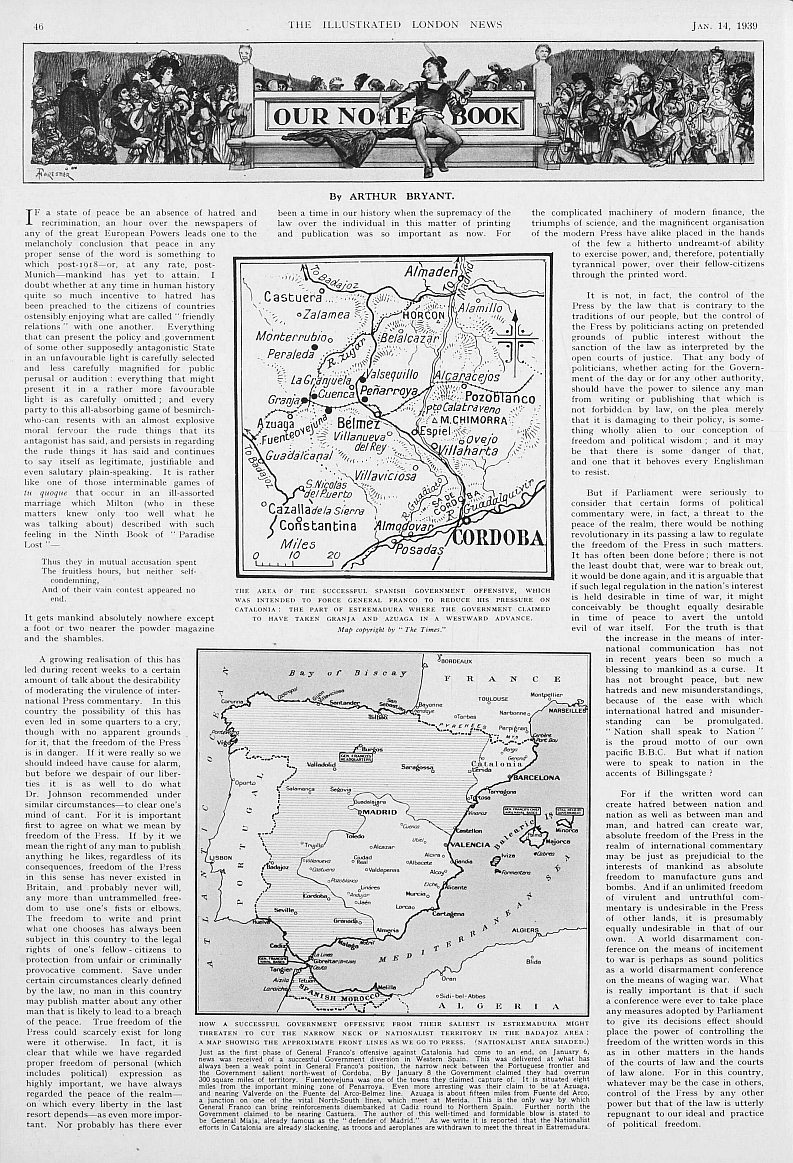
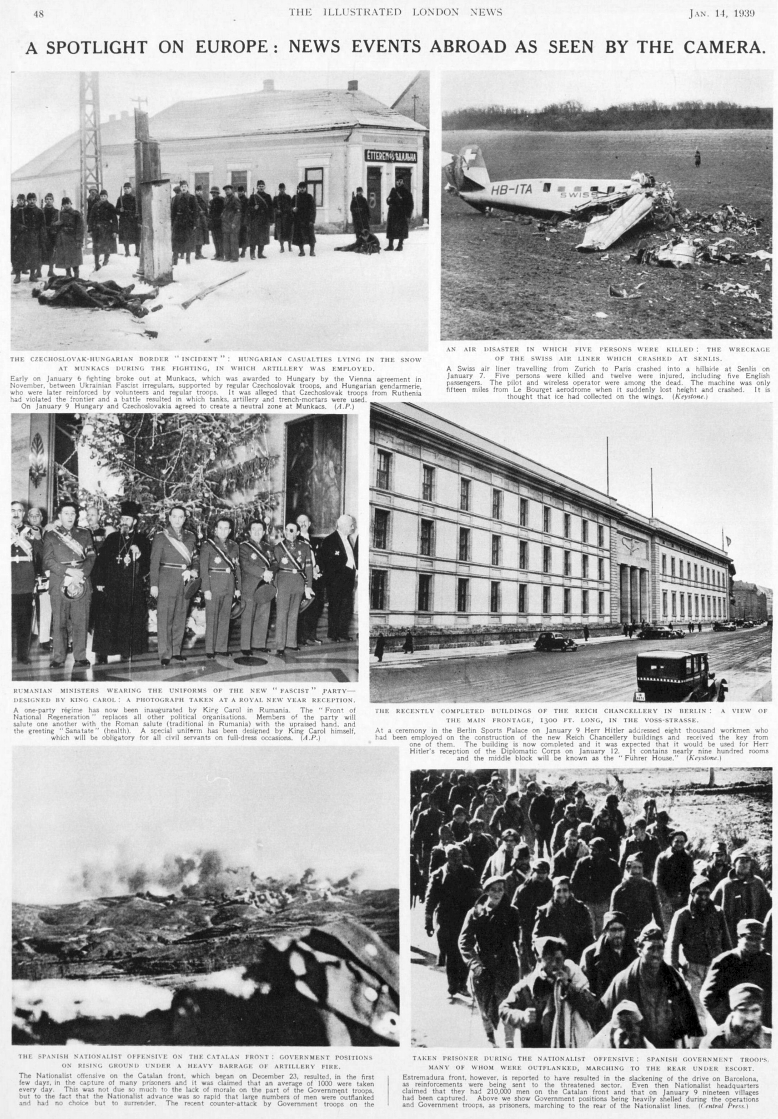
January 14th 1939

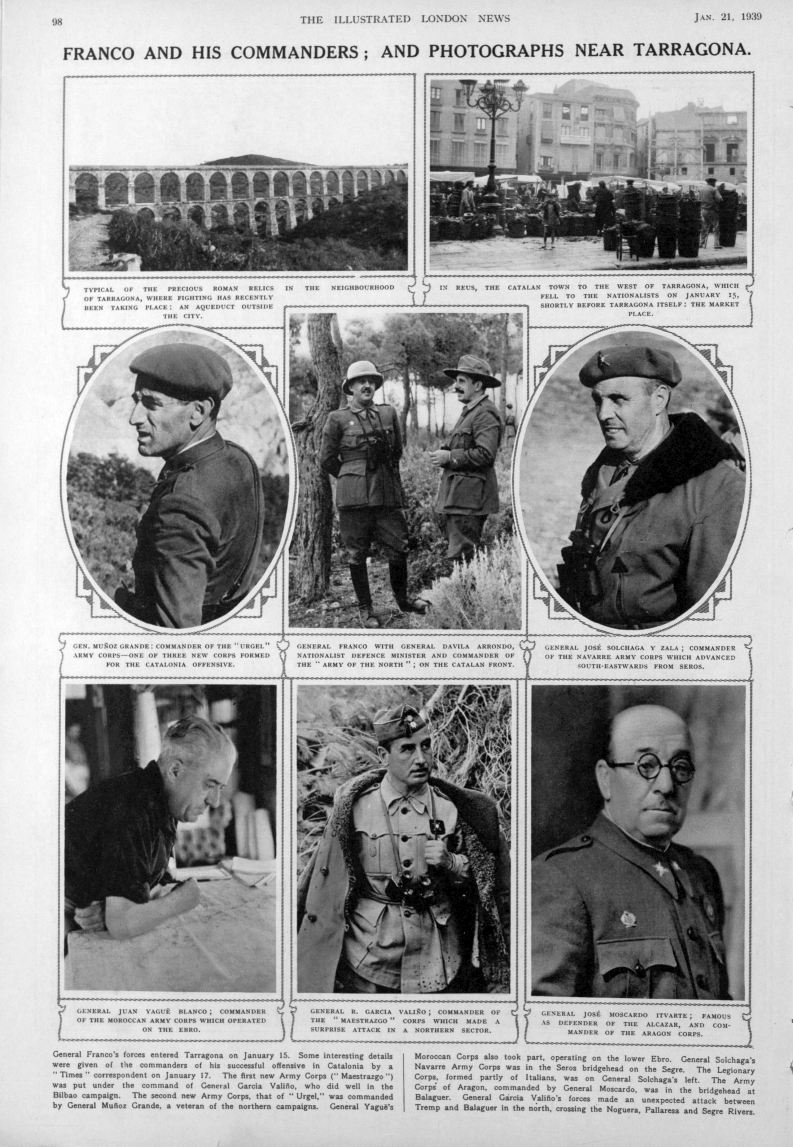
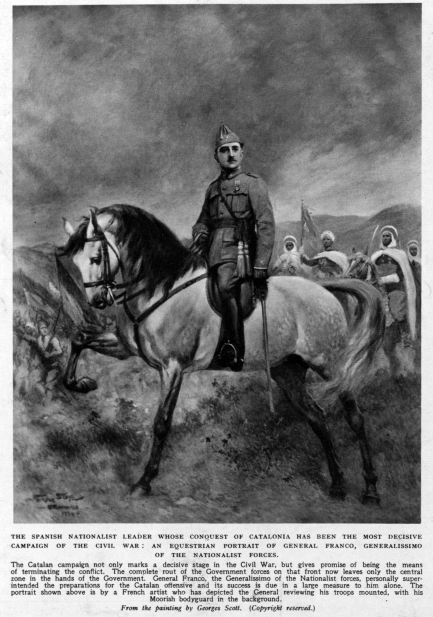
Franco and his commanders: Near Tarragona
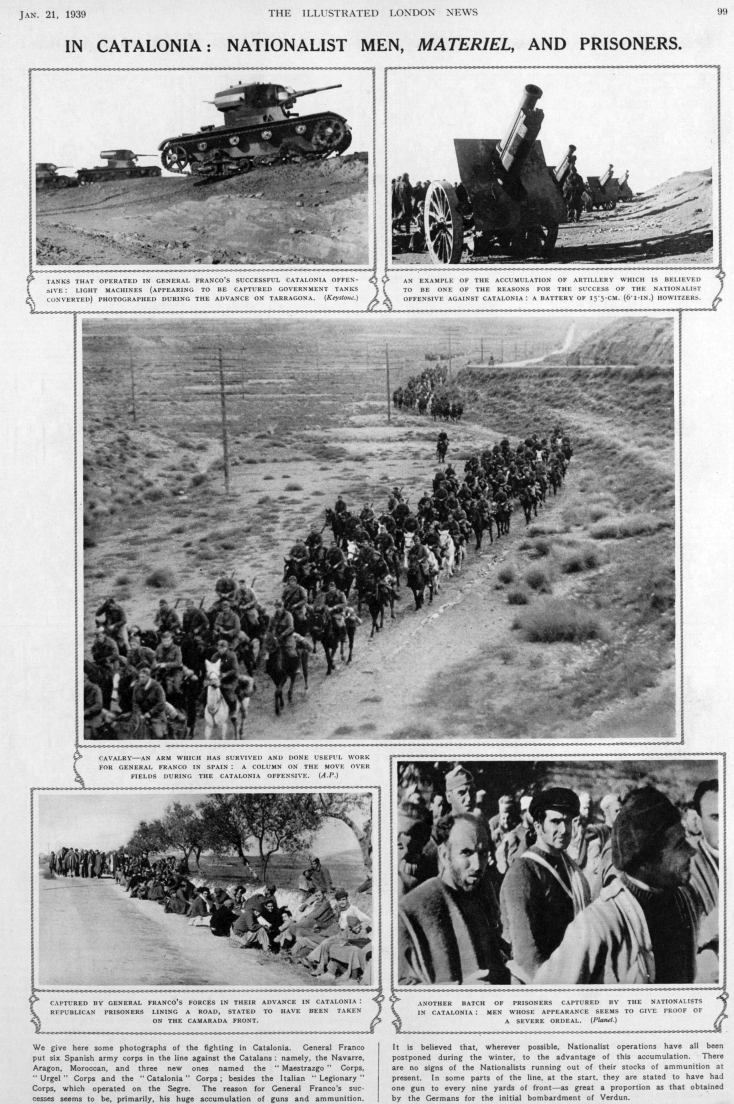
In Catalonia: Nationalist men, Materiel, and prisoners January 21st 1939
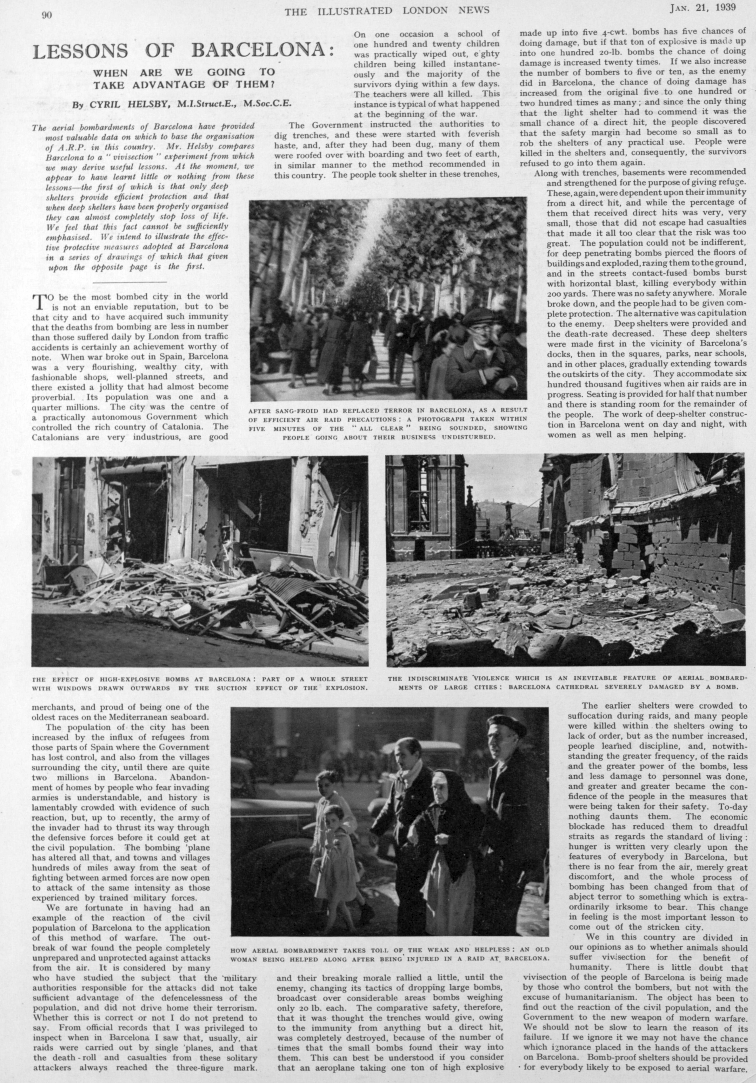
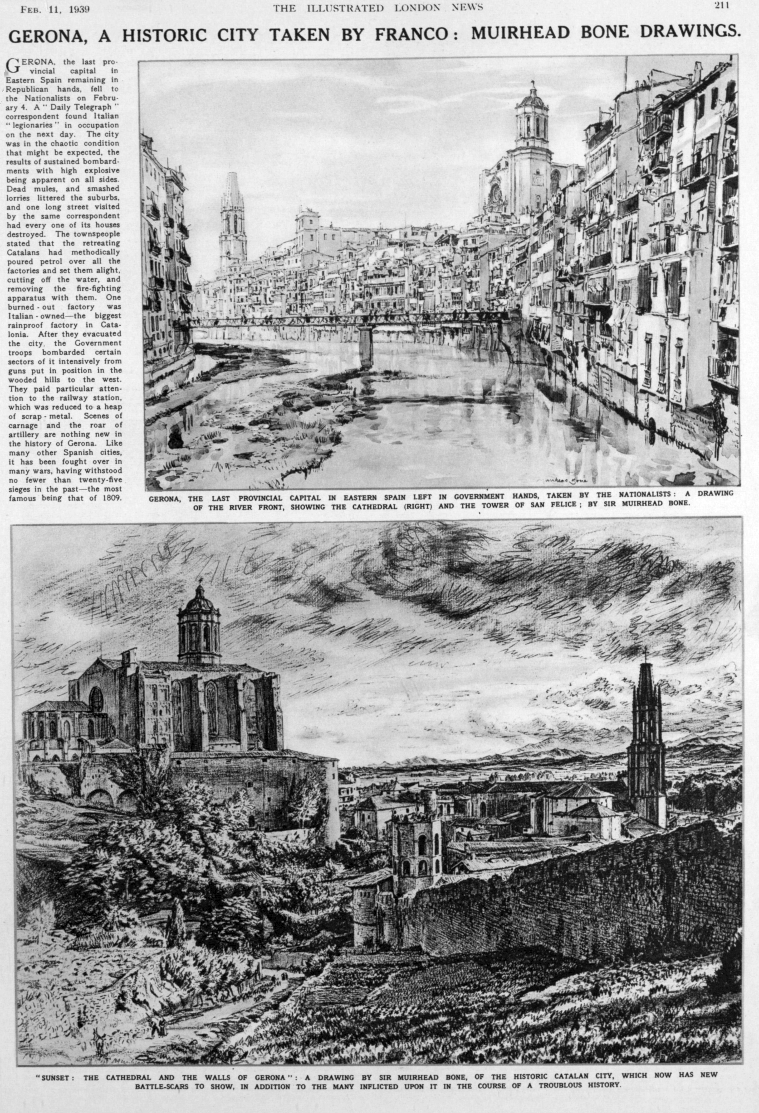
The bombed streets of Barcelona January 21st 1939

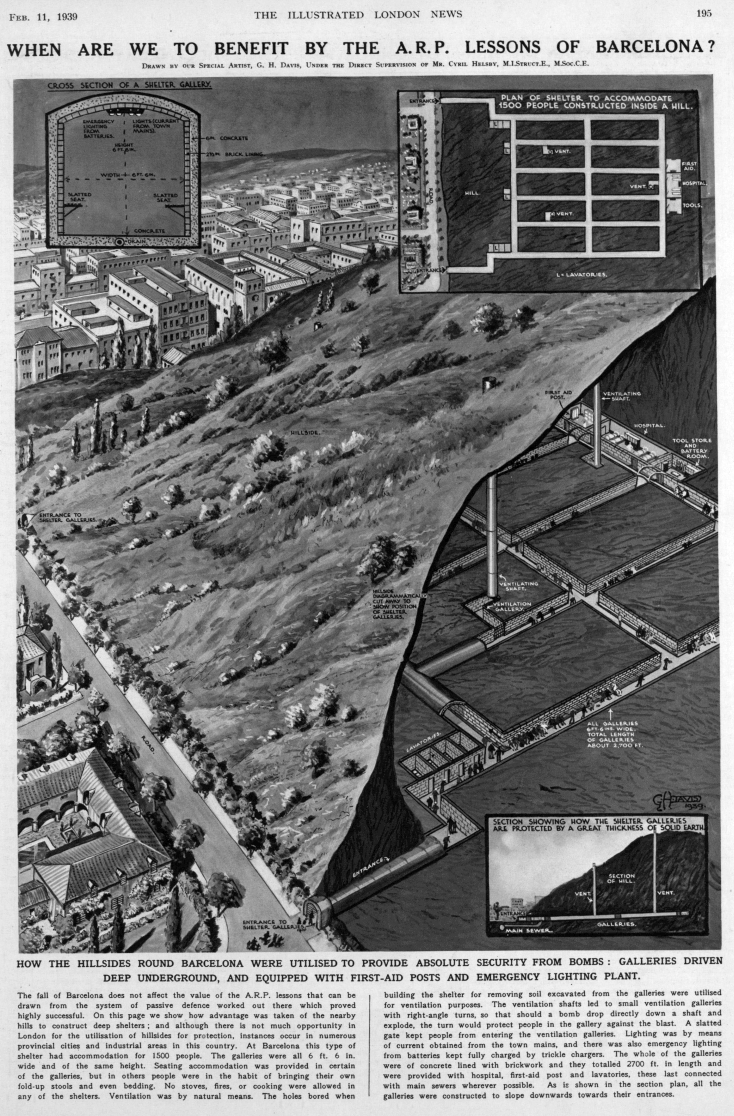
Lessons of Barcelona: Deep air raid shelters still unknown in London
The deep shelter measure which enabled the people of Barcelona to endure
heavy aerial bombardments with very few casualties
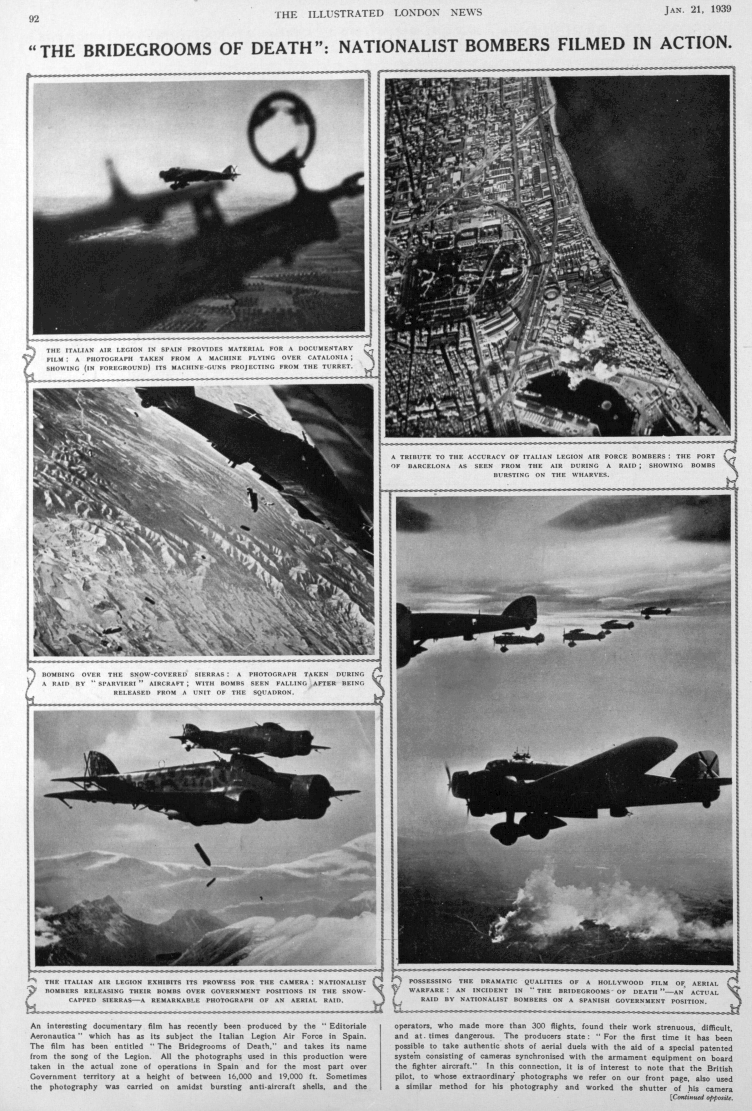
"The bridegrooms of death" : Nationalist bombers filmed in action January 21st 1939
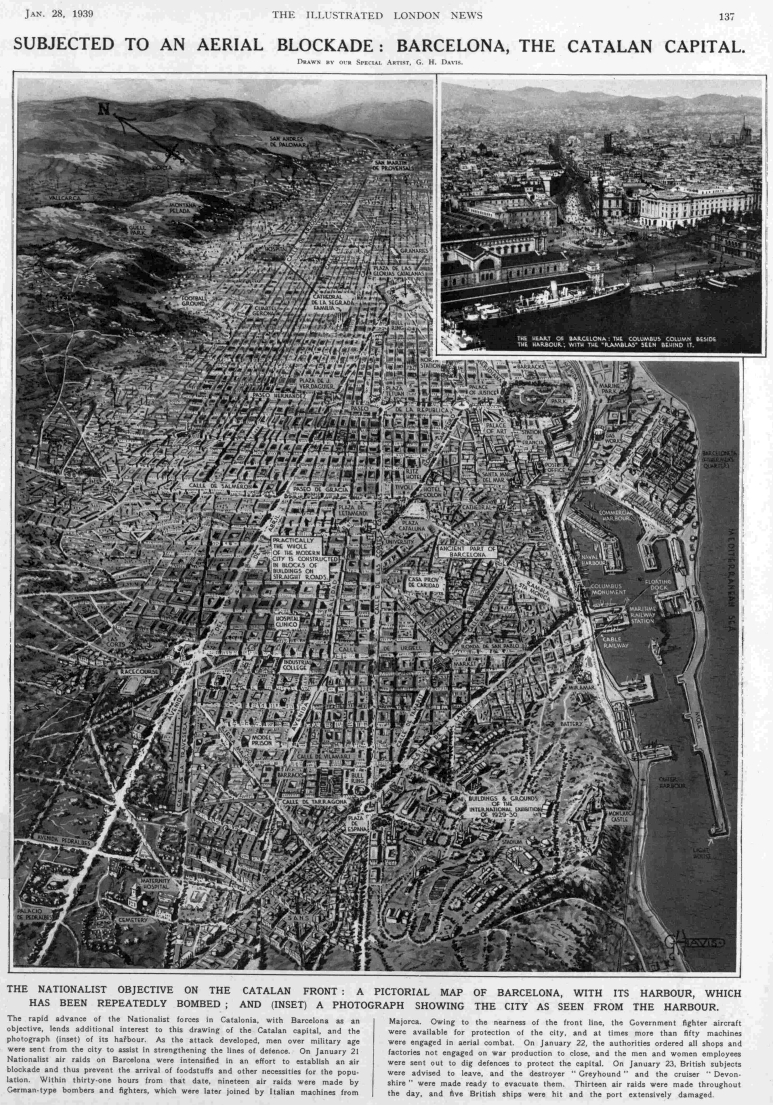
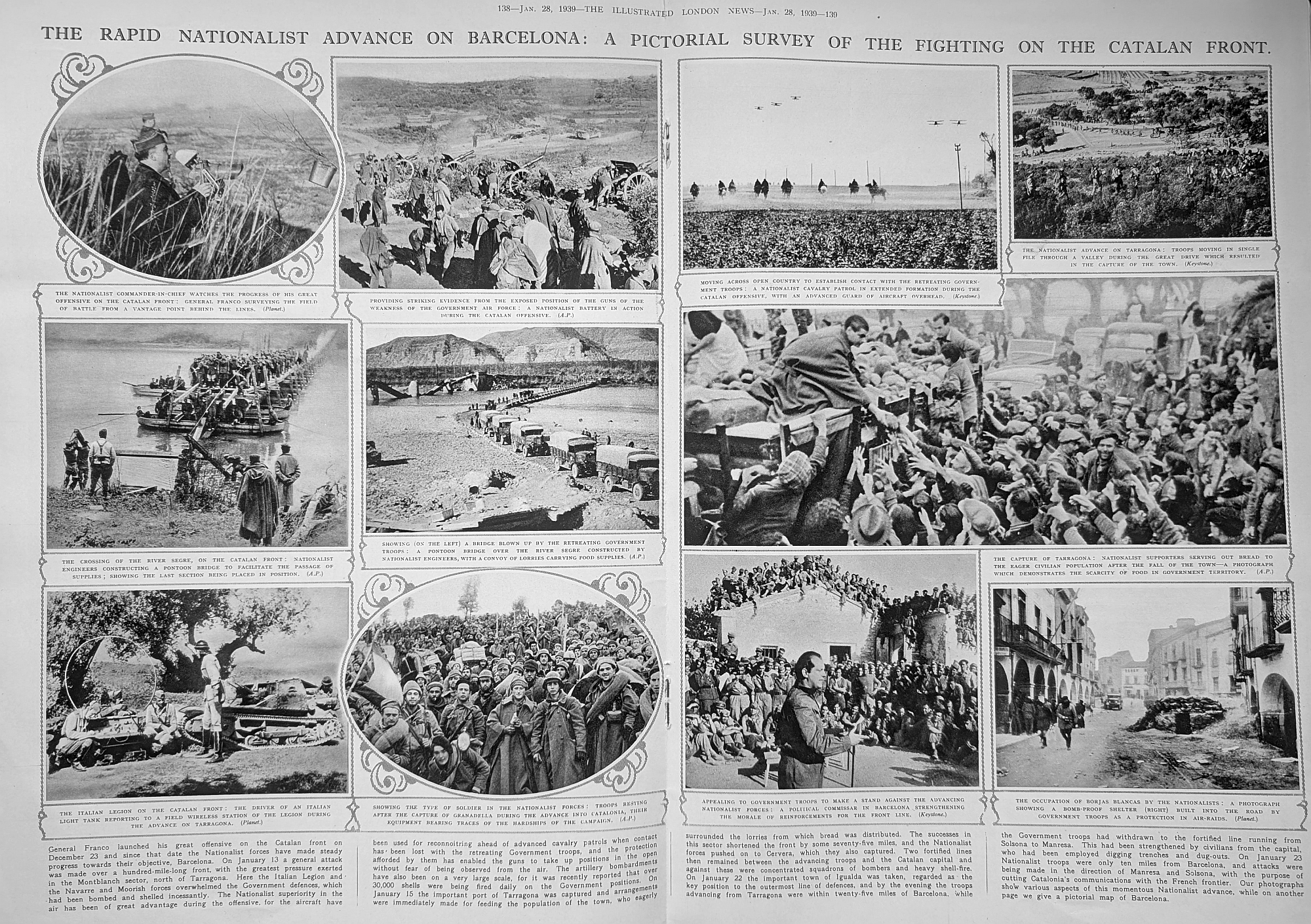
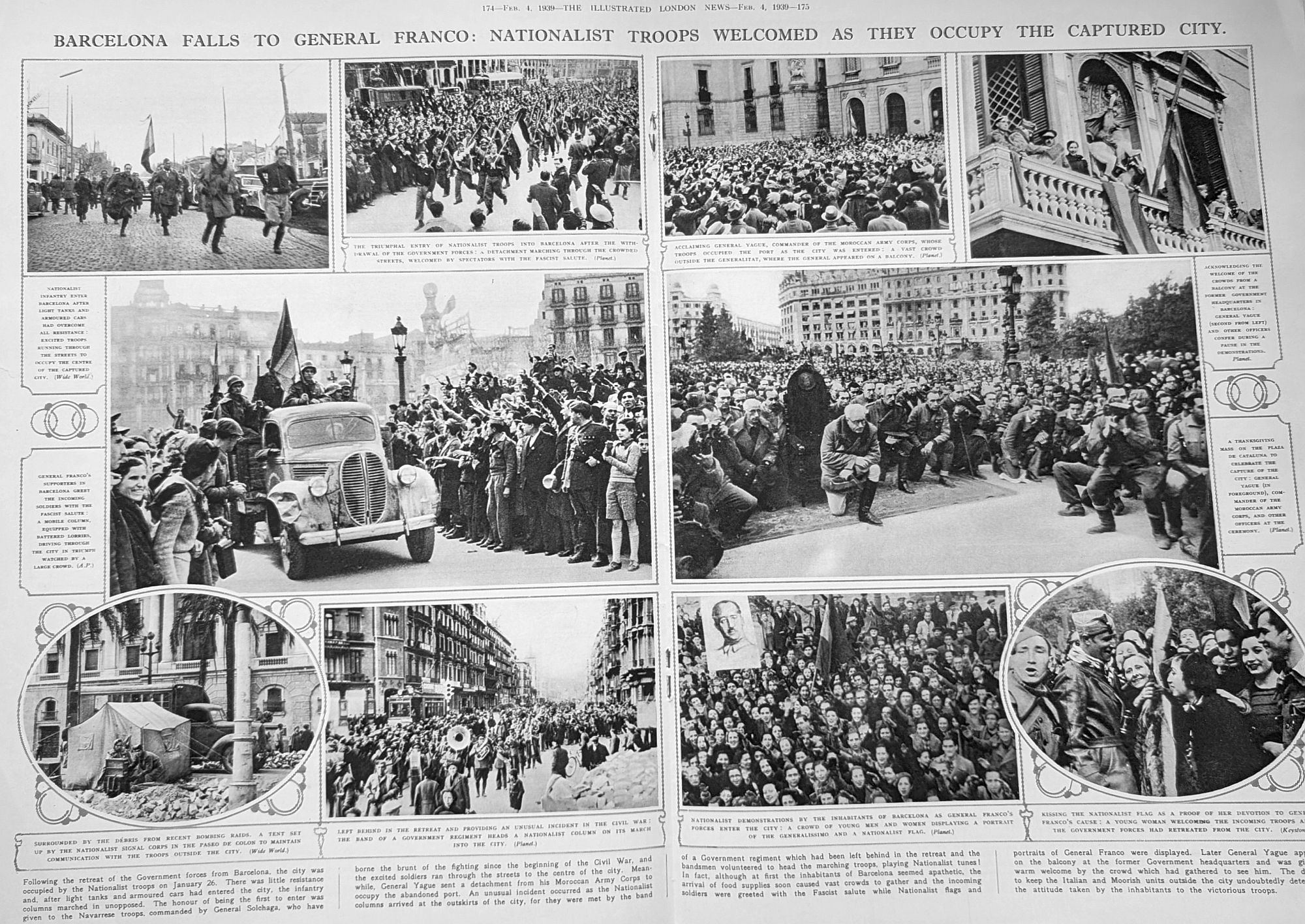
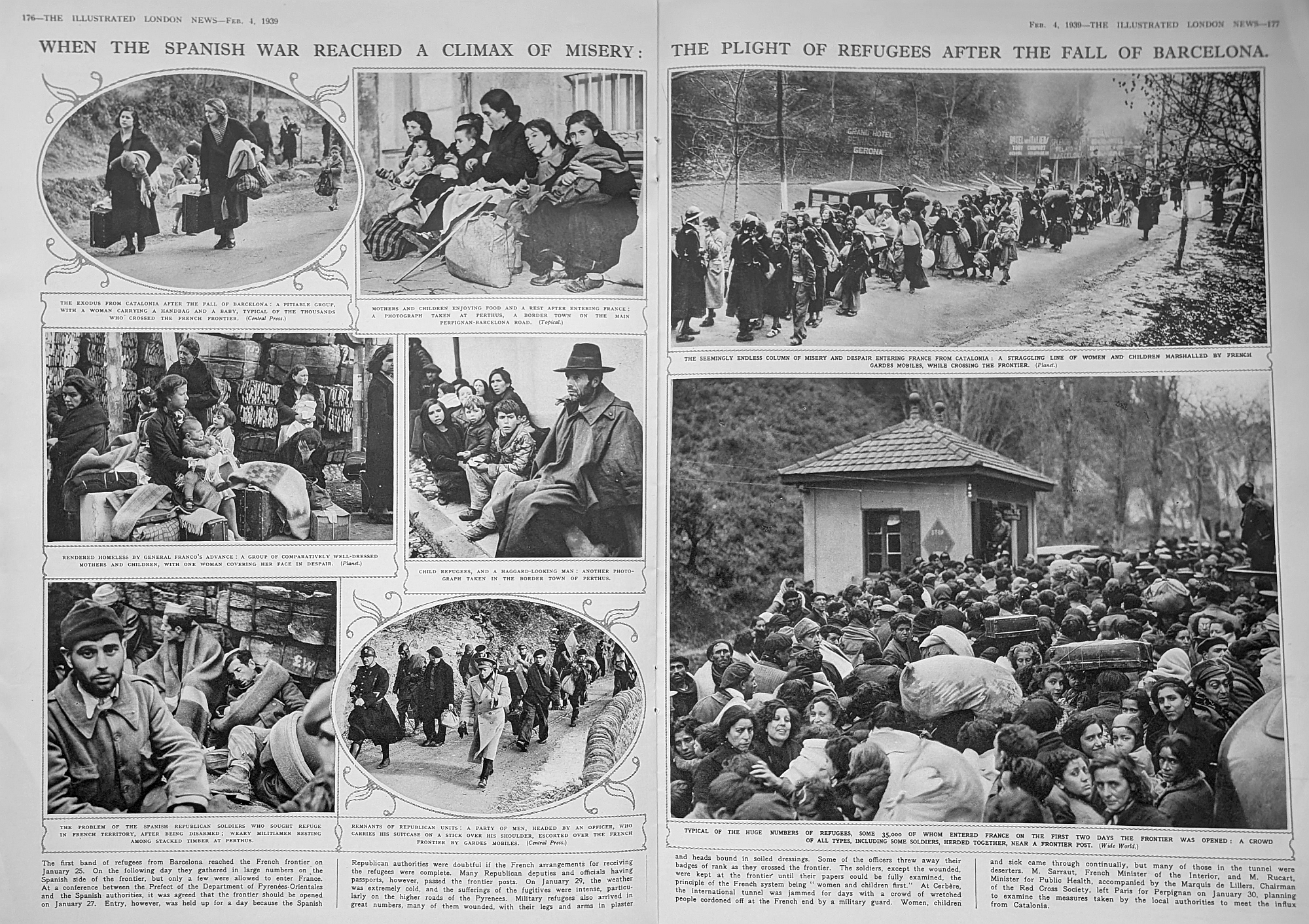
Subjected to an aerial blockade: Barcelona the Catalan capital January 28th 1939



Aftermath (source Chat GPT 5.2)
Spain after 1 April 1939 – End of 1939
1 April 1939 – War Ends
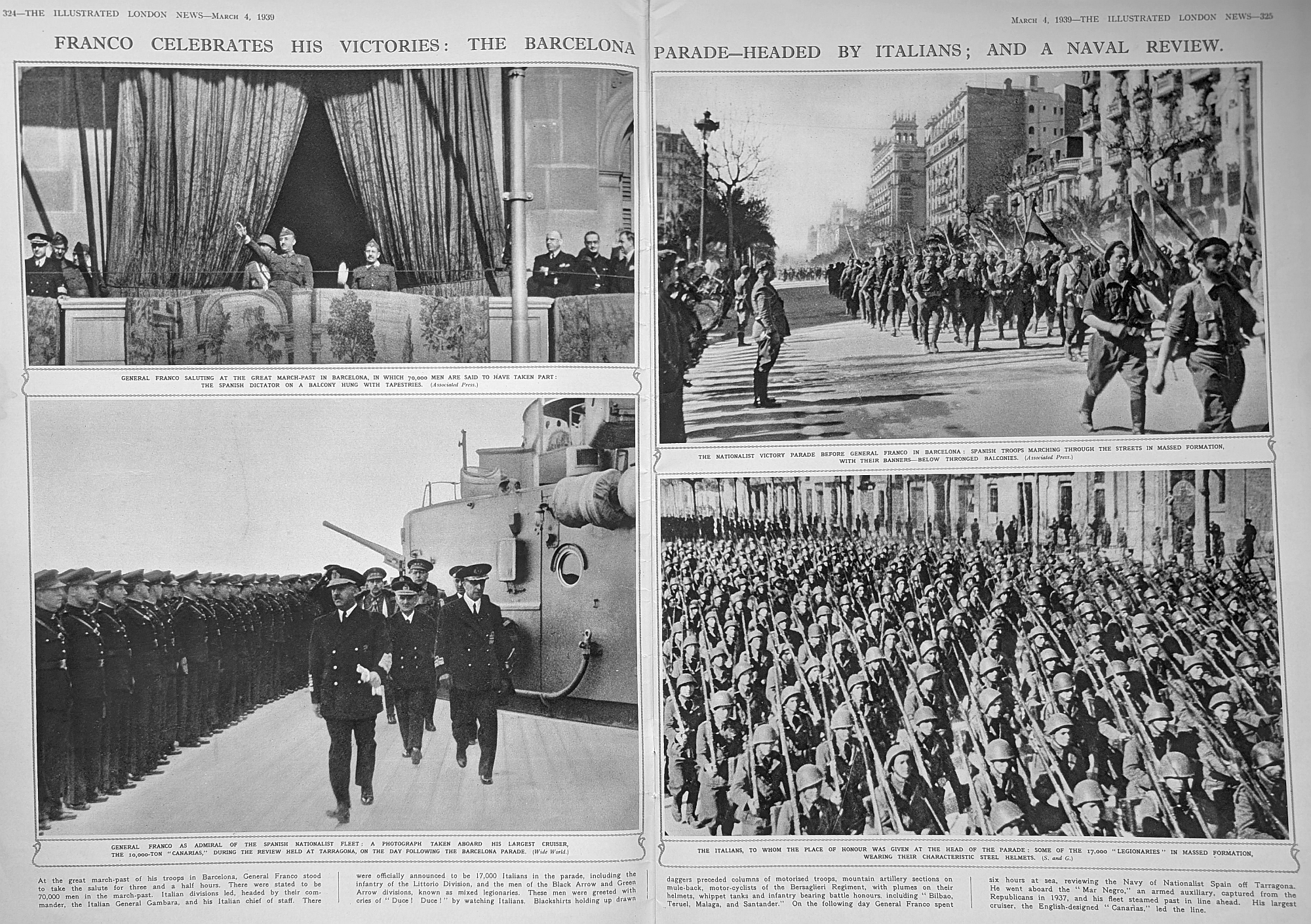
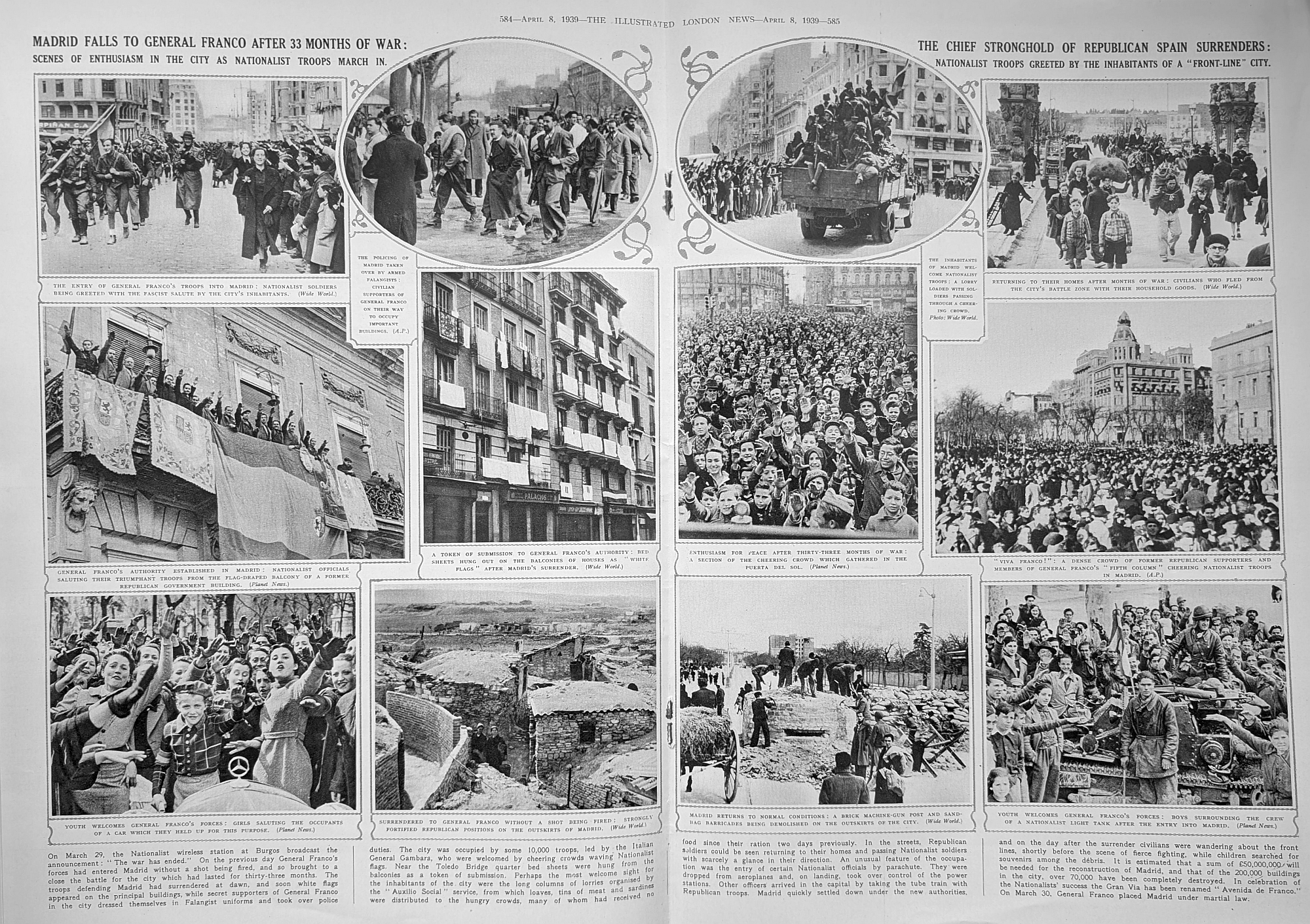
On 1 April 1939, General Francisco Franco announced victory. The Republican government collapsed, and the Nationalists became the sole authority in Spain.
Immediate Aftermath
🔴 Political Repression
-
The new regime abolished the Republic and all democratic institutions.
-
Political parties, trade unions, and regional governments (Catalonia, Basque Country) were outlawed.
-
Republican symbols, flags, and language were banned.
🔴 Arrests and Executions
-
Hundreds of thousands of former Republicans were arrested.
-
Many were sent to prisons, labour camps, or forced-labour battalions.
-
Executions continued throughout 1939, often after summary trials.
-
Historians estimate tens of thousands were executed after the war ended.
Franco’s New State
🏛 One-Party Dictatorship
-
Franco ruled as Head of State, Prime Minister, and Commander-in-Chief.
-
Spain became a one-party state, dominated by the Falange.
-
Franco adopted the title “Caudillo” (Leader).
⛪ Alliance with the Catholic Church
-
The Church was restored to a central role in education and public life.
-
The regime promoted Catholic morality, censorship, and traditional values.
-
Divorce and secular education were abolished.
Social and Economic Conditions
🍞 Economic Hardship
-
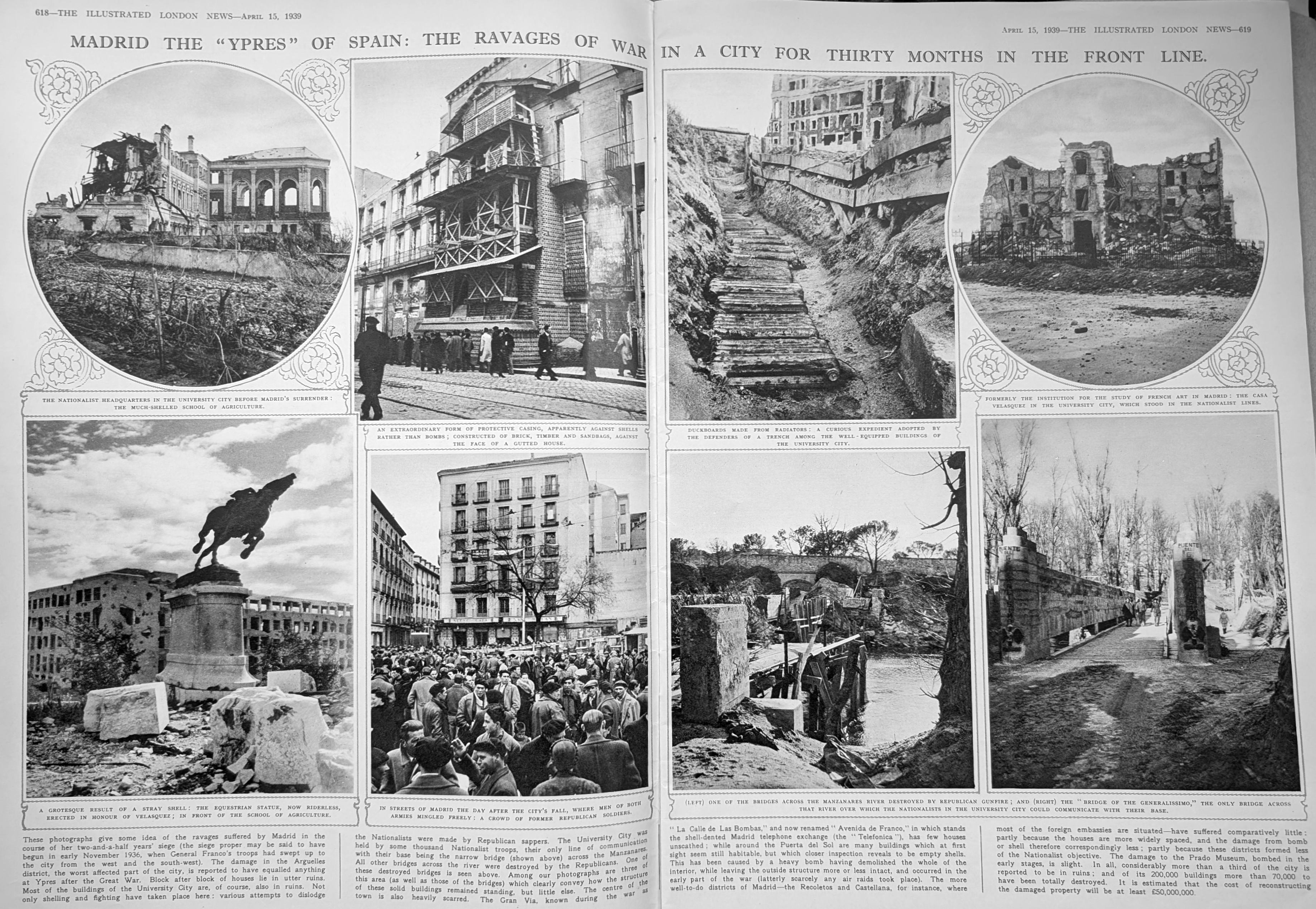
Spain was devastated by war: destroyed infrastructure, food shortages, unemployment.
-
Rationing began and continued into the 1940s.
-
The regime pursued economic self-sufficiency (autarky), worsening shortages.
🚫 Censorship and Fear
-
Strict press censorship was imposed.
-
Public discussion of the war or sympathy for the Republic was dangerous.
-
A climate of fear dominated daily life.
International Position (1939)
🌍 Foreign Relations
-
Franco received diplomatic recognition from Britain and France in early 1939.
-
Spain declared itself non-belligerent when World War II began in September 1939.
-
Though ideologically close to Nazi Germany and Fascist Italy, Spain remained outside the war due to exhaustion.
Summary (April–December 1939)
-
The Civil War ended, but violence did not.
-
Spain became a military dictatorship.
-
Massive repression reshaped Spanish society.
-
Economic misery and political silence set in.
-
Franco laid the foundations of a regime that would last until 1975.
Executions in Spain After April 1939: Who and Why
Following the conclusion of the Civil War on 1 April 1939, the Nationalist Government undertook extensive legal and security actions against individuals associated with the defeated Republican side. Executions occurred primarily under military tribunals operating under emergency legislation.
Those executed generally fell into several broad categories:
Former Republican officials and administrators
Civil servants, local councillors, governors, and political organisers who had served the Republican Government or regional administrations were charged with rebellion, collaboration, or responsibility for wartime measures. Holding office under the Republic was often sufficient grounds for prosecution.
Republican military officers and militia leaders
Officers of the Republican Army, members of militia columns, and commanders of local defence units were tried for armed resistance against the Nationalist forces. Many were accused of participation in executions, sabotage, or continued resistance after Nationalist advances.
Political activists and party members
Members of socialist, communist, anarchist, and regional nationalist organisations—including the CNT, UGT, PSOE, PCE, and Esquerra Republicana—were targeted. Involvement in strikes, revolutionary committees, or wartime political activity was commonly cited.
Individuals accused of anti-clerical violence
Particular attention was given to those alleged to have taken part in attacks on clergy, churches, or religious institutions during the war. Such cases were treated with severity, reflecting the restored prominence of the Catholic Church under the new régime.
Notable Executions (Examples)
-
Lluís Companys, former President of the Generalitat of Catalonia, was captured after fleeing to France, returned to Spain, tried by military court, and executed in October 1940 on charges of rebellion against the State.
-
Numerous Republican generals, colonels, and local commanders were executed in 1939 following summary trials, though many names remain recorded only in regional archives.
Stated Rationale
The Nationalist authorities maintained that these actions were not reprisals but the application of justice against those responsible for rebellion, disorder, and violence during the conflict. The tribunals operated under laws that defined the Republican resistance itself as unlawful rebellion, despite its former status as the recognised government.
Modern historical studies estimate that tens of thousands were executed in the immediate post-war years, particularly during 1939–1941, though precise figures vary.
The Stated Rationale for Post-War Executions in Spain
Following the military victory of April 1939, the Nationalist Government presented the executions not as acts of revenge but as the restoration of order and legality after what it described as a period of anarchy and unlawful rule.
The authorities asserted that the conflict had been caused by a rebellion against the Spanish State, which they dated not from July 1936 but from earlier political and social unrest under the Republican Government. On this basis, all resistance to the Nationalist movement was retrospectively defined as criminal insurrection, regardless of whether it had occurred under a previously recognised government.
The legal foundation for the prosecutions rested on military jurisdiction and emergency laws enacted during the war. These measures allowed for the rapid trial of civilians as well as soldiers. Participation in Republican institutions—civil, military, or political—was treated as evidence of culpability, particularly where individuals had held authority or influence.
A central element of the stated justification was the claim that severe penalties were necessary to prevent renewed disorder. The Government argued that Spain remained vulnerable to sabotage, guerrilla activity, and foreign-inspired subversion, and that firm action was required to secure peace and national unity.
Special emphasis was placed on crimes alleged to have been committed during the conflict, especially killings, confiscations, and attacks on religious institutions. The régime maintained that the tribunals were correcting injustices left unpunished during the war and restoring moral and social order, closely aligned with the Catholic Church.
The authorities also rejected the term “reprisals,” insisting that those executed were lawfully condemned after judicial proceedings. While these proceedings were frequently summary in nature, the Government held them to be legitimate expressions of sovereign justice exercised by the victorious State.
In official statements and contemporary Nationalist press, the executions were presented as a regrettable but unavoidable consequence of civil conflict, framed as justice rather than vengeance, and as the final phase in the pacification of the country.
Reparations and Official Action After Franco’s Death (1975)
When General Franco died in November 1975 and the monarchy was restored under King Juan Carlos I, Spain entered a period of political transition whose primary objective was the peaceful establishment of constitutional government. In this context, the new authorities avoided measures that might reopen divisions arising from the Civil War and its aftermath.
No immediate programme of reparations or formal redress was introduced for the families of those executed, imprisoned, or otherwise punished under the Franco régime. The guiding principle of the transition was reconciliation through silence, rather than judicial or symbolic reckoning.
In 1977, the Spanish Parliament passed the Amnesty Law, which released political prisoners and annulled penalties for certain political offences. This law applied broadly to actions committed during both the Civil War and the dictatorship, and it explicitly precluded prosecutions of those responsible for repression under the former régime. While it enabled political normalisation, it also foreclosed official investigation into past abuses.
Families of victims did not, at that time, receive compensation, official apologies, or state-sponsored recognition. Military verdicts and civil sanctions imposed during the Franco years remained legally valid, and records were not revised. Burials in unmarked graves were not addressed by the State, and exhumations were left to private initiative or remained unattempted.
The monarchy itself did not issue declarations regarding responsibility for past repression. King Juan Carlos I presented his role as that of constitutional guarantor, emphasising unity and democratic continuity rather than historical judgement.
It was only many years later—particularly from the early 2000s onward—that the Spanish State began to acknowledge the legacy of repression. Measures such as the Law of Historical Memory (2007) and subsequent legislation provided limited recognition, assistance for exhumations, and symbolic reparations, though these came long after the restoration of the monarchy and remained contested.
- Preston, Paul. The Spanish Civil War.
- Beevor, Antony. The Battle for Spain.
- Contemporary ILN issues (scans on this site).