Spanish Civil War 1936–1939
Part 4
(dates below refer to publication dates)
from August 22nd - August 29th 1936
Illustrated London News Collection
A curated collection of ILN reports and images covering the Spanish Civil War — political background, major battles and key personalities.
The Spanish Civil War (1936–1939) began with a military uprising against the Republican government in July 1936. The conflict rapidly polarised Spanish society and drew international attention — the Nationalists (led by Francisco Franco) were supported by Fascist Italy and Nazi Germany, while the Republicans received aid from the Soviet Union and volunteers from the International Brigades. The war reshaped Spain and had wide-reaching cultural and political consequences across Europe.
On this page you will find ILN scans, captions, short biographies, and selected contextual notes to help readers understand the events and principal actors.
Key figures (brief)
- Francisco Franco — Leader of the Nationalist rebels, later head of state of Spain.
- Manuel Azaña — President of the Spanish Republic (during key periods of the war).
- Dolores Ibárruri (La Pasionaria) — Prominent Republican speaker and symbol of Republican resistance.
- International Brigades — Volunteers from many countries who fought for the Republic.
- General Emilio Mola — One of the main plotters and Nationalist commanders (died 1937).
- Buenaventura Durruti — Anarchist leader who played a role on the Republican side.
(Names and roles are documented in ILN coverage and standard histories of the conflict.)
Key Events
-
August 1936
-
Battle of Badajoz: Nationalist Army of Africa captures Badajoz after heavy fighting; mass reprisals reported.
-
Relief of the Alcázar begins: Nationalist forces move to relieve the siege of the Alcázar garrison in Toledo.
-
Foreign intervention accelerates:
– Germany and Italy send aircraft and military support to the Nationalists.
– Soviet advisers begin assisting the Republic.
September 1936
-
International Non-Intervention Committee formed (Britain & France push policy).
-
Francisco Largo Caballero becomes Republican Prime Minister.
-
Nationalists advance toward Madrid for the first major assault.
October 1936
-
Franco confirmed as Generalísimo and Head of State of Nationalist Spain.
-
First International Brigade units arrive in Spain to support the Republicans.
-
Nationalists capture Toledo, lifting the siege of the Alcázar — an enormous propaganda victory.
November 1936
-
Battle of Madrid (first major assault):
Nationalists attempt to take the capital; the city resists. -
Republican Government relocates to Valencia for safety.
-
Heavy German & Italian involvement in bombing Madrid.
December 1936
-
Battle of the Corunna Road: Nationalist attempt to encircle Madrid and cut supply routes.
-
Italian “volunteer” troops begin arriving in large numbers (Corpo Truppe Volontarie).
-
Front stabilises; Madrid holds.
-
-
April 26, 1937 — Bombing of Guernica
German and Italian air forces bomb the Basque town of Guernica, showing the war’s brutality and foreign involvement. Homeschool Spanish Academy+1 -
May-November 1938 — Battle of the Ebro
One of the largest battles in the war, the Republican attempt to change the momentum, but ultimately the Nationalists prevail. Homeschool Spanish Academy+1 -
January 1939 — Fall of Barcelona / March 1939 — Nationalist capture of Madrid
Key Republican strongholds fall. The capital Madrid is taken, marking the imminent end of the war. History of Spain+1 -
April 1 1939 — Franco declares victory
Francisco Franco formally proclaims the end of the war and begins his dictatorship.
Who Were the Rebels?
The Rebels — later known as the Nationalists — were led by General Francisco Franco and other senior officers who rose in July 1936 against Spain’s elected Popular Front government, the left-wing administration of the Second Spanish Republic. Their ranks included much of the regular army, particularly units from Spanish Morocco, together with monarchists, conservatives, and members of the Falange (Spain’s fascist movement). They received crucial support from Nazi Germany, Fascist Italy, and Portugal.
The opposing Republicans comprised socialists, communists, anarchists, and regional nationalists, supported by the Soviet Union and the International Brigades of foreign volunteers.
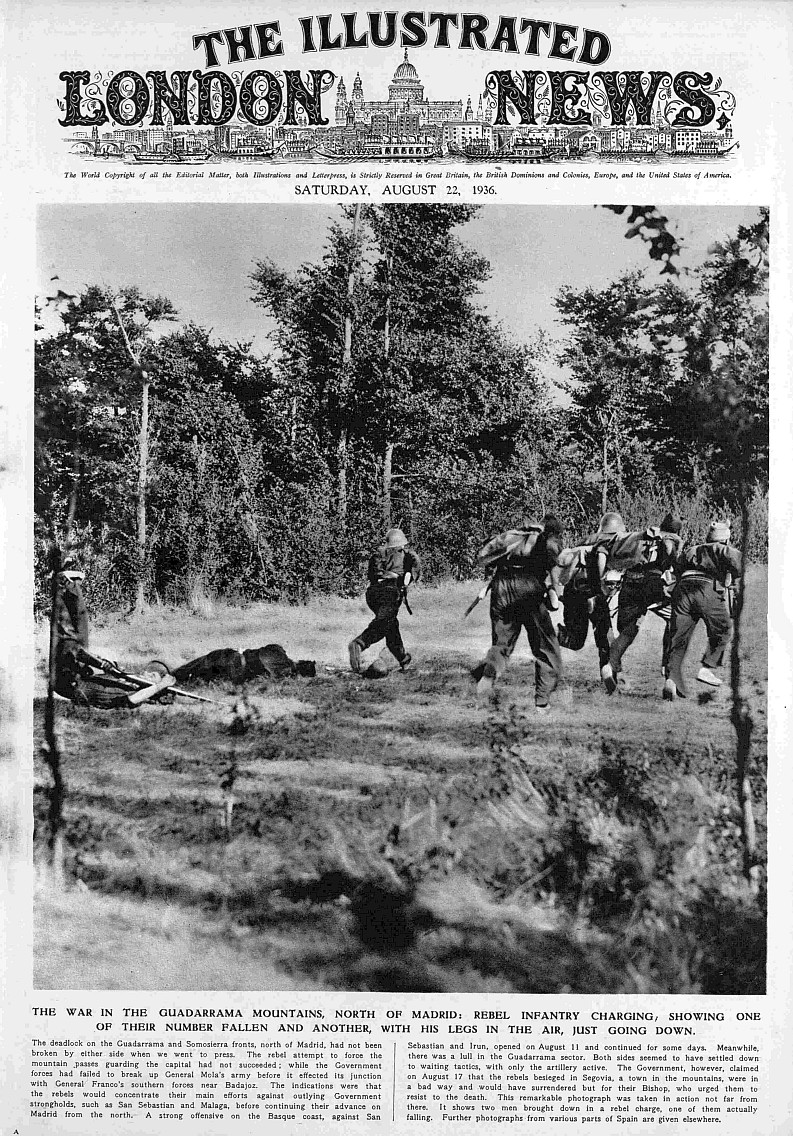
The war in the Guadarrama mountains, north of Madrid: Rebel infantry charging, showing one
of their number fallen and another, with his legs in the air, just going down August 22nd 1936
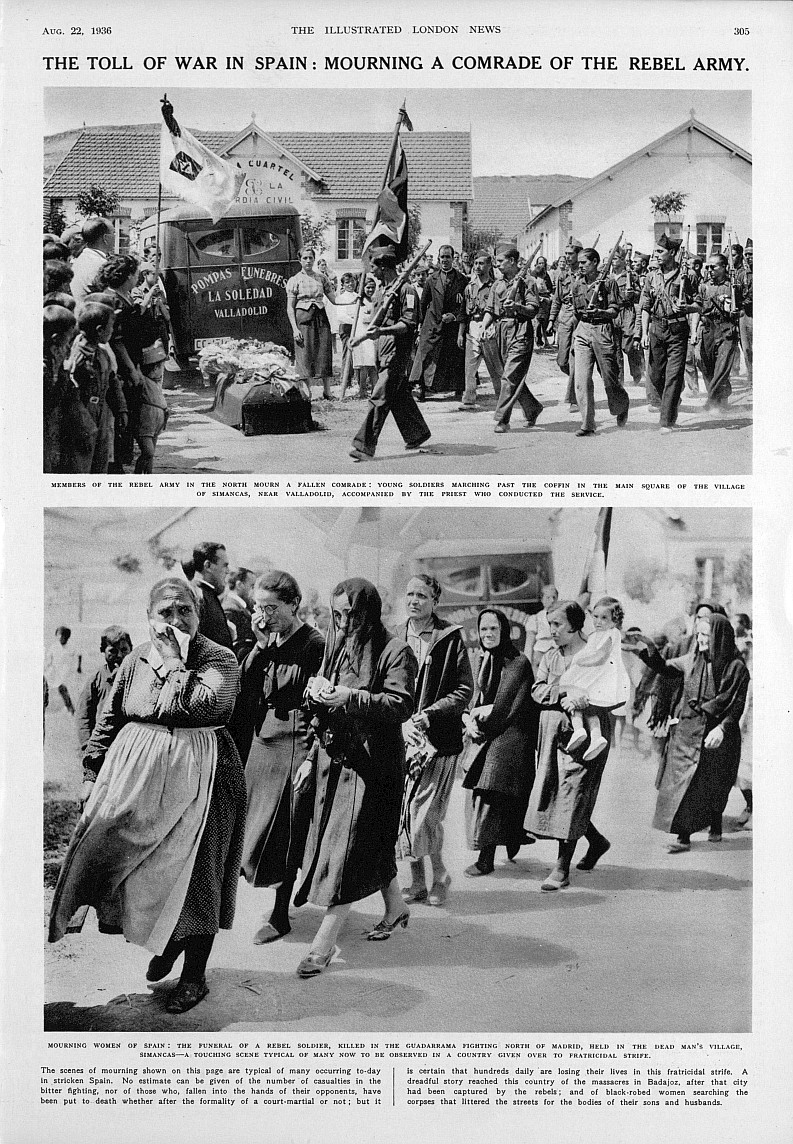
Mourning a comrade of the rebel army
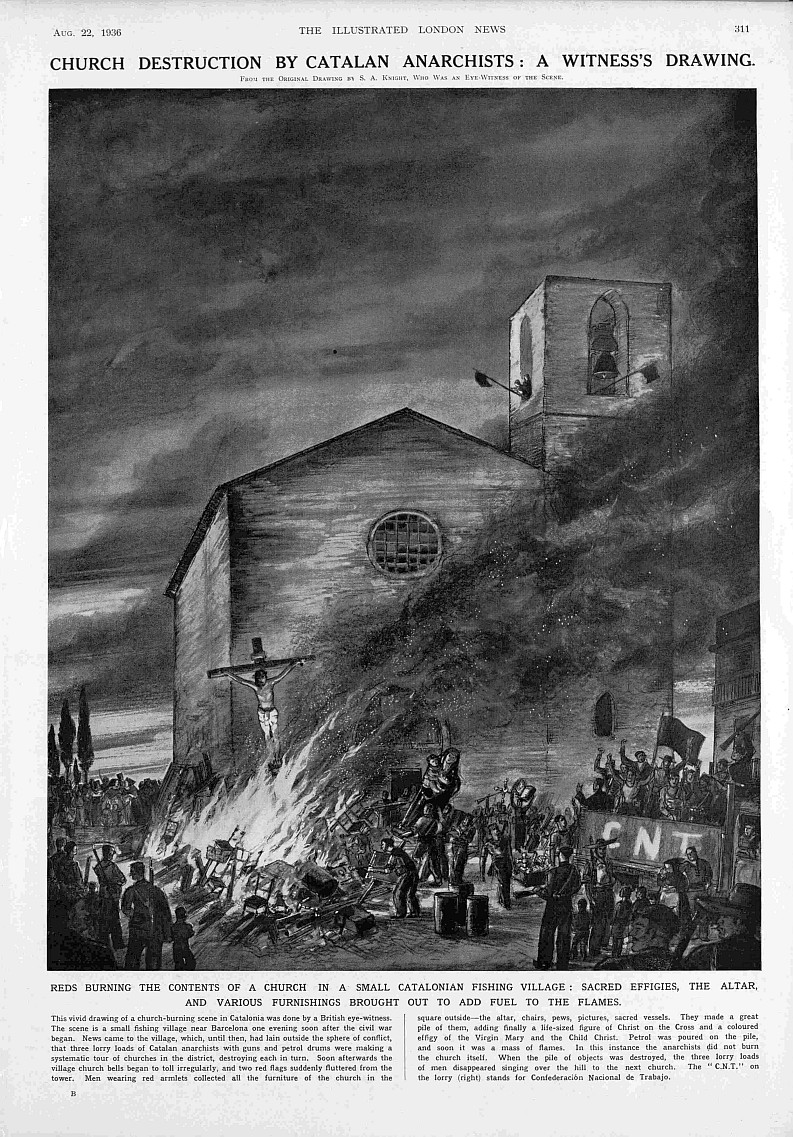
Reds burning the contents of a church in a small Catalonian fishing village: Sacred effigies, the altar, and various
furnishingsbrought outto add fuel to the flames
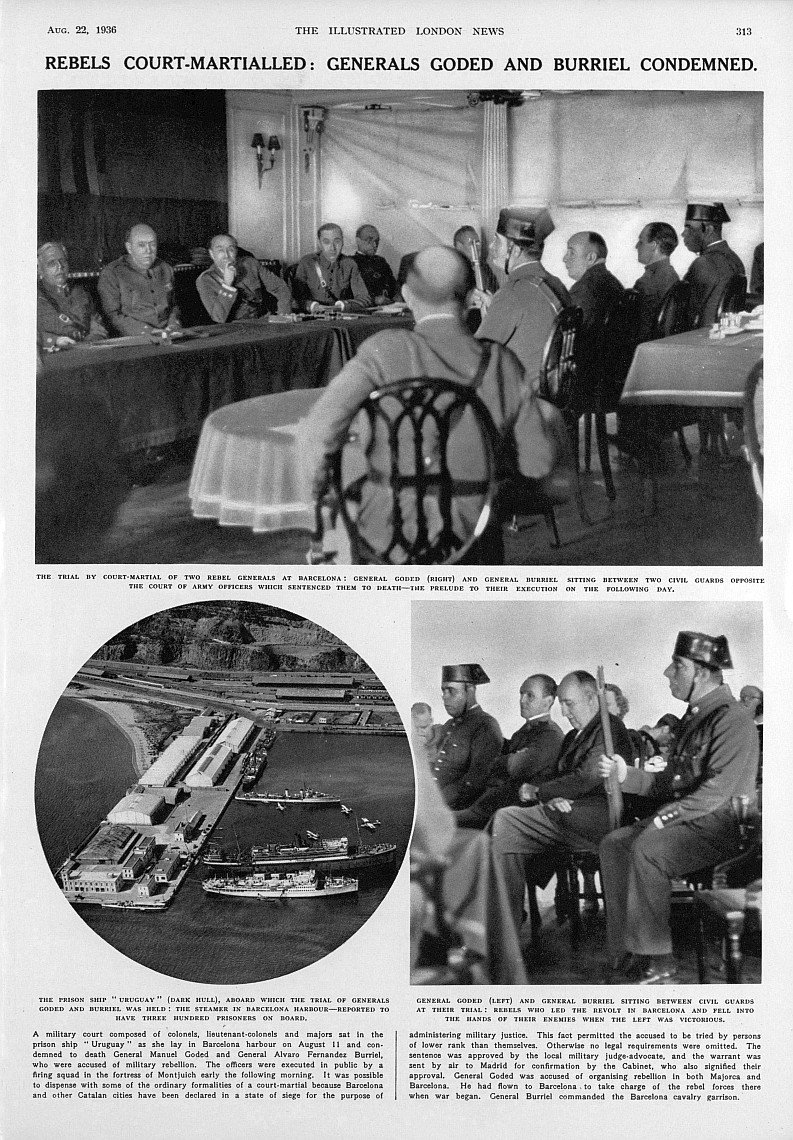
Rebels court martialled: Generals Goded and Burriel condemned
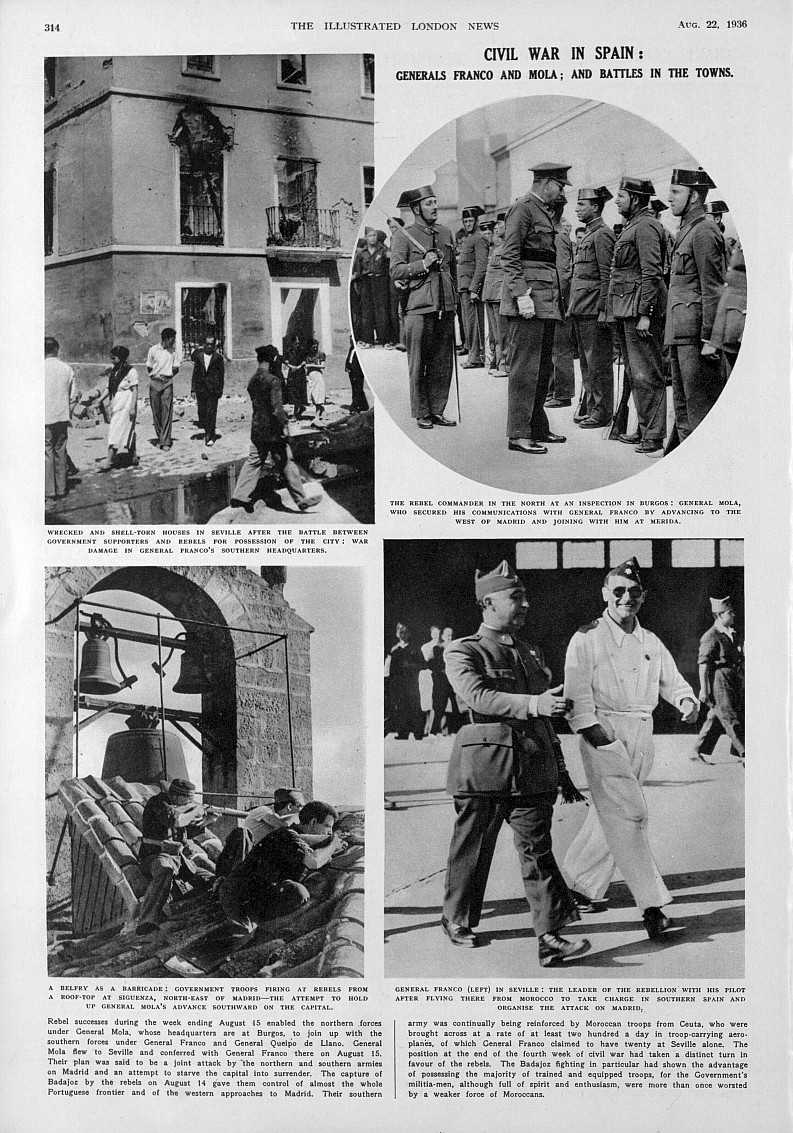
Generals Franco and Mola; and battles in the towns

The Foreign Legion capture Constantina

The British steamer " Gibel Zerjon" stopped by the Spanish cruiser " Miguel de Cervantes" August 29th 1936
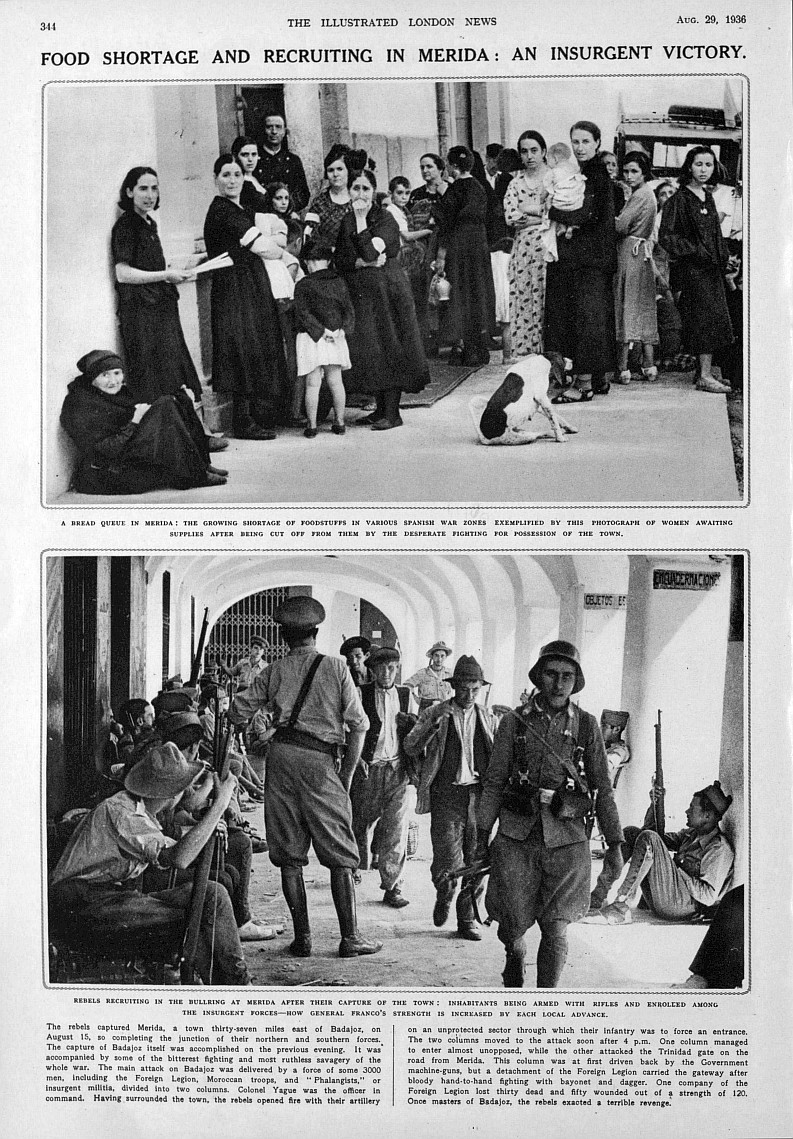
Food shortage and recruiting in Merida: An insurgent victory
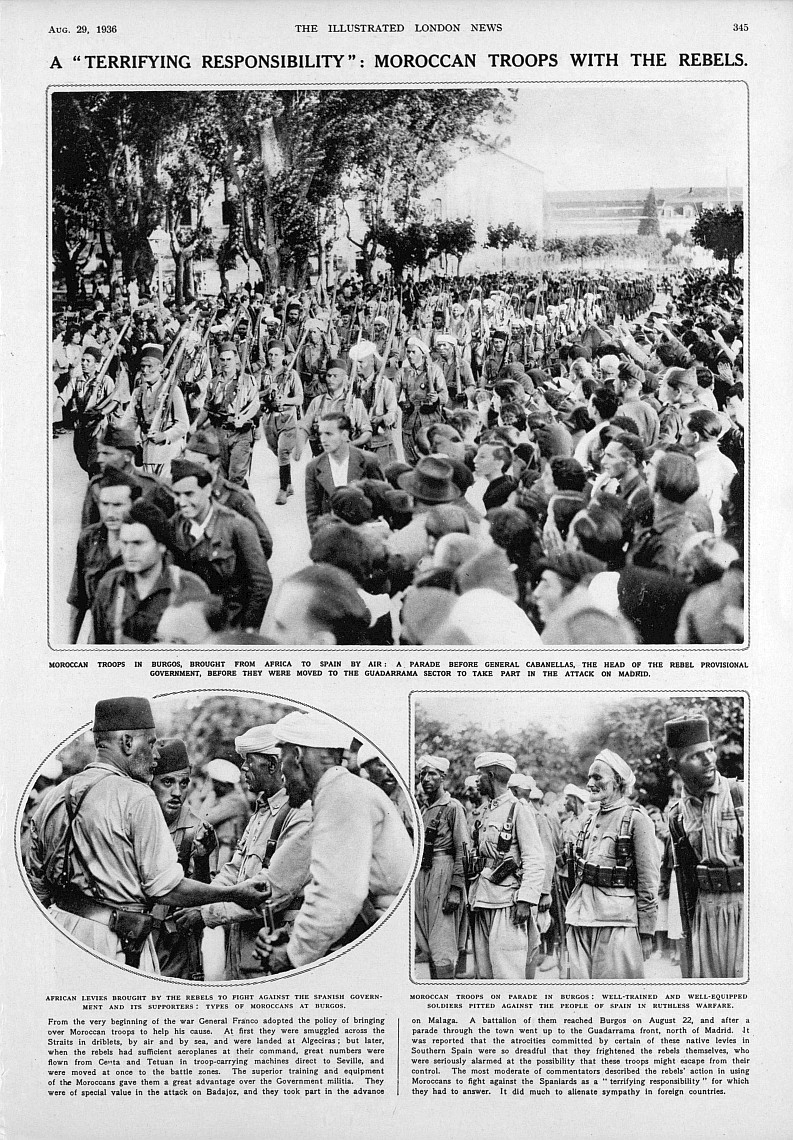
A "Terrifying Responsibility": Moroccan troops with rebels

Relentless civil war in Spain: Ptotographs from 4 zones
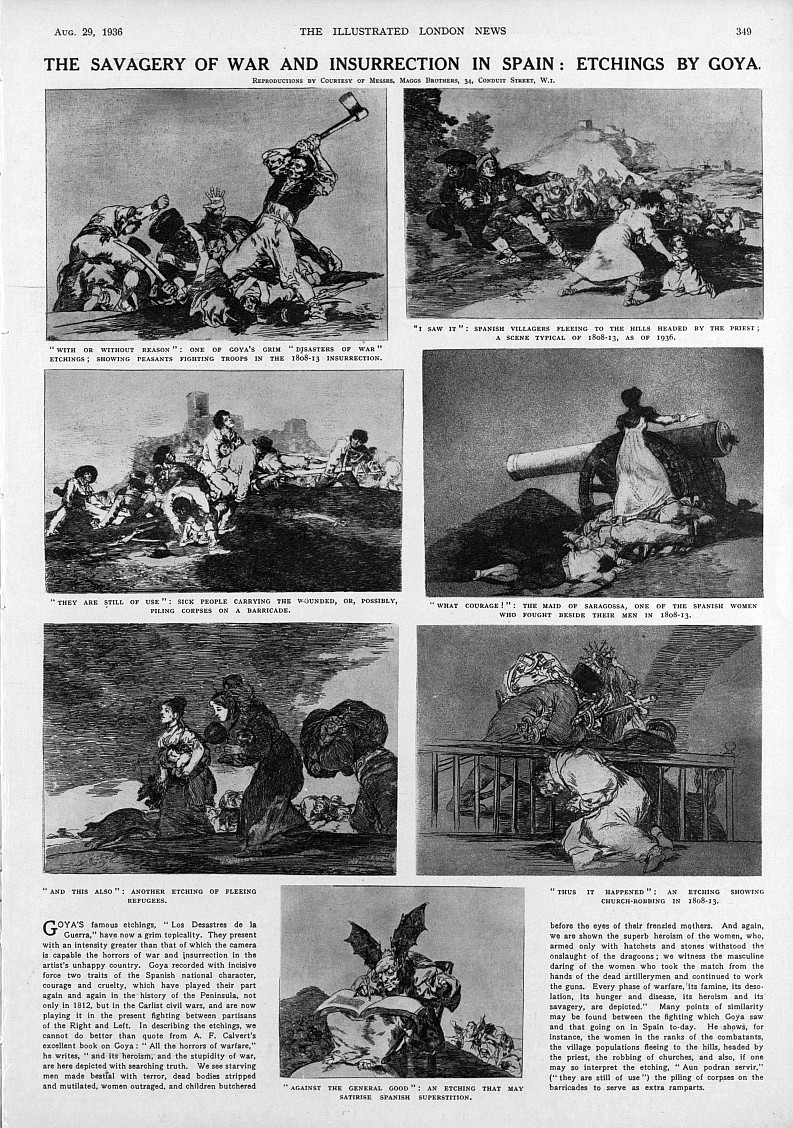
The savagery of war and insurrection in Spain: Etchings by Goya
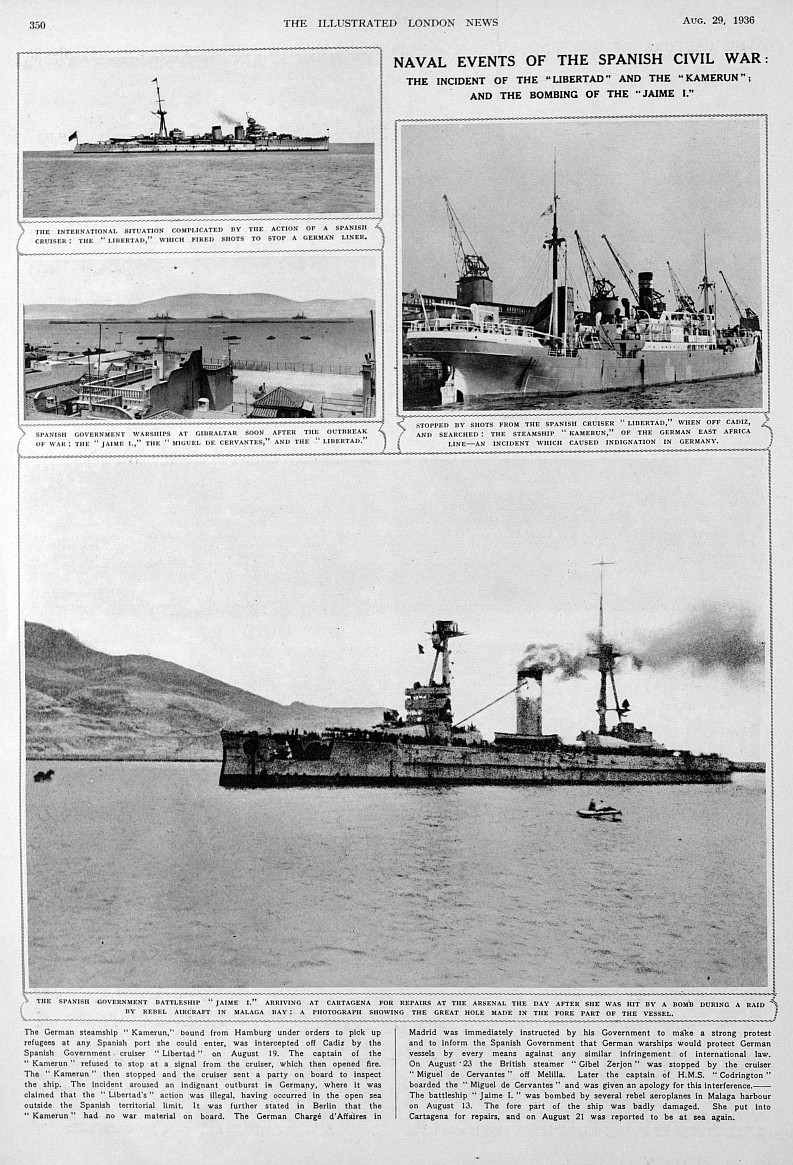
Naval events of the Spanish civil war: The incident of the "Libertad" and the "Kamerun :
and the bombing of the "Jaime I."
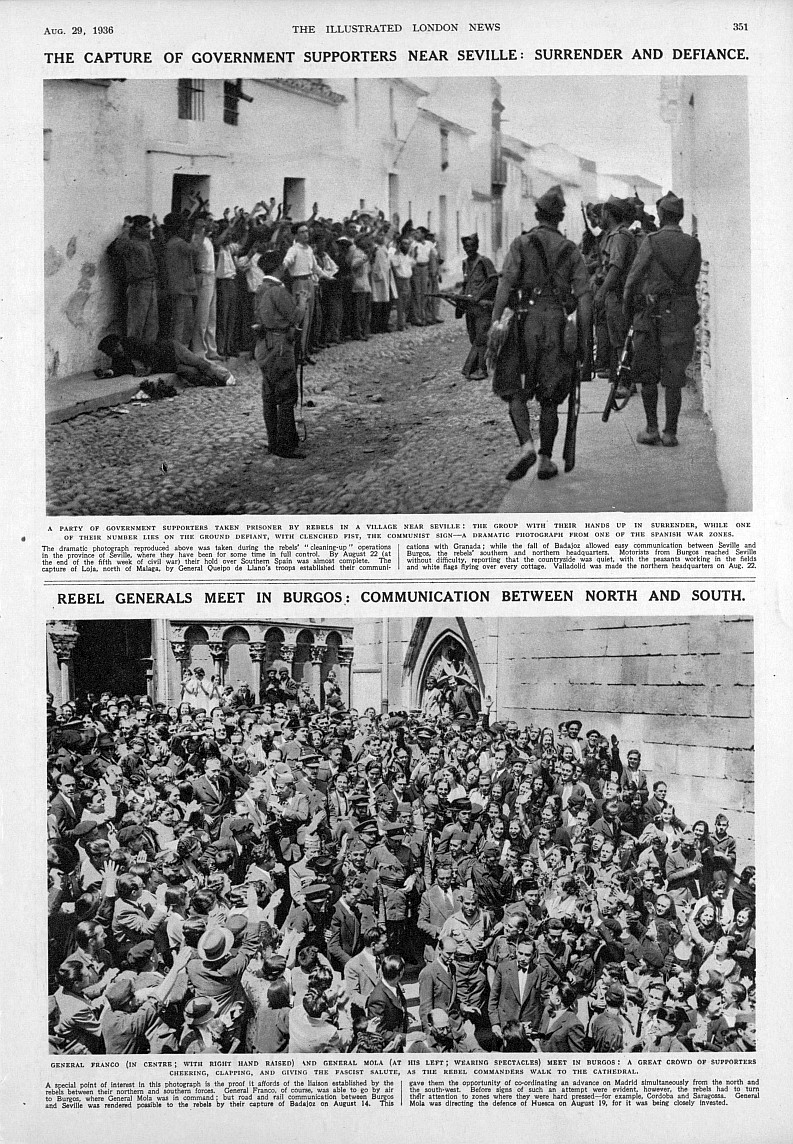
The capture of government supporters near Seville: Surrender and defiance
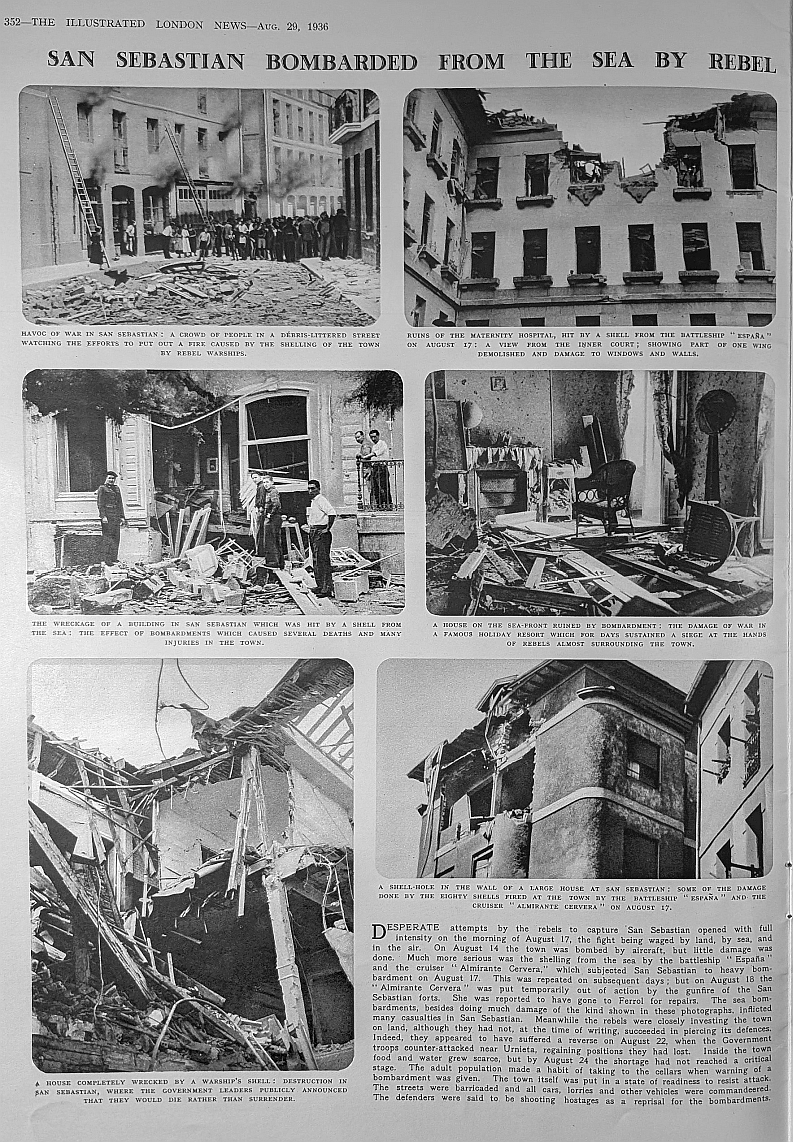
San sebastian bombarded from the sea by rebel warships
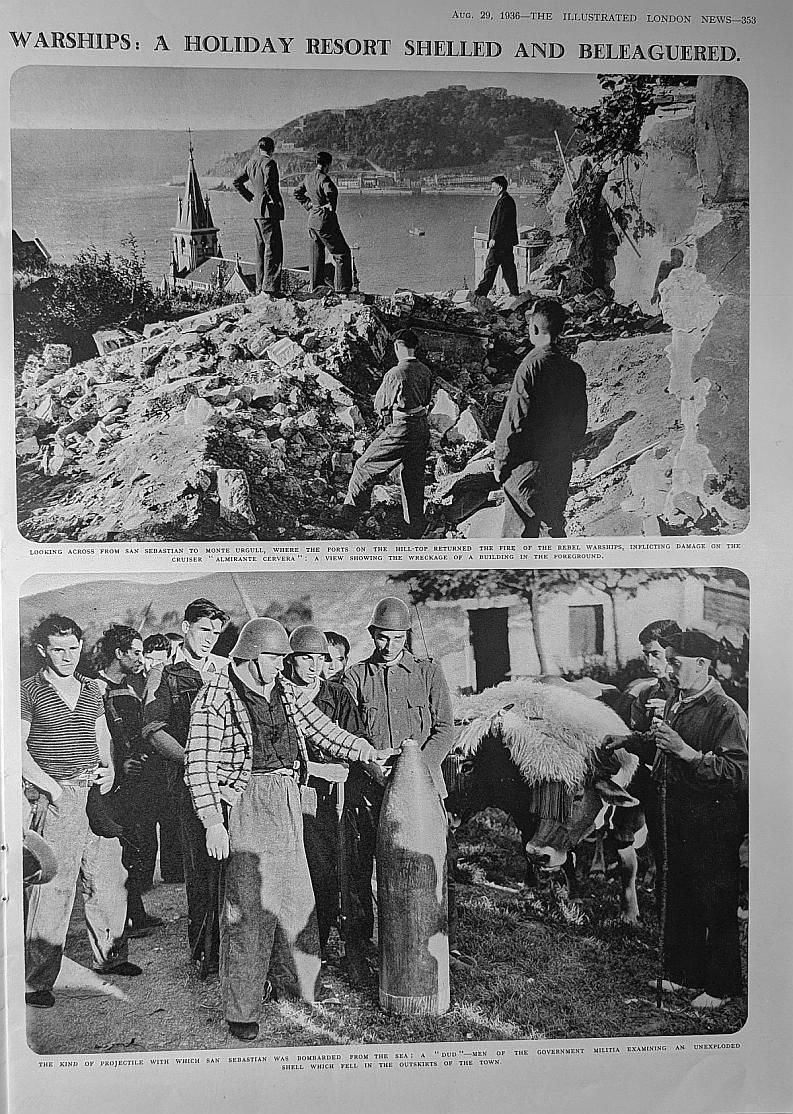
A holiday resort shelled and beleagured
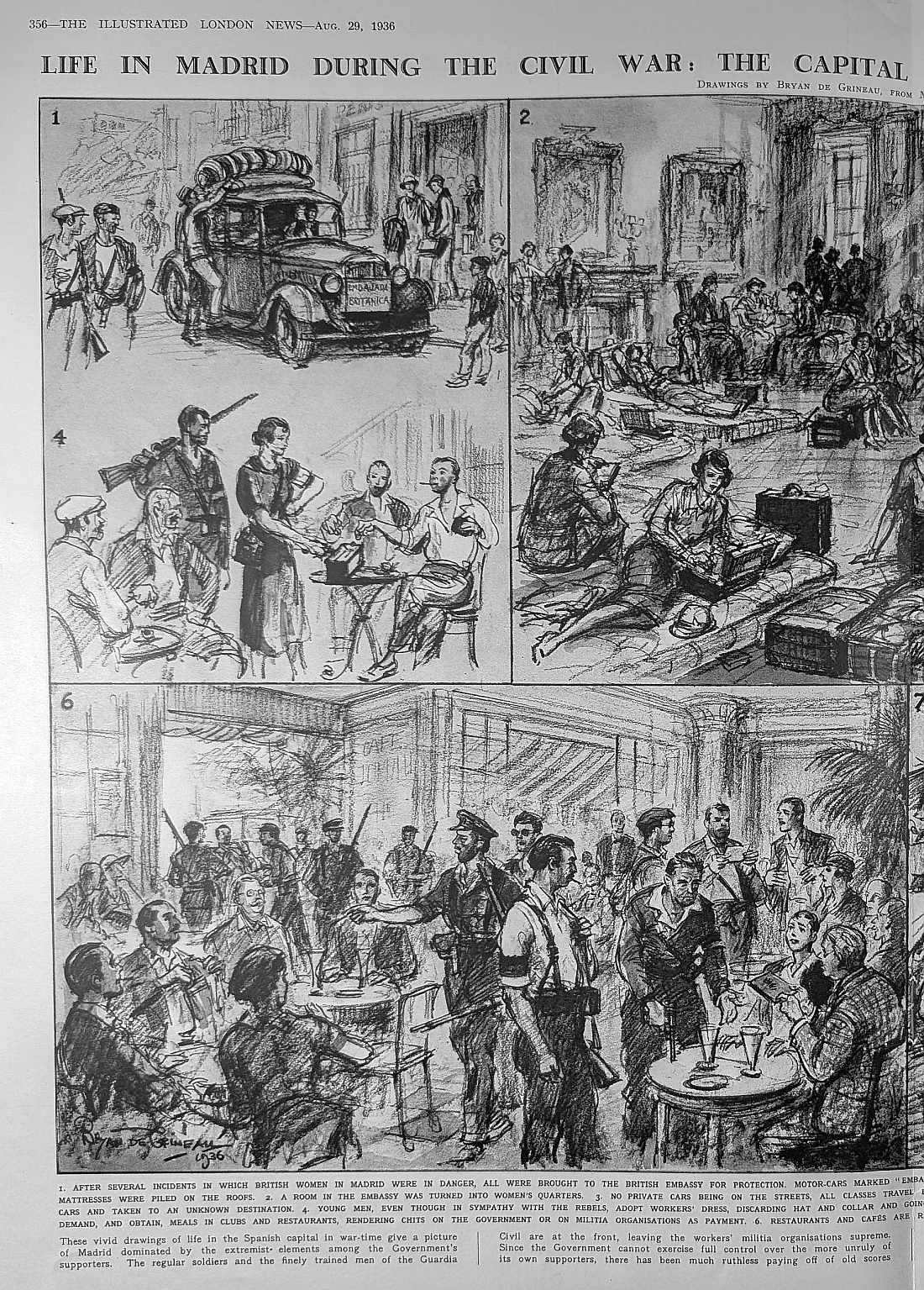
Life in madrid during the civil war, The Capital
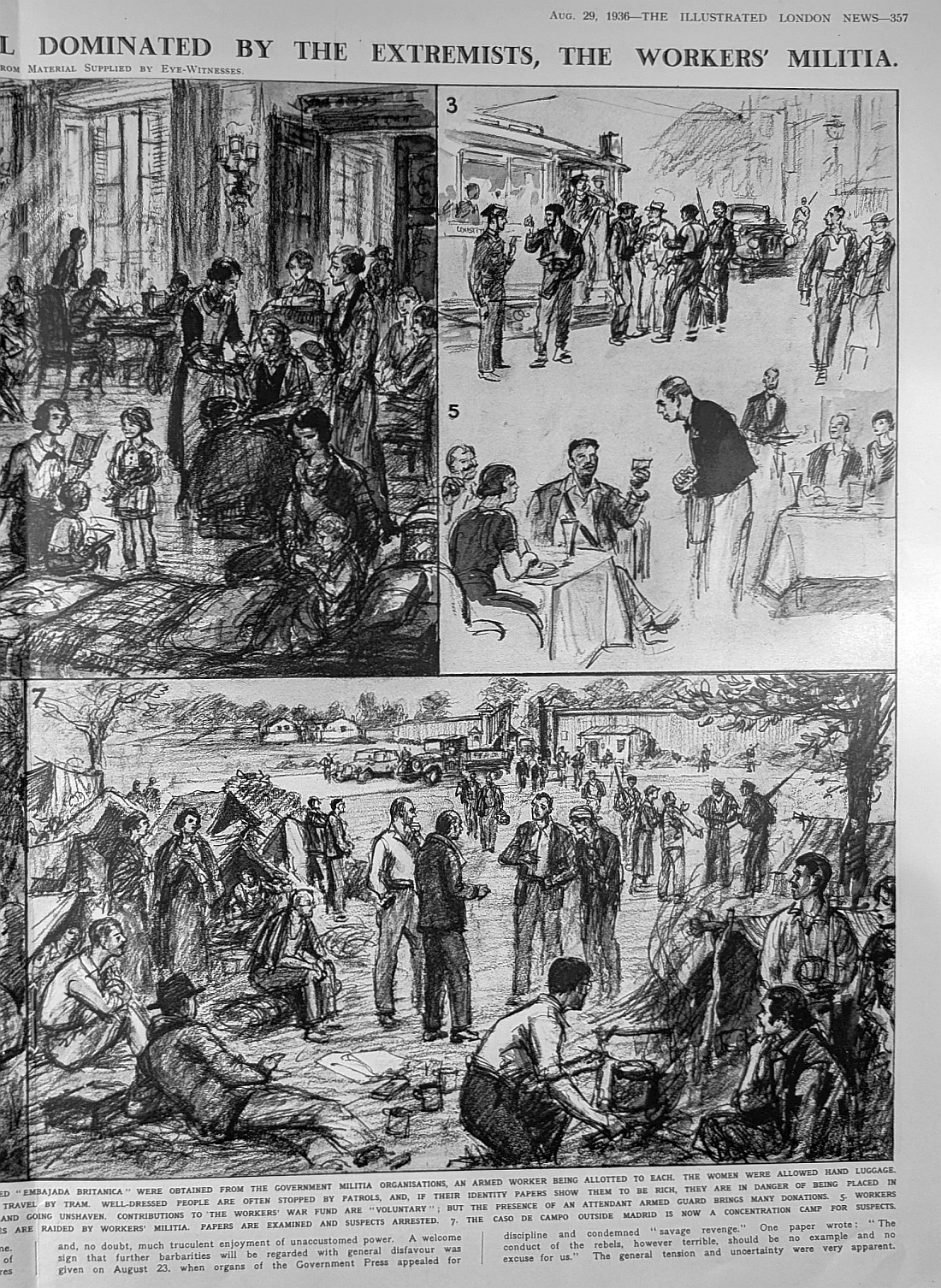
Madrid dominated by extremists the workers militia
Short historical note
The war was fought on multiple fronts and combined conventional battles with sieges (Guernica, Madrid, Bilbao) and aerial bombardment (notably Guernica in 1937). It ended in early 1939 with a Nationalist victory and Franco's long rule. The conflict was a testing ground for new military tactics and an ideological prelude to World War II.
- Preston, Paul. The Spanish Civil War.
- Beevor, Antony. The Battle for Spain.
- Contemporary ILN issues (scans on this site).