Spanish Civil War 1936–1939
Part 12
(dates below refer to publication dates)
October - December 1937
Illustrated London News Collection
A curated collection of ILN reports and images covering the Spanish Civil War — political background, major battles and key personalities.
The Spanish Civil War (1936–1939) began with a military uprising against the Republican government in July 1936. The conflict rapidly polarised Spanish society and drew international attention — the Nationalists (led by Francisco Franco) were supported by Fascist Italy and Nazi Germany, while the Republicans received aid from the Soviet Union and volunteers from the International Brigades. The war reshaped Spain and had wide-reaching cultural and political consequences across Europe.
On this page you will find ILN scans, captions, short biographies, and selected contextual notes to help readers understand the events and principal actors.
Key figures (brief)
- Francisco Franco — Leader of the Nationalist rebels, later head of state of Spain.
- Manuel Azaña — President of the Spanish Republic (during key periods of the war).
- Dolores Ibárruri (La Pasionaria) — Prominent Republican speaker and symbol of Republican resistance.
- International Brigades — Volunteers from many countries who fought for the Republic.
- General Emilio Mola — One of the main plotters and Nationalist commanders (died 1937).
- Buenaventura Durruti — Anarchist leader who played a role on the Republican side.
(Names and roles are documented in ILN coverage and standard histories of the conflict.)
Key Events
-
July 17-18, 1936 — Military uprising begins
A coup by parts of the military against the Second Spanish Republic starts the civil war. Wikipedia+2spanishcivilwar.ca+2 -
July-Sept 1936 — Nationalists seize large areas
The rebel forces quickly take control of areas like Seville, parts of Morocco, and large swathes of western/central Spain. History of Spain+1 -
Late 1936 — Siege of Madrid and international aid begins
The battle for Madrid becomes symbolically important. Meanwhile the rebel side receives increasing foreign support (Germany, Italy) and the Republic receives Soviet aid. Homeschool Spanish Academy+1 -
April 26, 1937 — Bombing of Guernica
German and Italian air forces bomb the Basque town of Guernica, showing the war’s brutality and foreign involvement. Homeschool Spanish Academy+1 -
May-November 1938 — Battle of the Ebro
One of the largest battles in the war, the Republican attempt to change the momentum, but ultimately the Nationalists prevail. Homeschool Spanish Academy+1 -
January 1939 — Fall of Barcelona / March 1939 — Nationalist capture of Madrid
Key Republican strongholds fall. The capital Madrid is taken, marking the imminent end of the war. History of Spain+1 -
April 1 1939 — Franco declares victory
Francisco Franco formally proclaims the end of the war and begins his dictatorship.
Who Were the Rebels?
The Rebels — later known as the Nationalists — were led by General Francisco Franco and other senior officers who rose in July 1936 against Spain’s elected Popular Front government, the left-wing administration of the Second Spanish Republic. Their ranks included much of the regular army, particularly units from Spanish Morocco, together with monarchists, conservatives, and members of the Falange (Spain’s fascist movement). They received crucial support from Nazi Germany, Fascist Italy, and Portugal.
The opposing Republicans comprised socialists, communists, anarchists, and regional nationalists, supported by the Soviet Union and the International Brigades of foreign volunteers.

Mediterranean piracy:A map showing scenes of outrages, and H.M.S. Basilisk

General Franco's Junkers Bombers photographed from a British warship after bombing Gijon
Machines of the German type marked with the cross of St. Andrew
October 23rd 1937


Majorca October 23 1937

The last area (Gijon) held by the Spanish government on the North coast falls to Franco
October 30 (21)

The Orient liner "Orcades" with her ensign at the stern floodlit as an indication of her nationality
a precaution against nocturnal piracy
General Franco's Junkers bombers photographed from a British warship after bombing Gijon:
Machines of German type marked with St. Andrew's cross
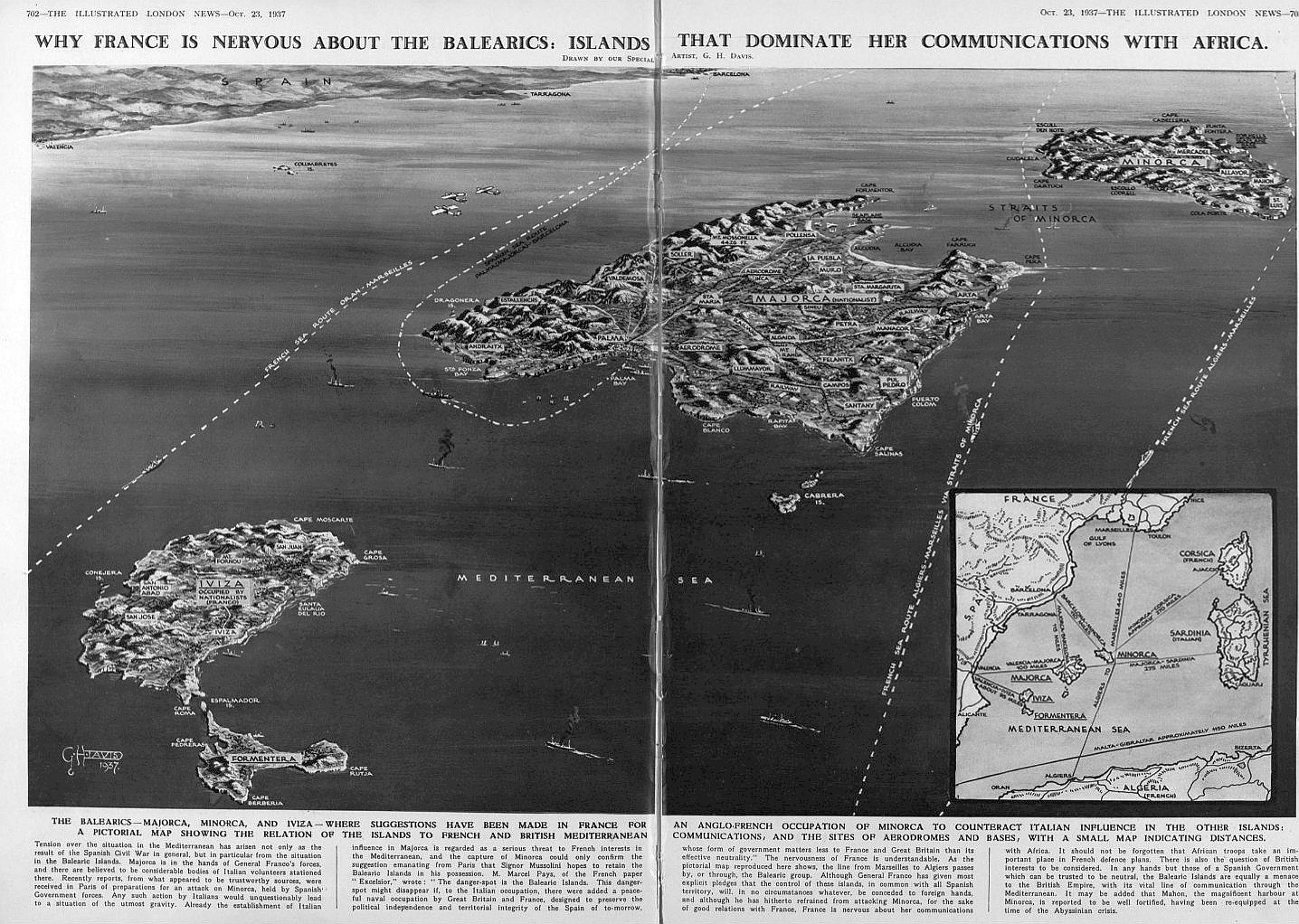
Why France is nervous about the Balearics: Islands that dominate her communications with Africa
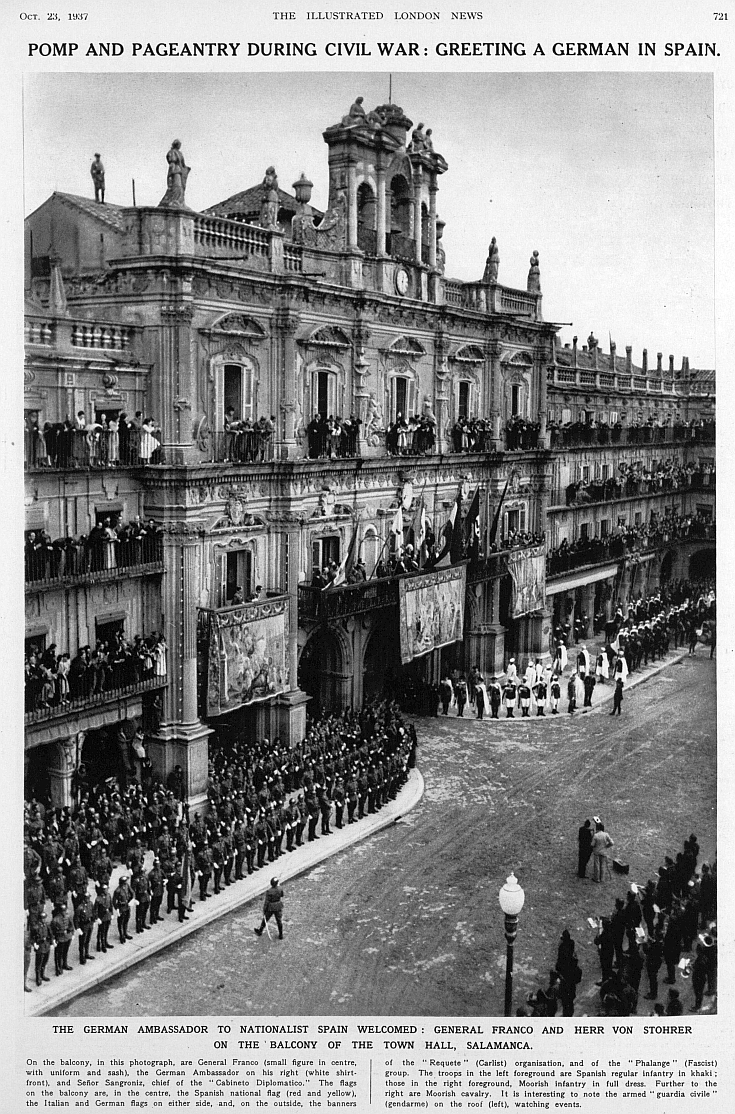
Pomp and pageantry: Greeting a german in Spain
The German ambassador to Nationalist Spain (Rebels): welcomed:
General Franco and Herr Von Stohrer on the balcony of the town hall, Salamanca
October 23rd 1937
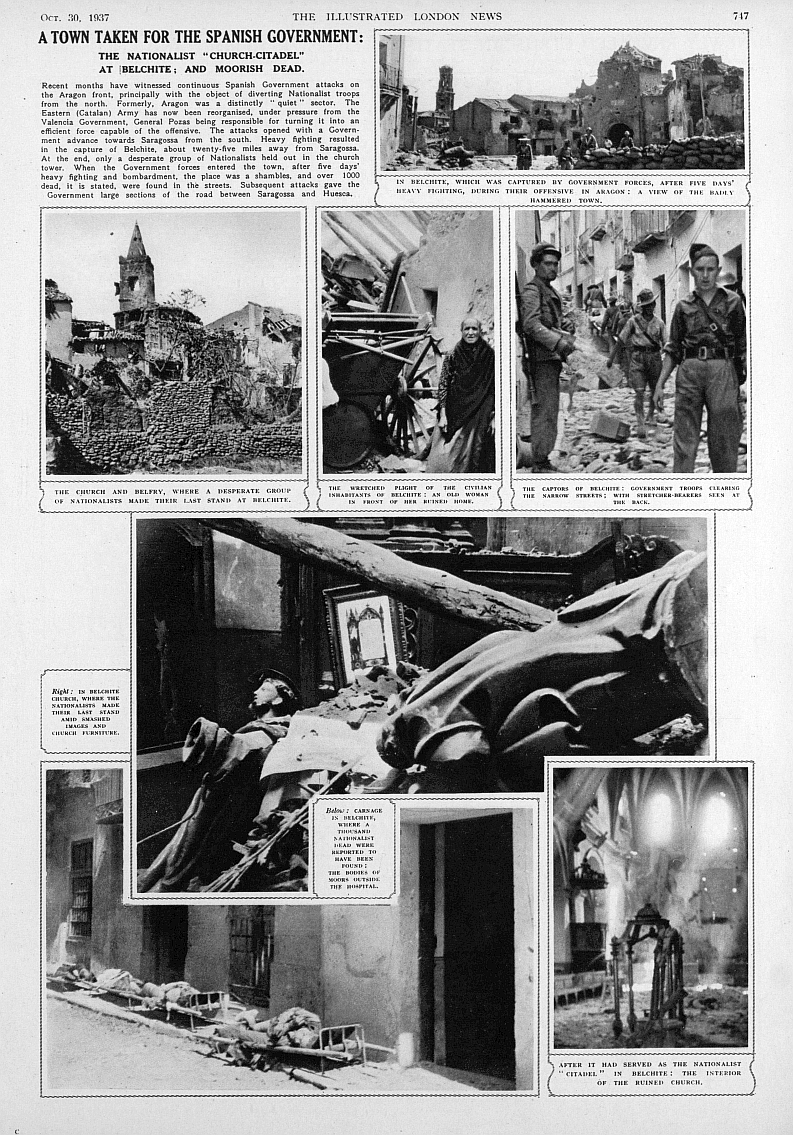
A town taken for the Spanish government:
The Nationalist "Church Citadel" at Belchite; and moorish dead
2
Gijon, The last area held by the Spanish government on the North coast falls to General Franco
October 30th 1937
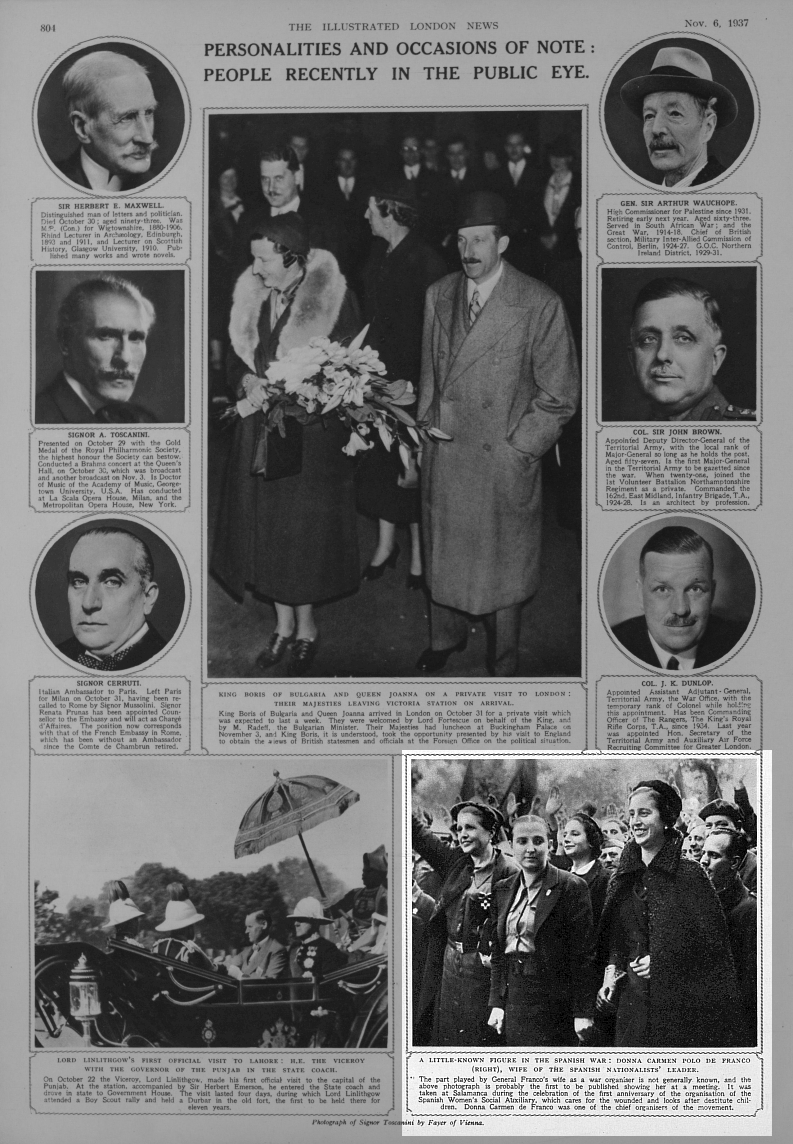
A little known figure in the Spanish war: Donna Carmen Polo de Franco (right) wife of the Spanish Nationalist leader

Honour for Italians killed or wounded in Spain: Signor Mussolini presenting medals to relatives of the fallen
November 6th 1937
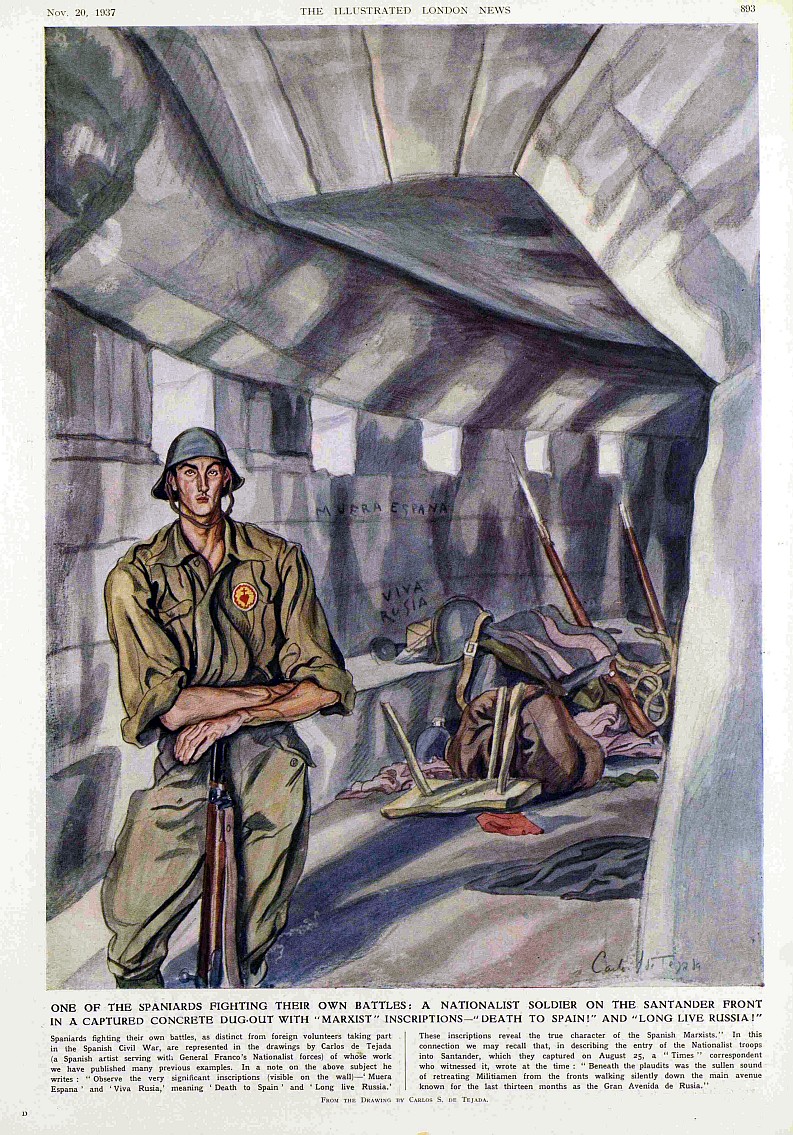
One of the spaniards fighting their own battles: A nationalist soldier on the Santander front
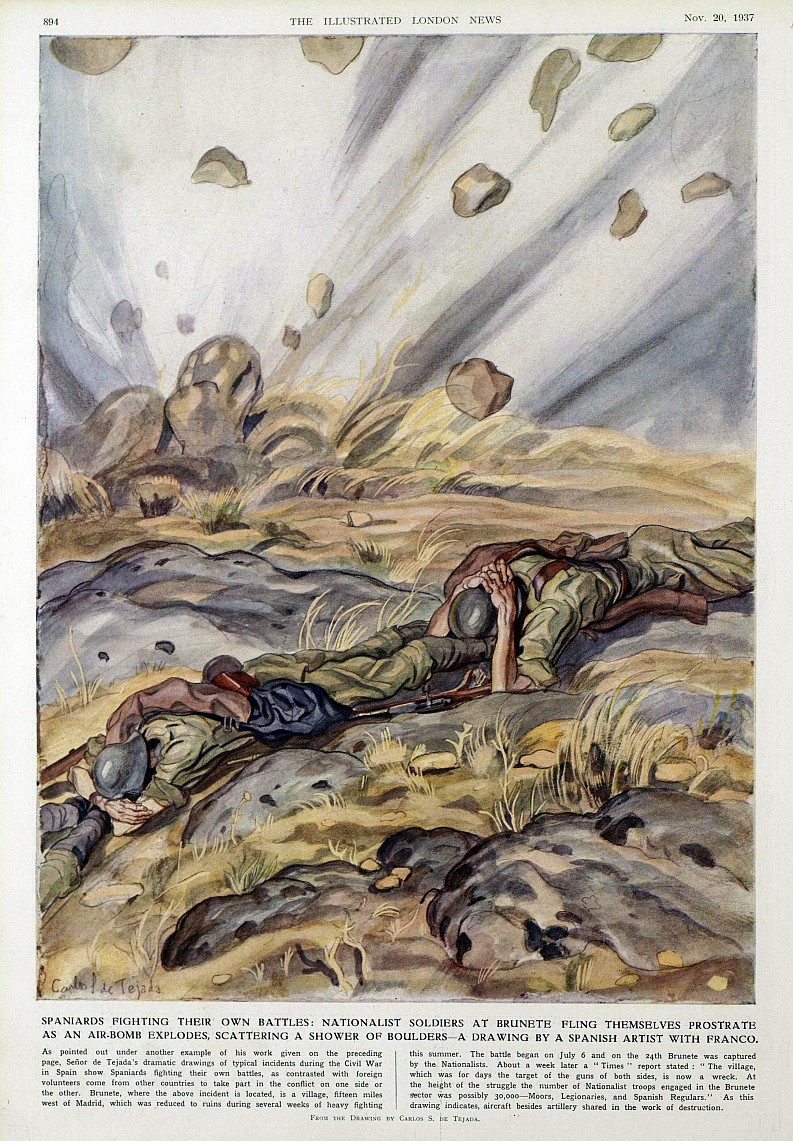
Nationalist soldiers at Brunete November 20th 1937
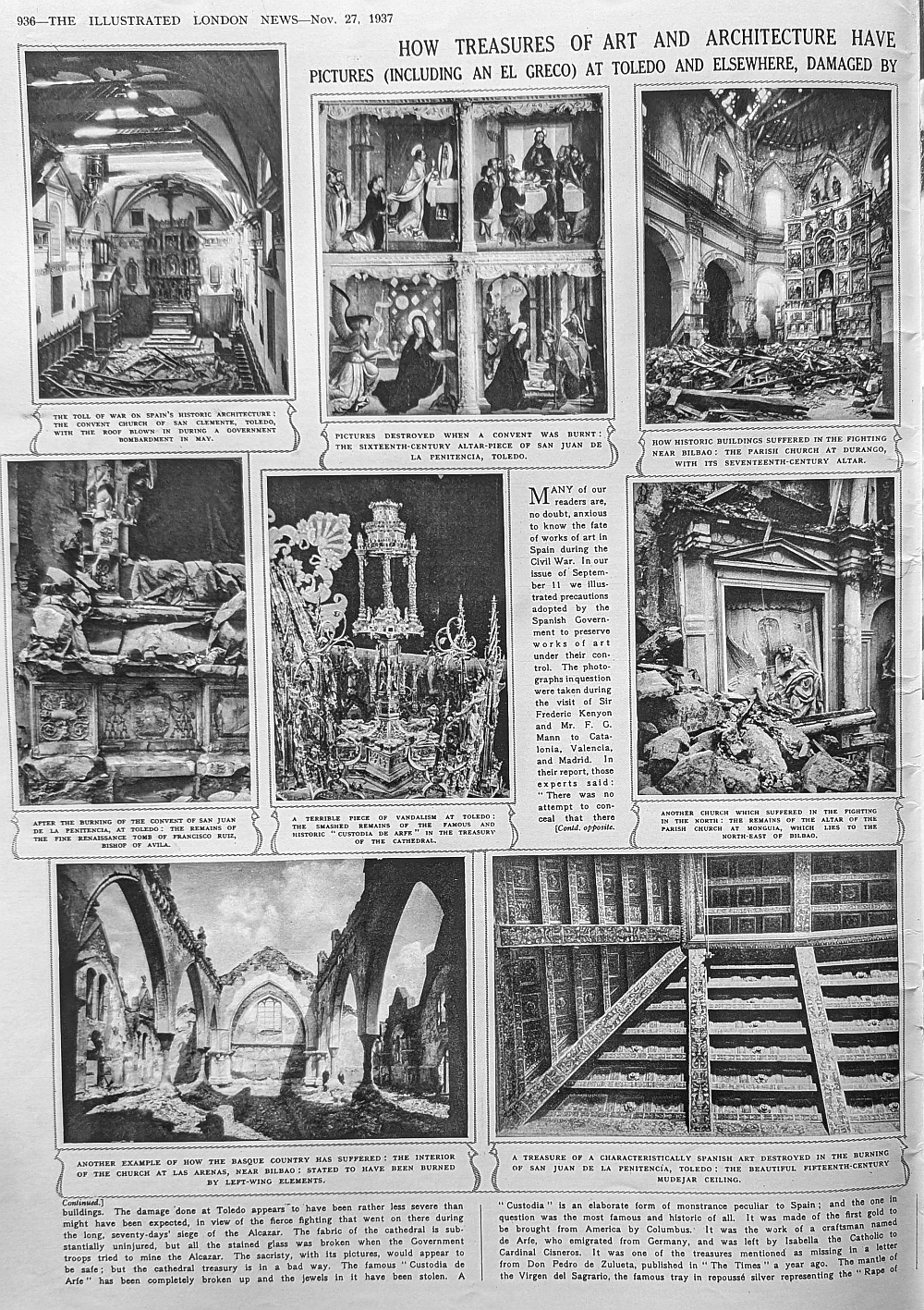
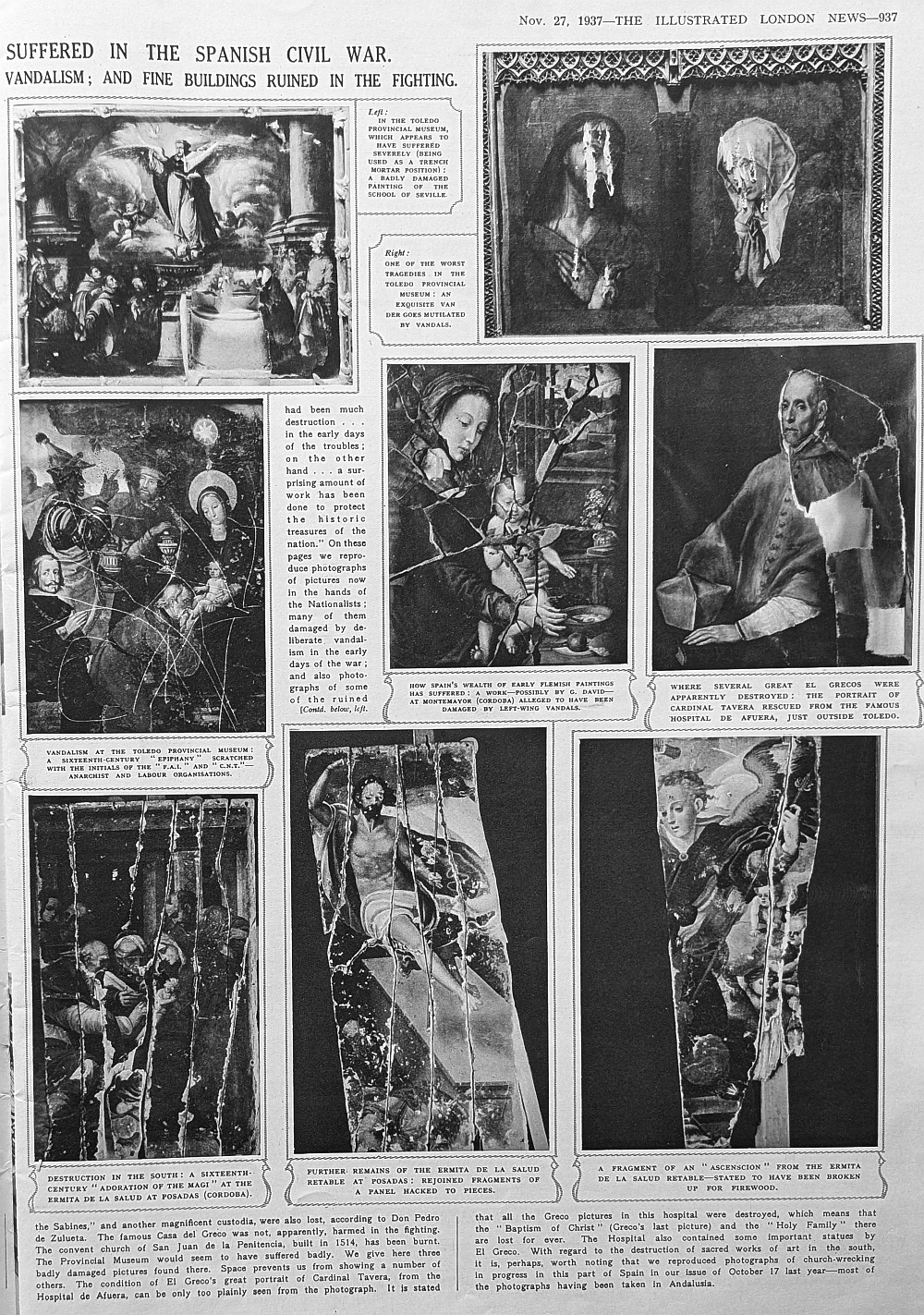

Leader of his Majesty's opposition (UK) visits Republican Spain: Mr Attlee in Madrid with Miss Ellen Wilkinson and Mr Noel Baker
Short historical note
The war was fought on multiple fronts and combined conventional battles with sieges (Guernica, Madrid, Bilbao) and aerial bombardment (notably Guernica in 1937). It ended in early 1939 with a Nationalist victory and Franco's long rule. The conflict was a testing ground for new military tactics and an ideological prelude to World War II.
- Preston, Paul. The Spanish Civil War.
- Beevor, Antony. The Battle for Spain.
- Contemporary ILN issues (scans on this site).