Spanish Civil War 1936–1939
Part 10 1937
(dates below refer to publication dates)
April 10th to June 1937
Illustrated London News Collection
A curated collection of ILN reports and images covering the Spanish Civil War — political background, major battles and key personalities.
The Spanish Civil War (1936–1939) began with a military uprising against the Republican government in July 1936. The conflict rapidly polarised Spanish society and drew international attention — the Nationalists (led by Francisco Franco) were supported by Fascist Italy and Nazi Germany, while the Republicans received aid from the Soviet Union and volunteers from the International Brigades. The war reshaped Spain and had wide-reaching cultural and political consequences across Europe.
On this page you will find ILN scans, captions, short biographies, and selected contextual notes to help readers understand the events and principal actors.
Key figures (brief)
- Francisco Franco — Leader of the Nationalist rebels, later head of state of Spain.
- Manuel Azaña — President of the Spanish Republic (during key periods of the war).
- Dolores Ibárruri (La Pasionaria) — Prominent Republican speaker and symbol of Republican resistance.
- International Brigades — Volunteers from many countries who fought for the Republic.
- General Emilio Mola — One of the main plotters and Nationalist commanders (died 1937).
- Buenaventura Durruti — Anarchist leader who played a role on the Republican side.
(Names and roles are documented in ILN coverage and standard histories of the conflict.)
Key Events 1937
-
January 1937
-
Continued fighting north-west of Madrid, especially around the Corunna Road.
-
Nationalist pressure persists but fails to break the city's defences.
February 1937
-
Battle of Jarama: Nationalists try to cut Madrid–Valencia road.
-
International Brigades play a central role.
-
Battle ends in stalemate with heavy casualties.
March 1937
-
Battle of Guadalajara:
The Italian CTV offensive against Madrid fails; Republicans win a major defensive victory.
April 1937
-
Bombing of Guernica by German Condor Legion (26 April) — becomes the war’s most infamous atrocity.
-
Nationalists advance across the Basque Country.
May 1937
-
Barcelona “May Days”: violent internal conflict between anarchists, POUM and Communist-backed forces within the Republican zone.
-
Juan Negrín replaces Largo Caballero as Prime Minister.
June 1937
-
Fall of Bilbao: Major Nationalist victory; Basque steel and industry captured.
-
Republicans lose much of the north’s industrial strength.
July 1937
-
Battle of Brunete: Republican attempt to relieve pressure on Madrid.
-
Initial gains reversed; heavy losses weaken the Republic’s best troops.
August 1937
-
Nationalist Northern Offensive continues:
Cantabria isolated and collapsing under sustained attack.
September 1937
-
Fall of Santander: The Nationalists tighten control of the north.
-
Republicans increasingly reliant on Soviet aid.
October 1937
-
Fall of Gijón: Nationalists complete conquest of the northern Republican zone.
-
This gives them enormous industrial and resource advantages.
November 1937
-
International Brigades reorganised and reduced after heavy losses.
-
Madrid front remains static; heavy artillery duels.
December 1937
-
Battle of Teruel begins:
Republicans launch winter offensive, capturing much of the town. -
One of the war’s bloodiest battles and the last major Republican offensive with significant initial success.
-
Who Were the Rebels?
The Rebels — later known as the Nationalists — were led by General Francisco Franco and other senior officers who rose in July 1936 against Spain’s elected Popular Front government, the left-wing administration of the Second Spanish Republic. Their ranks included much of the regular army, particularly units from Spanish Morocco, together with monarchists, conservatives, and members of the Falange (Spain’s fascist movement). They received crucial support from Nazi Germany, Fascist Italy, and Portugal.
The opposing Republicans comprised socialists, communists, anarchists, and regional nationalists, supported by the Soviet Union and the International Brigades of foreign volunteers.
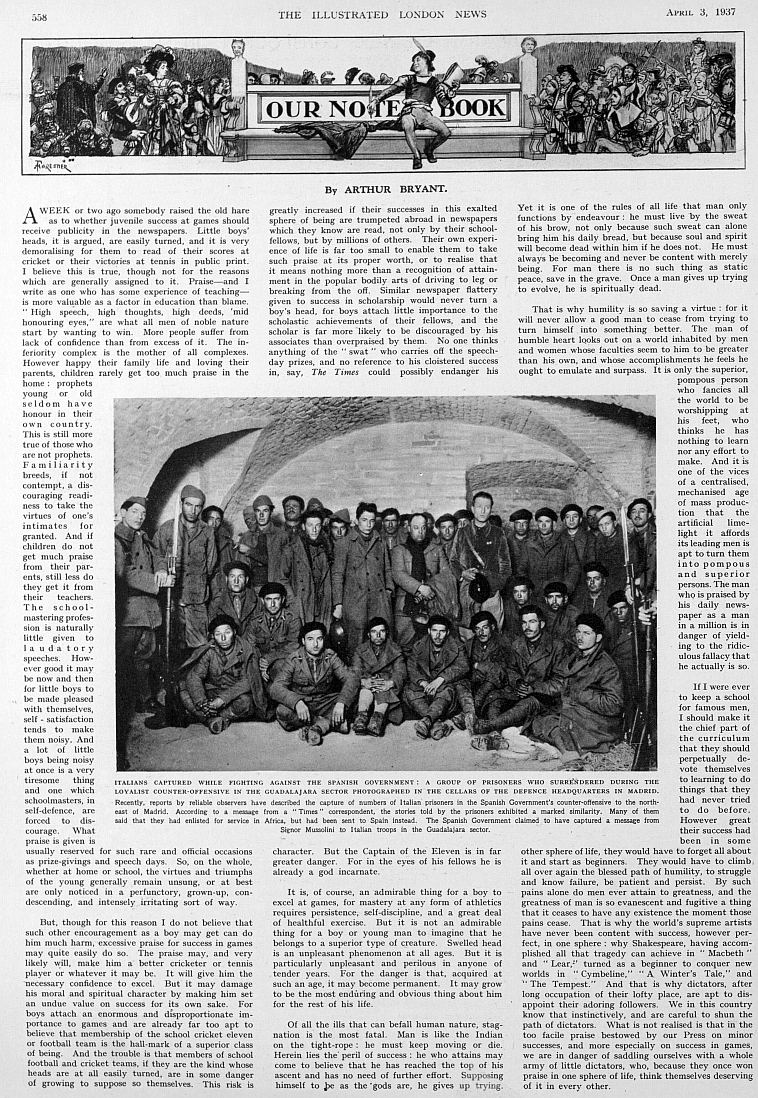
Italians captured, after surrendering, while fighting against the Spanish government April 3rd 1937

How the peaceable middle class suffer in a civil war: The wrecked homes of a

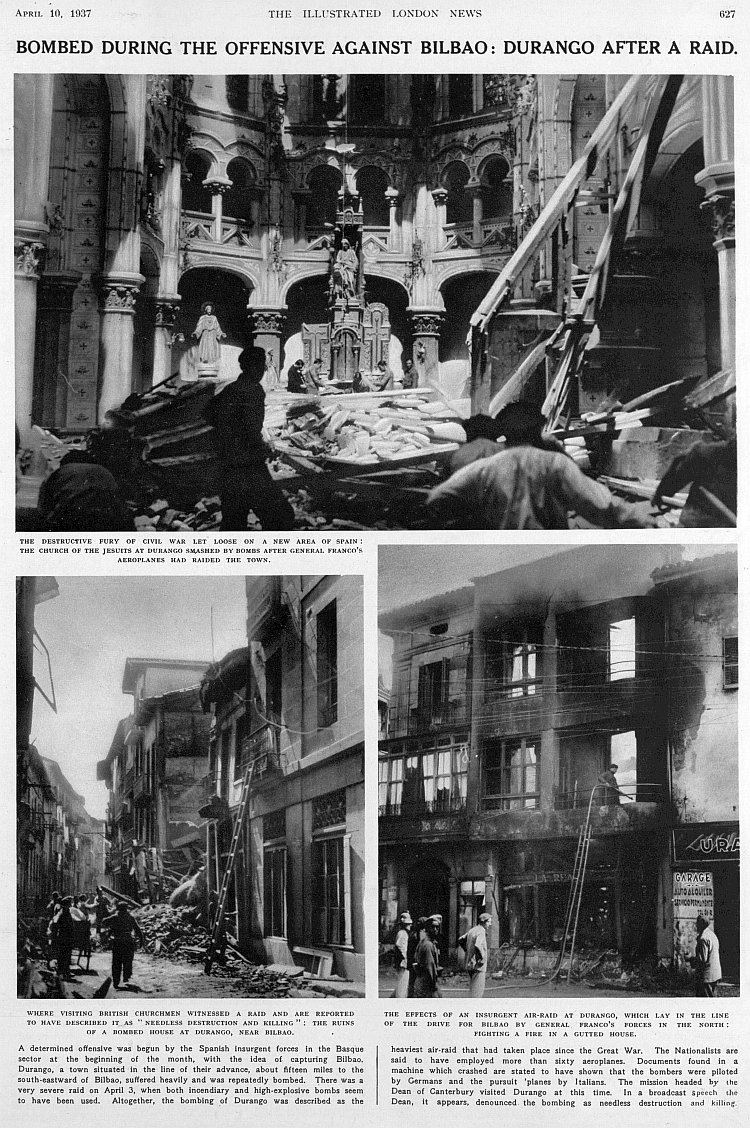
Bombed during the offensive against Bilbao: Durango after a raid
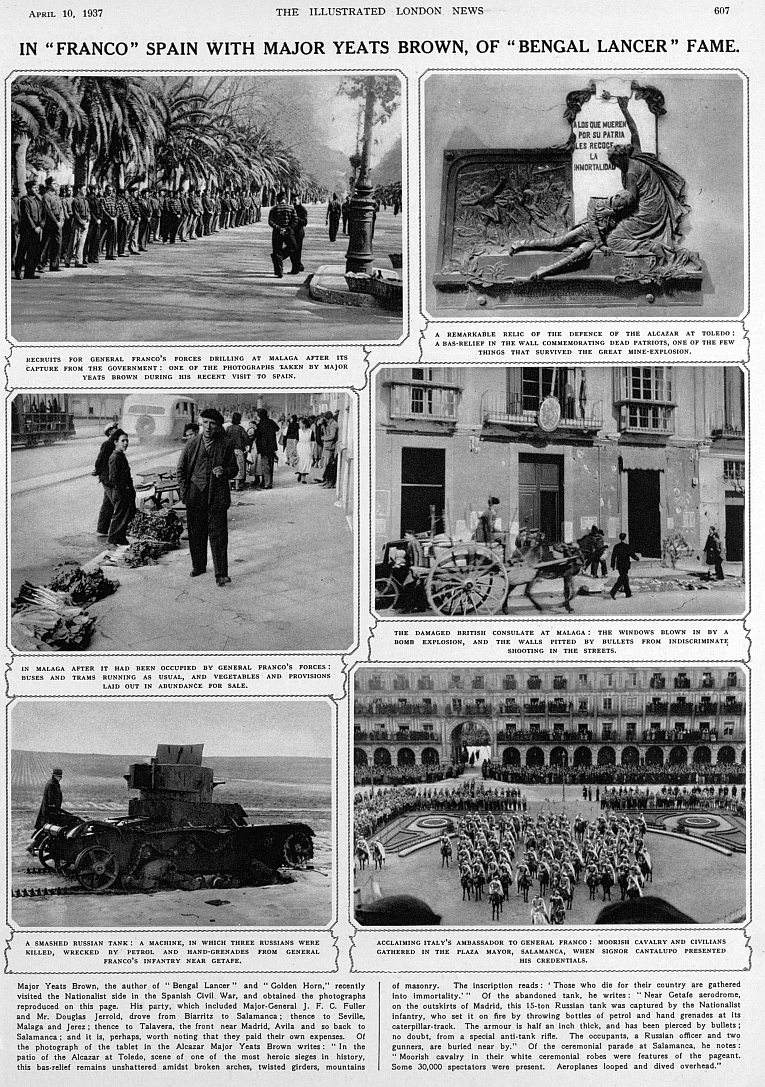
In "Franco" Spain with Major Yeats Brown, Of "Bengal Lancer" fame
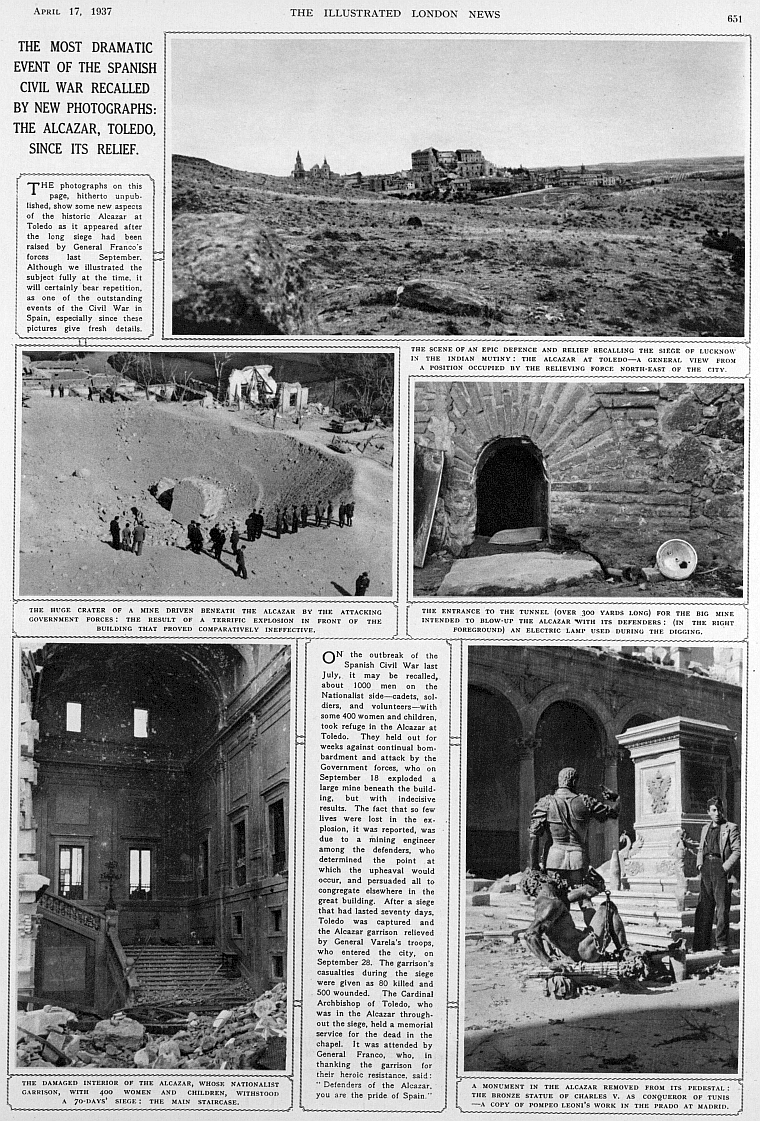
The most dramatic events of the Spanish civil war recalled by new photographs: The Alcazar, Toledo, since it's relief
April 17th 1937
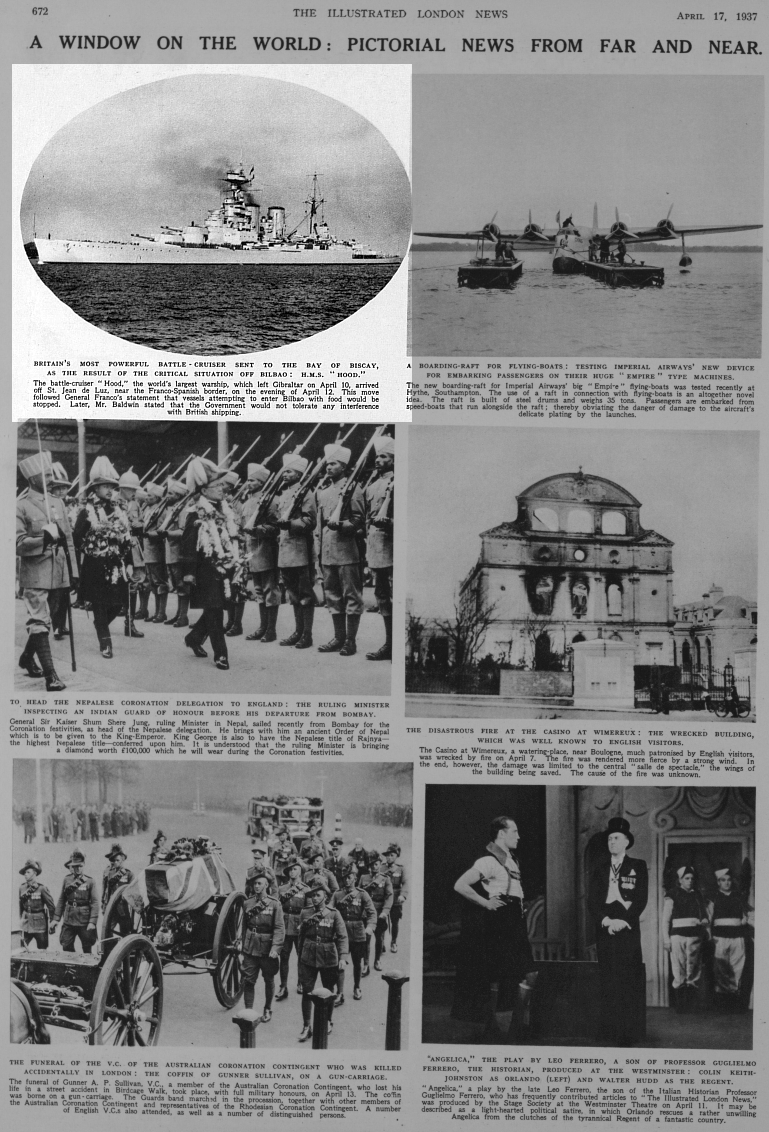
HMS Hood a very powerful Battle Cruiser sent to the Bay of Biscay as the result of the critical situation off Bilbao

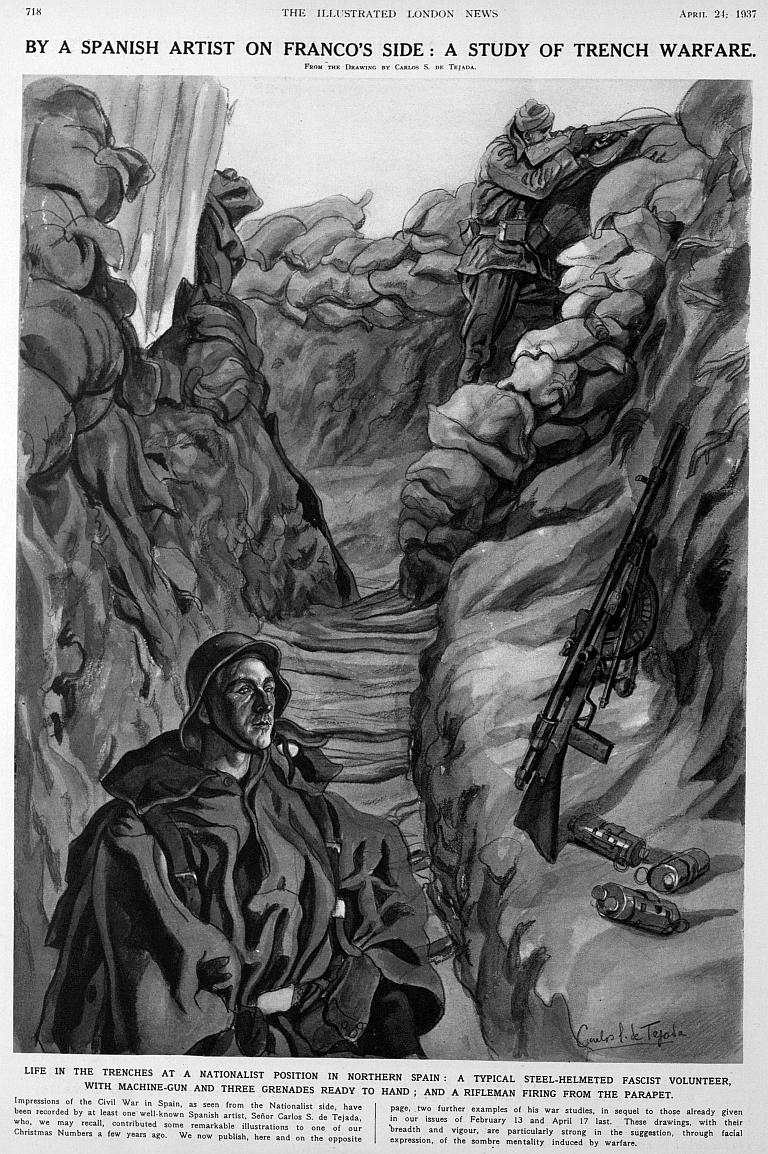
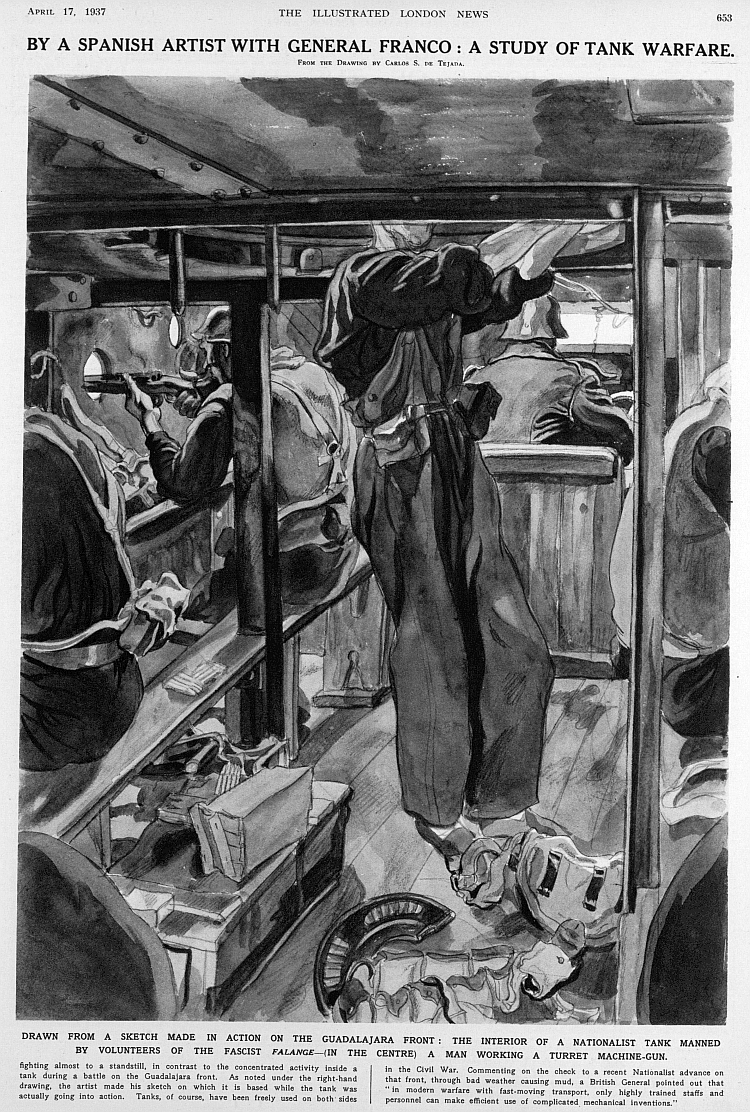
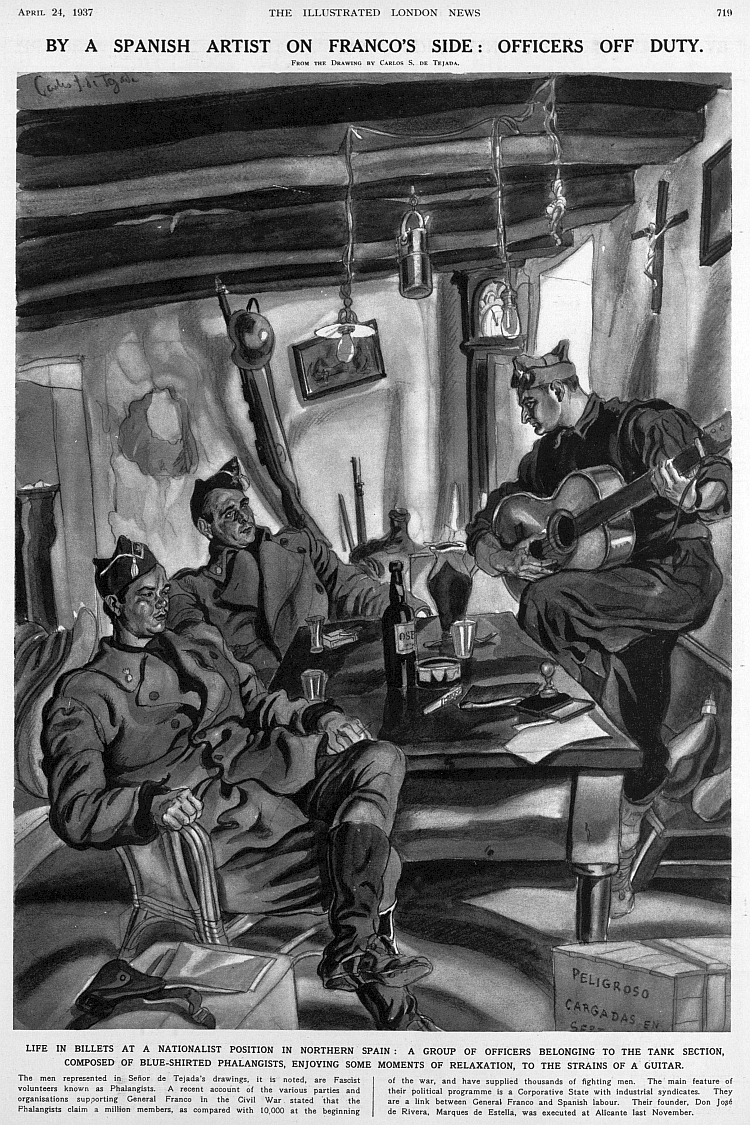
Paintings By Carlos s deTejada

British food ship for Bilbao
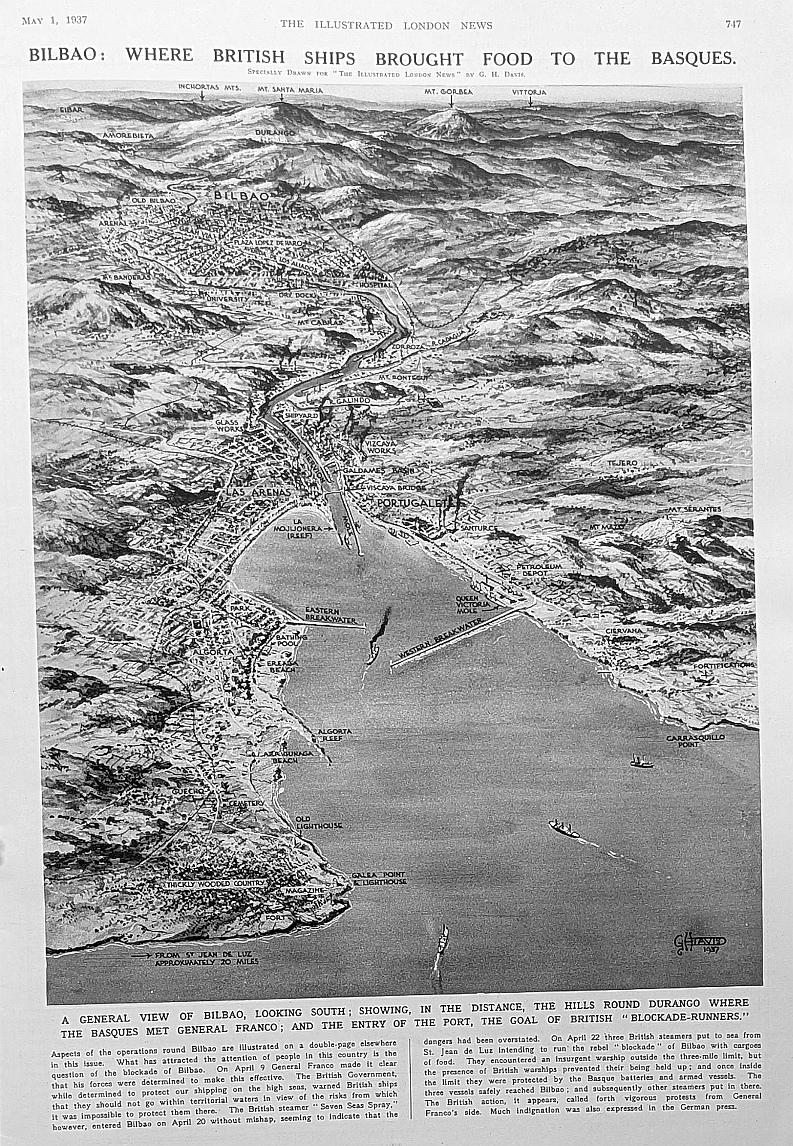
Bilbao: Where British ships brought food to the Basques

With the Basques defending Bilbao: Armed trawlers

With the Basques defending Bilbao: Swept mines: services in the field and barracks
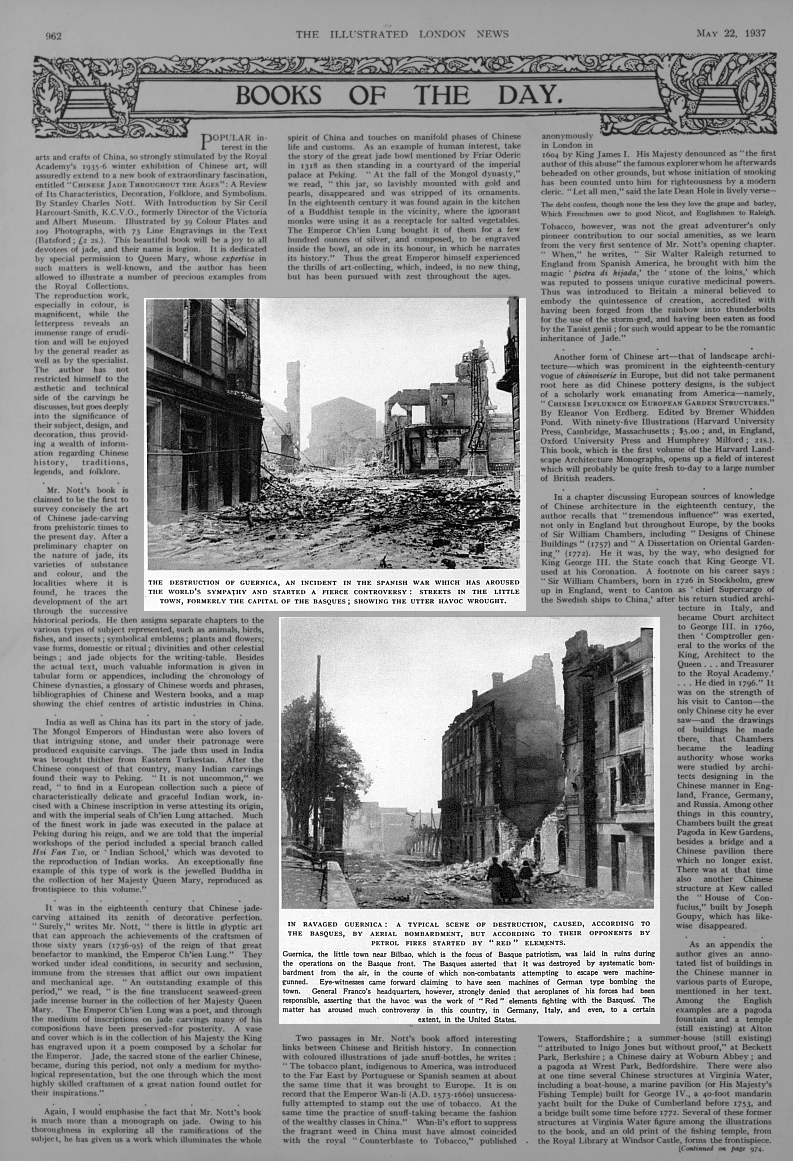
The destruction of Guernica!
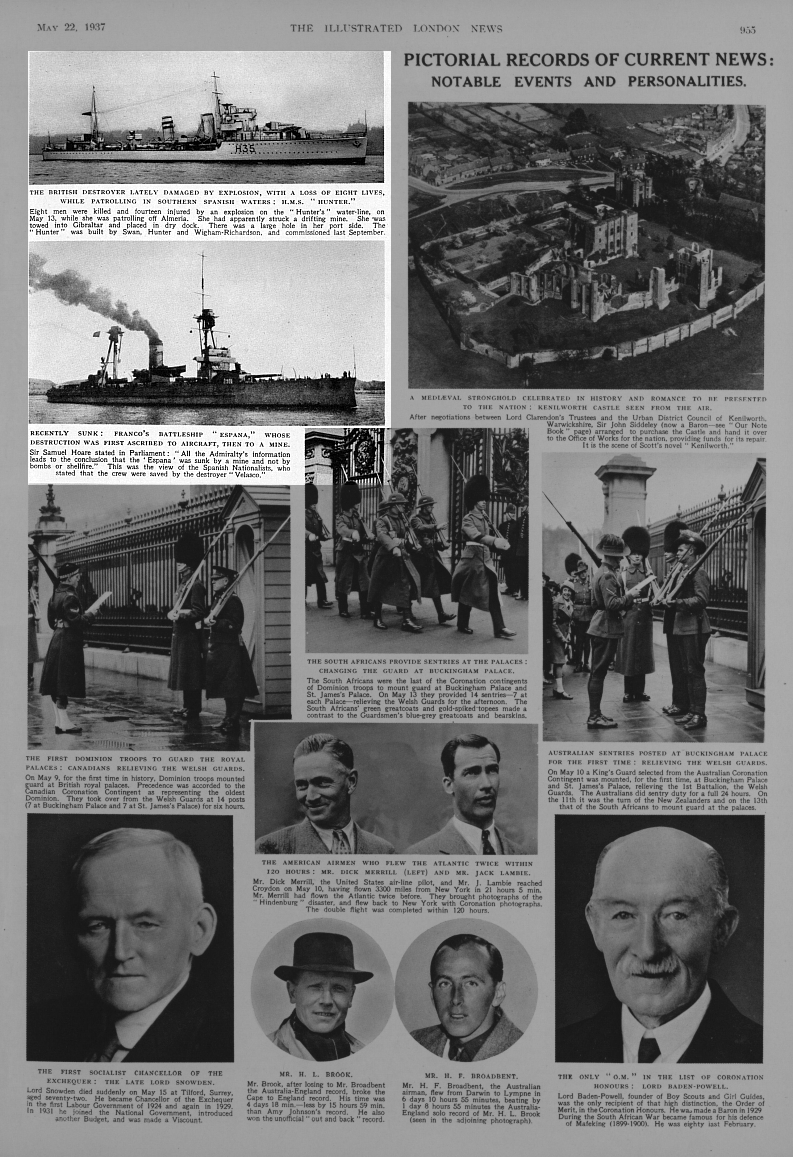
Franco's battleship Espana sunk May 22nd 1937

Basque children escape from the horrors of war May 29th 1937
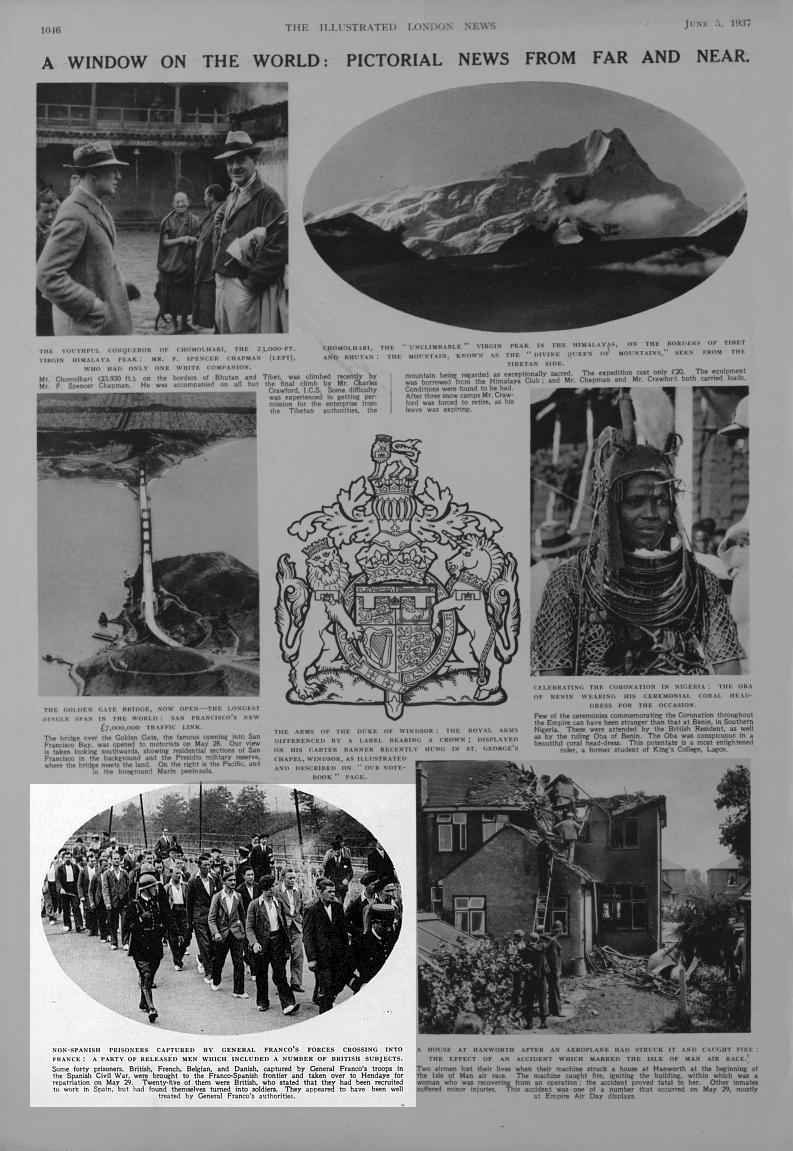
Non Spanish prisoners captured by General Franco's forces crossing into France
A party of released men which included a number of British subjects June 5th 1937

The "Deutschland" (German pocket battleship) Bombed by the Spanish


German naval bombardment of Almeria, nineteen people killed June 12th 1937
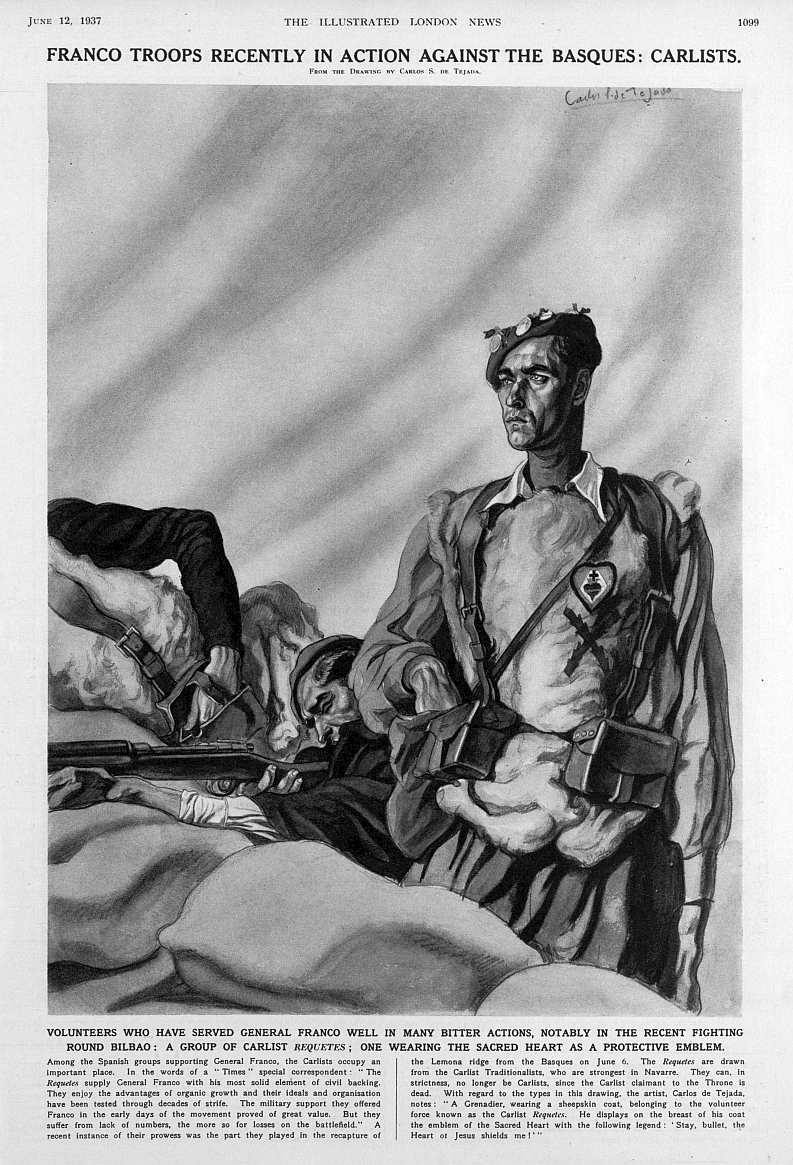
Art in the civil war: Volunteers who have served General Franco well in many bitter actions, notably in the recent fighting
around Bilbao
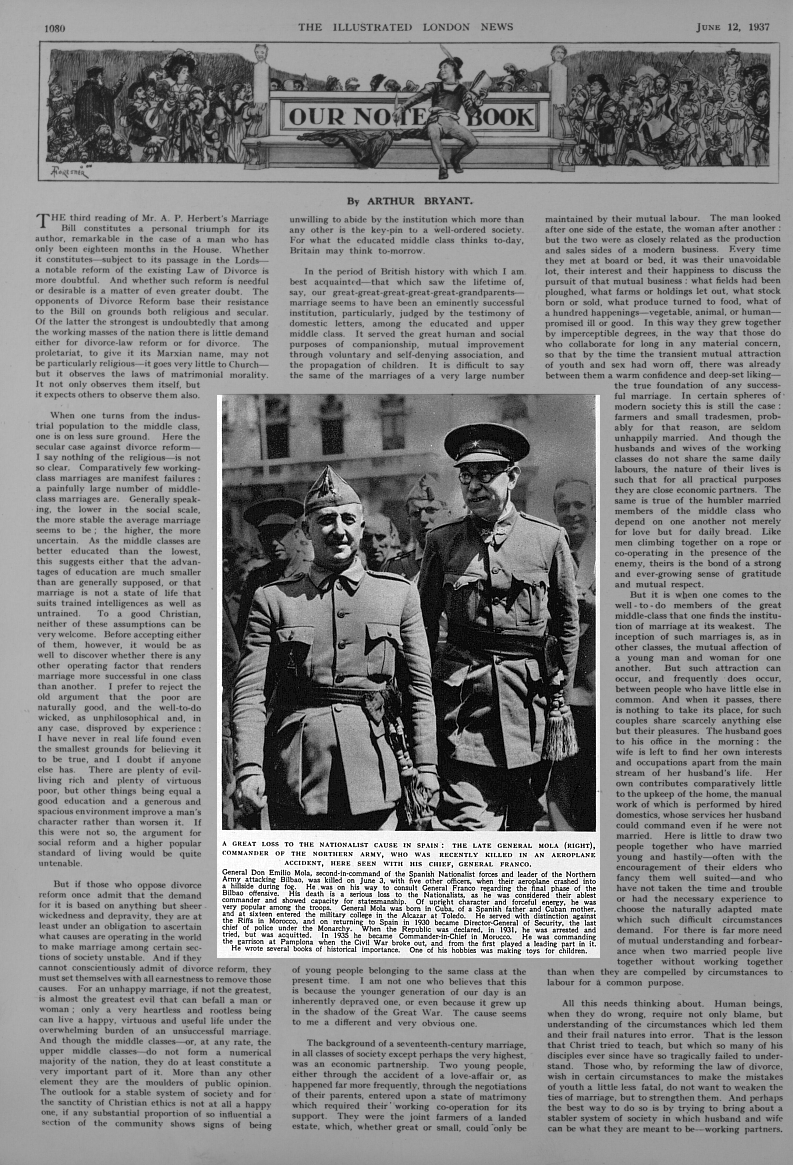
A great loss to the Nationalist cause in Spain. The late General Mola with Franco June 12th 1937
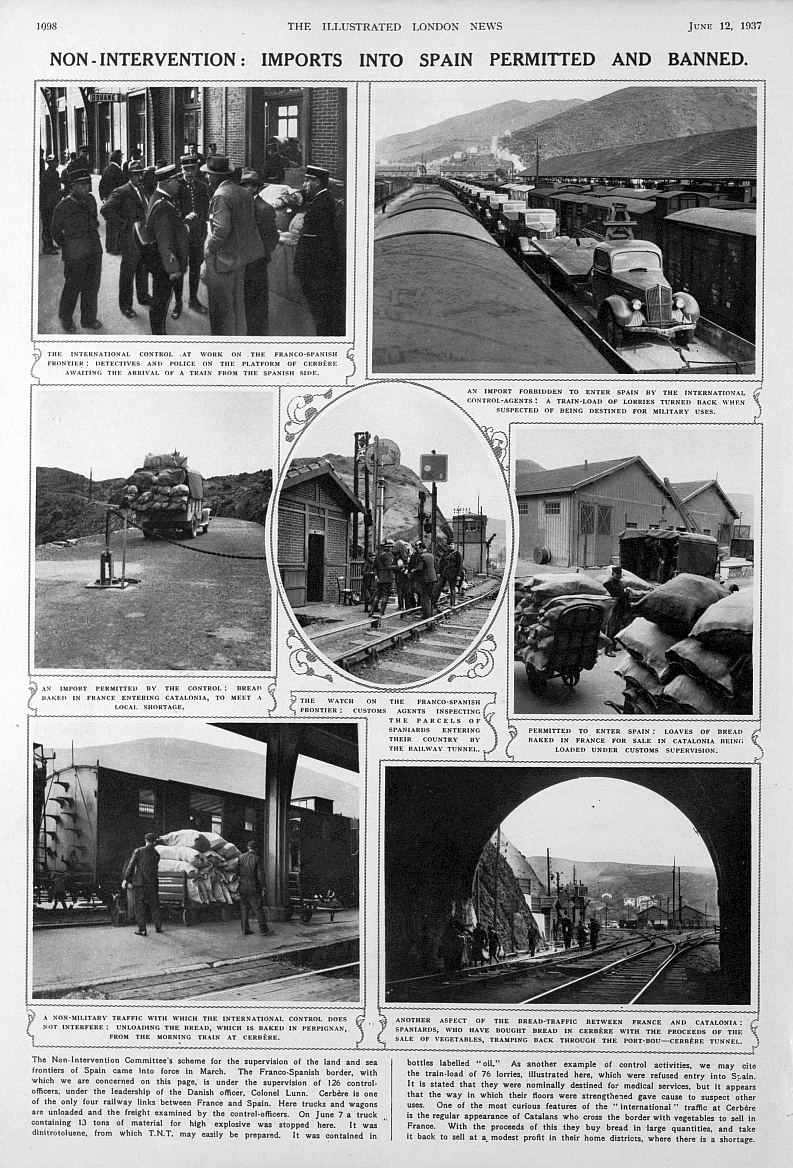
Non - intervention: Imports into Spain permitted and banned
Big traffic of Bread baked in Perpignan, France into Catalonia

Almeria after Germany'e reprisal for the bombing of the "Deutschland" June 19th 1937

With Franco's forces before Bilbao: Abandoned Basque defences
from a drawing by Carlos de Tejada

With Franco's troops before Bilbao: Abandoned Basque trenches
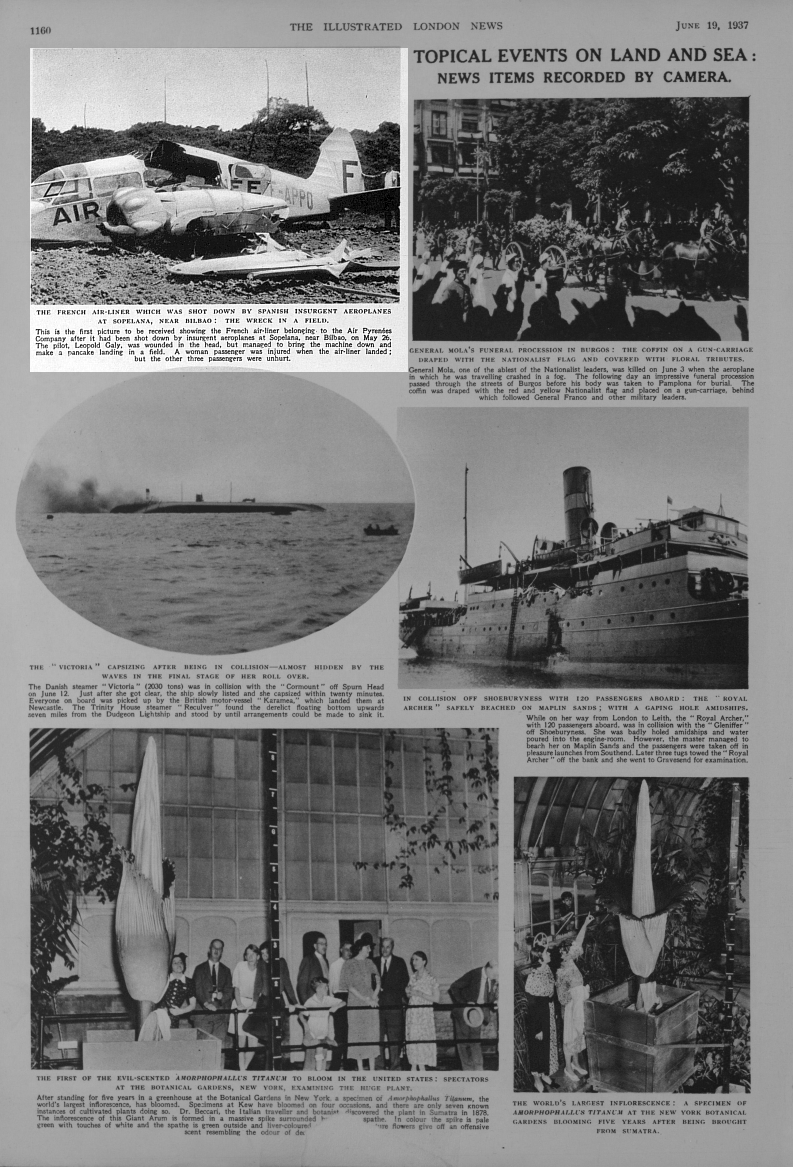
A french airliner shot down by Spanish insurgents plane at Sopelana, nr. Bilbao June 19th 1937
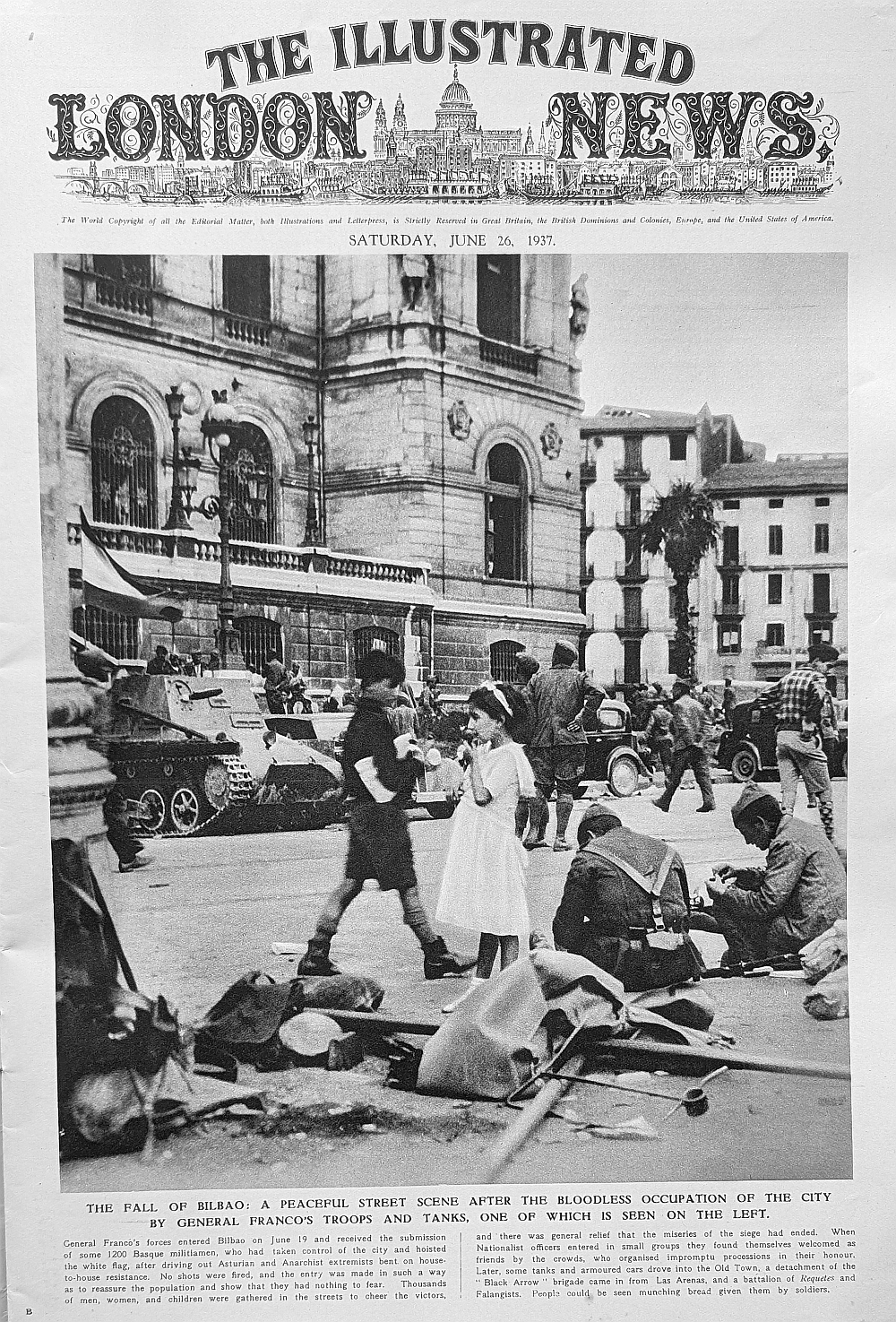
June 26 Fall of Bilbao
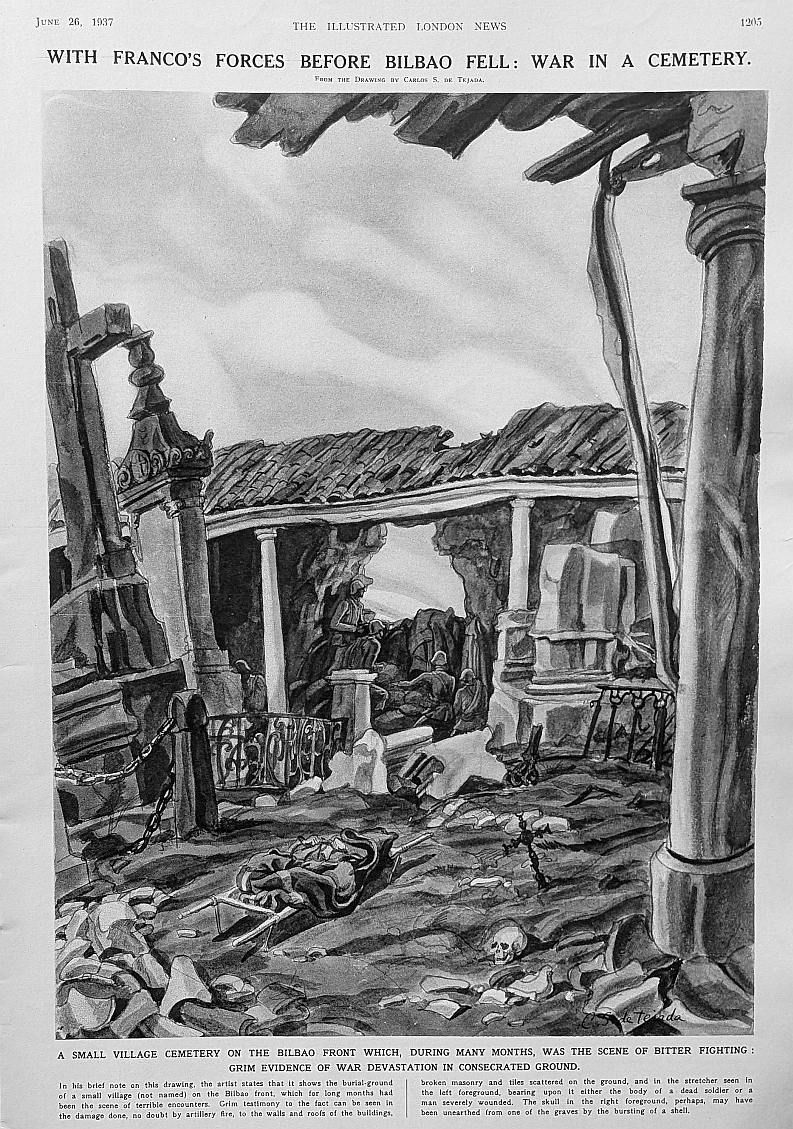
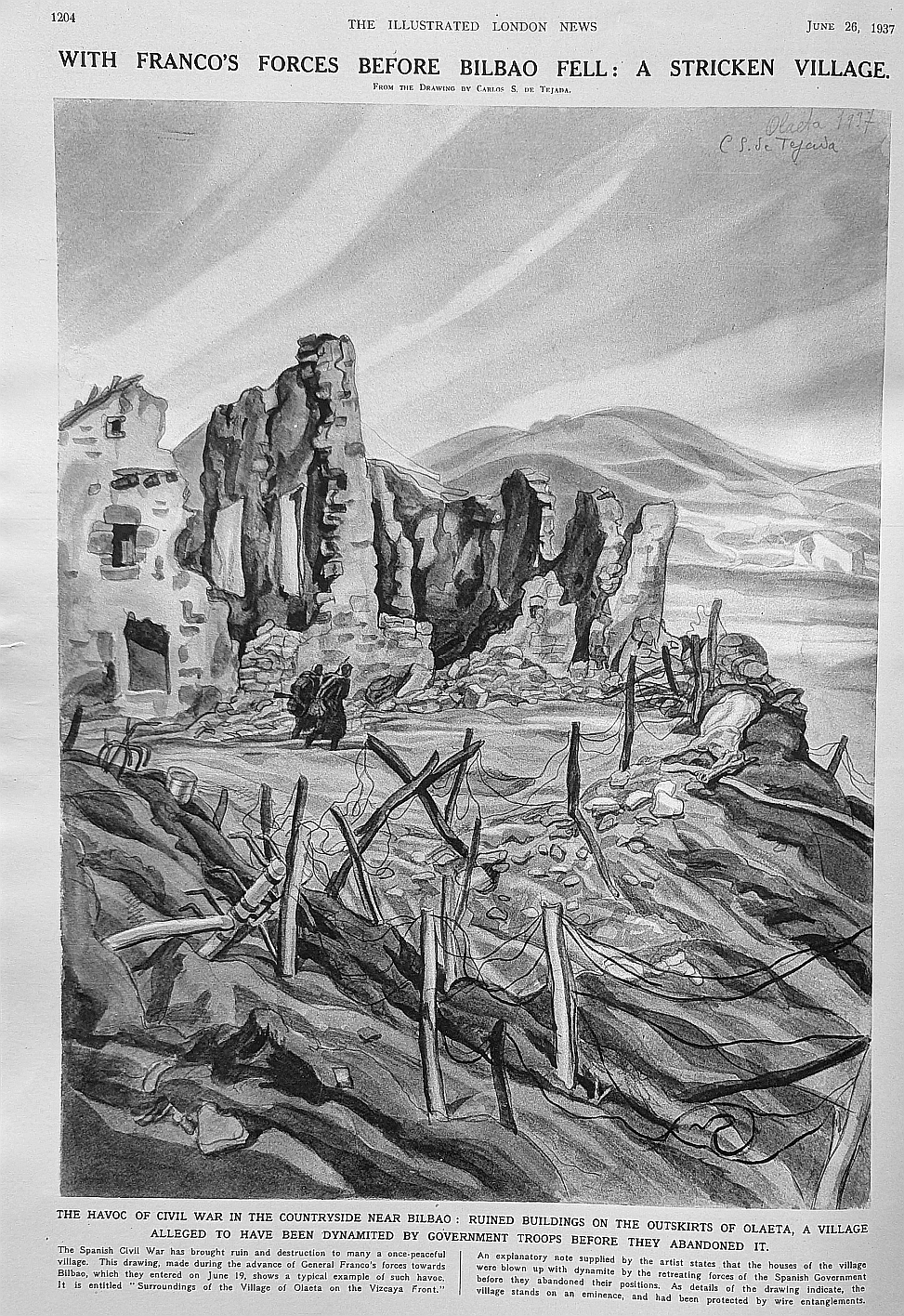

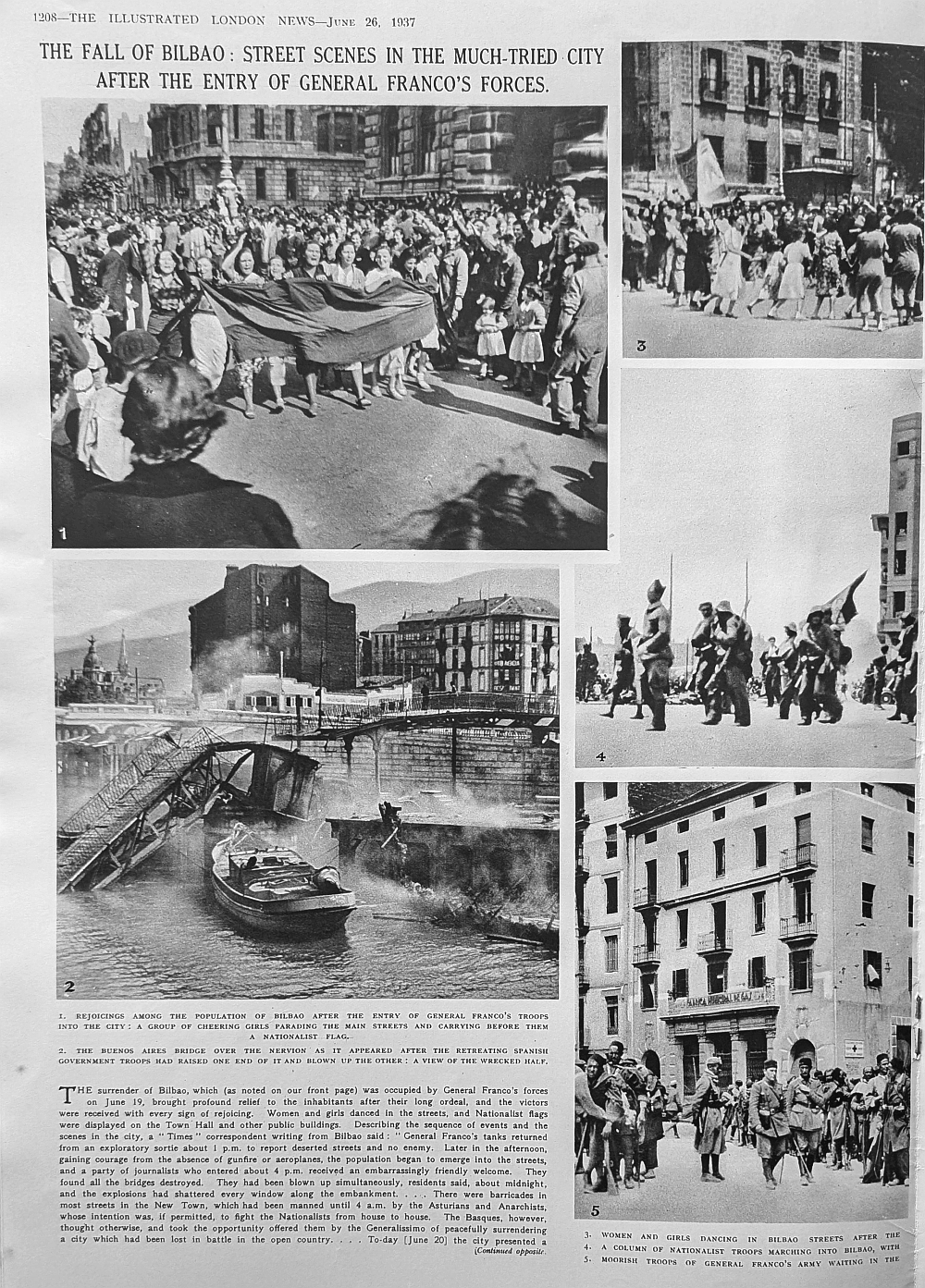
Short historical note
The war was fought on multiple fronts and combined conventional battles with sieges (Guernica, Madrid, Bilbao) and aerial bombardment (notably Guernica in 1937). It ended in early 1939 with a Nationalist victory and Franco's long rule. The conflict was a testing ground for new military tactics and an ideological prelude to World War II.
- Preston, Paul. The Spanish Civil War.
- Beevor, Antony. The Battle for Spain.
- Contemporary ILN issues (scans on this site).