|
|
|---|
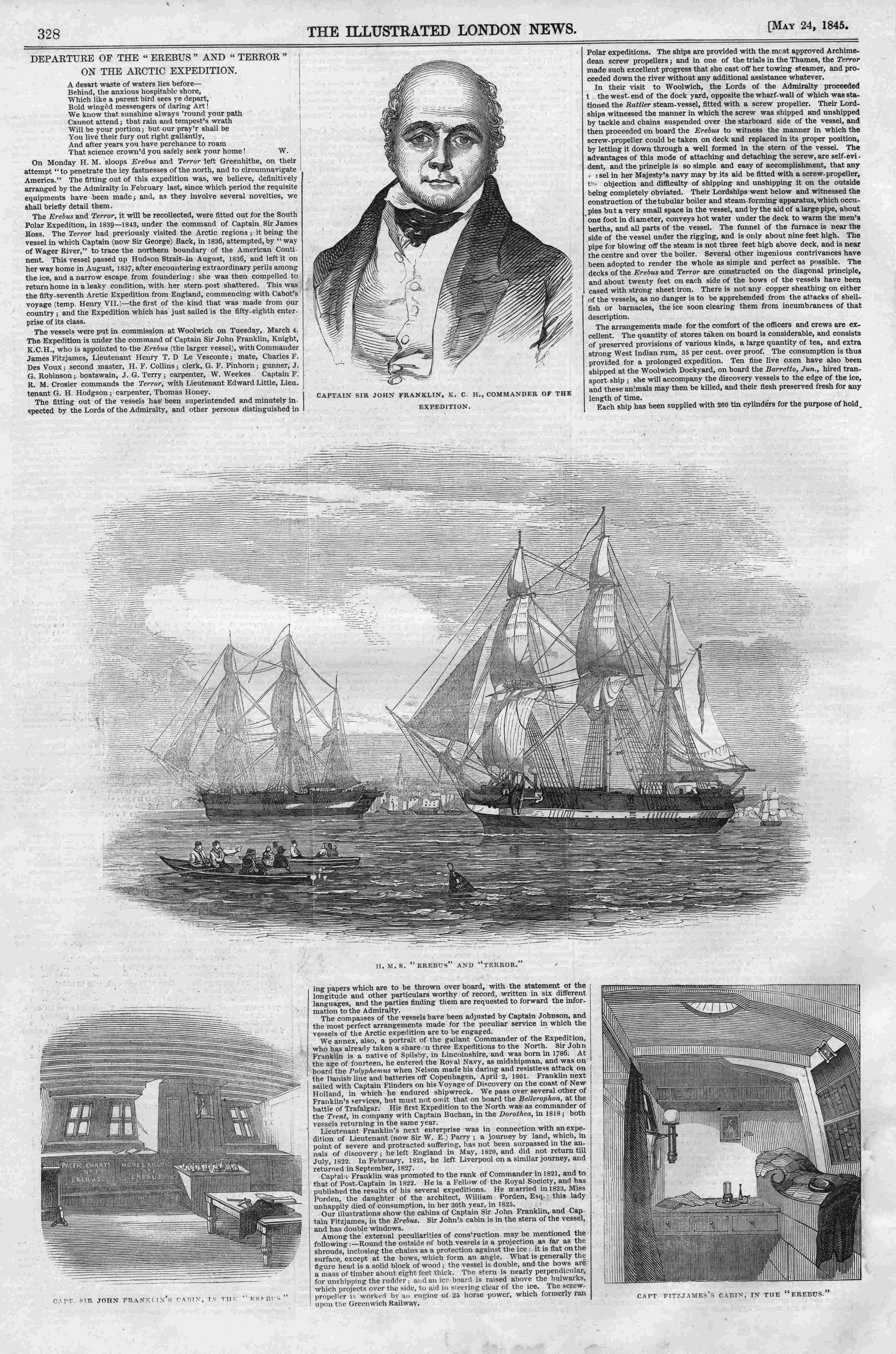
In 1845, Captain Sir John Franklin led the British Franklin Expedition on a daring voyage of Arctic exploration in pursuit of the elusive Northwest Passage.
Their mission: to discover a navigable route through the Arctic that would connect the Atlantic and Pacific Oceans.
With two stout ships, HMS Erebus and HMS Terror, and a crew of 129 men, the expedition set sail from England in May,
filled with hope and ambition. As they ventured deeper into the icy waters, the expedition encountered treacherous conditions that tested their resolve.
In Victoria Strait near King William Island, the ships became trapped in the unforgiving grip of the Arctic ice.
Months turned into years as Erebus and Terror remained locked in their icy prison, battling the elements and dwindling resources.
Despite their valiant efforts, tragedy struck the expedition. Franklin and many others succumbed to the harsh realities of Arctic life,
leaving behind a legacy of bravery and sacrifice. The fate of the Franklin Expedition soon became one of the greatest mysteries of Arctic exploration,
captivating the world with its enigma.
Driven by the relentless pursuit of answers, Lady Jane Franklin and others urged the Admiralty to launch search missions to locate the missing expedition
. For years, search parties scoured the icy expanse, but the fate of Franklin and his crew remained shrouded in uncertainty.
The Franklin expedition and the subsequent searches, over many years, were reported in depth by the Illustrated London News,
including many engravings that captured the imagination of readers across the globe.
Then, in a remarkable turn of events, the mystery began to unravel. In 2014, the wreck of HMS Erebus was discovered in the Queen Maud Gulf,
followed by the finding of HMS Terror in 2016. These discoveries provided vital clues to the expedition's final days,
shedding light on the challenges they faced and the sacrifices made.
Through meticulous research and archaeological investigations, a clearer picture emerged of the trials endured by the crew.
From harsh Arctic conditions to the insidious effects of lead poisoning and scurvy, the expedition grappled with numerous hardships.
Tragically, many crew members perished, some resorting to desperate measures for survival.
The legacy of the Franklin Expedition endures as a testament to the indomitable spirit of exploration and the human quest for discovery.
It serves as a reminder of the dangers and triumphs that await those who dare to venture into the unknown,
inspiring ongoing efforts to uncover the full story of this ill-fated journey into the frozen heart of the Arctic.
H.M.S. "Erebus" and "Terror" set out
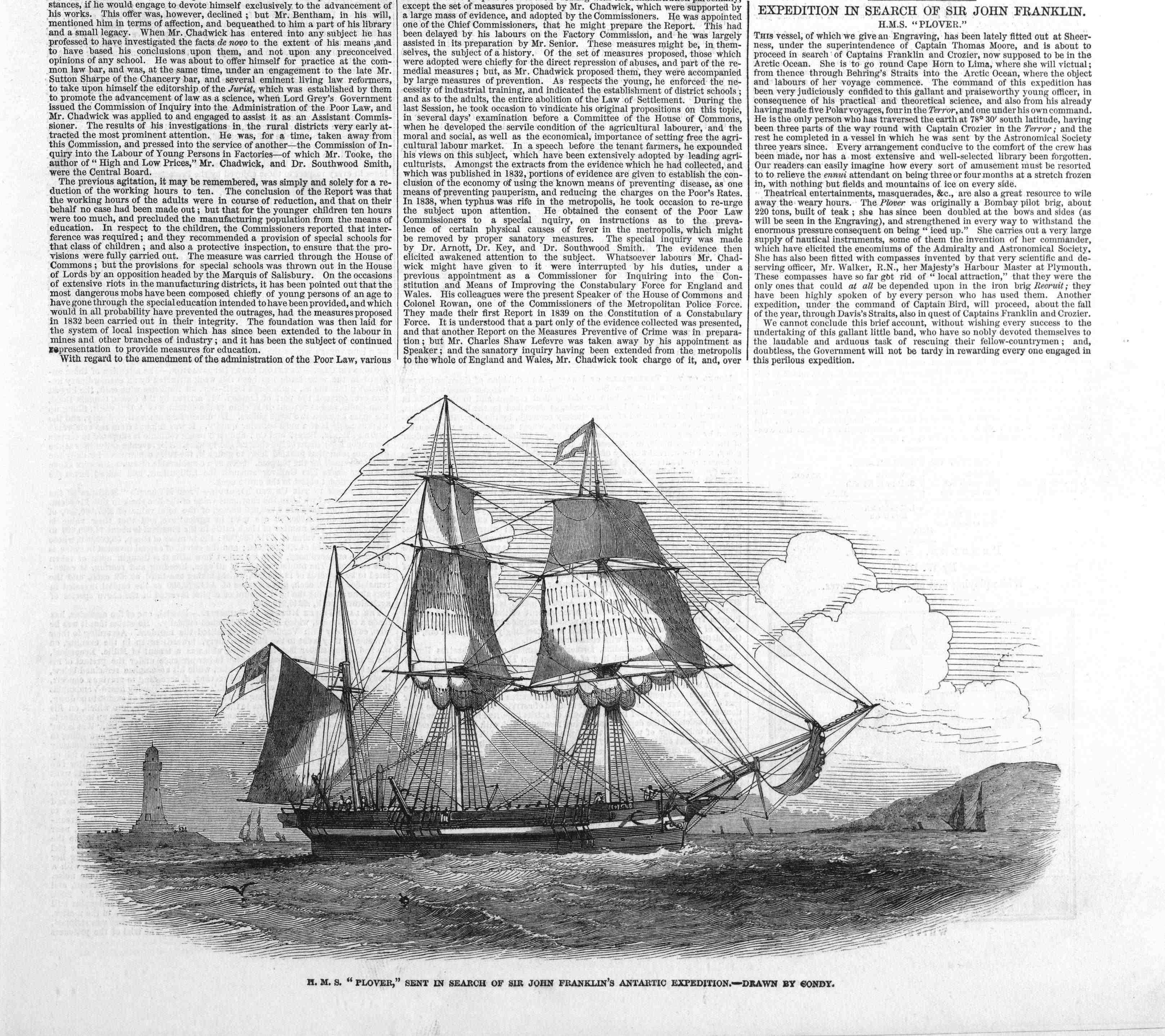
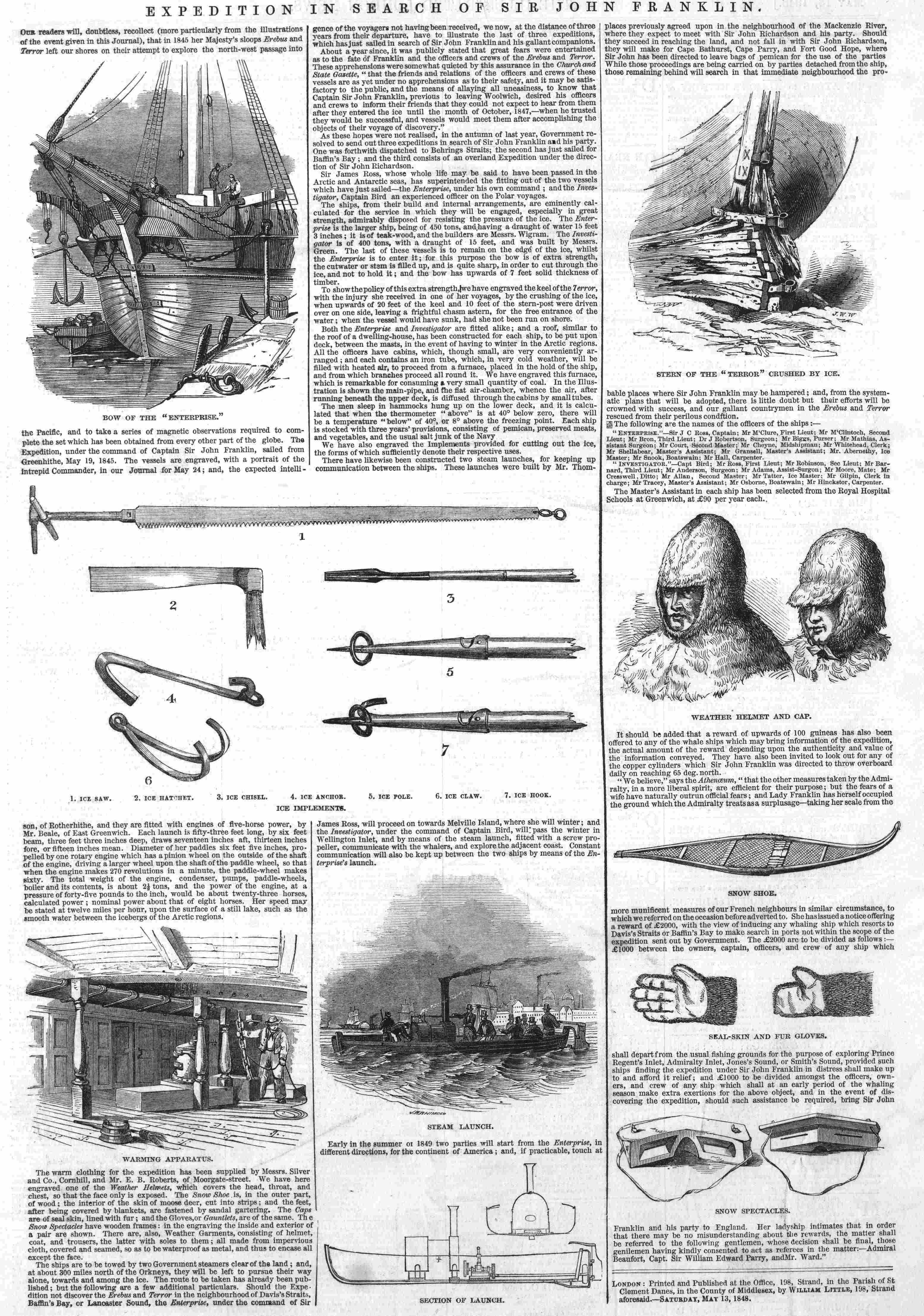

Here’s a structured timeline of how the Illustrated London News reported on Sir John Franklin’s ill-fated expedition and the many searches that followed:
1845: Launch of the Expedition
1848–1853: Search Operations Begin
From 1853, ILN published detailed woodcut engravings of Arctic missions such as those involving HMS Investigator and Breadalbane, illustrating search ships navigating ice terrain.
The June 4, 1853 issue featured an engraving of the screw-steamer Phoenix, dispatched in search efforts
1854: Rae’s Discovery of Relics
On 4 May 1854, ILN reported on relics discovered by Dr John Rae—objects obtained from Inuit informants on King William Island. This full-page spread depicted artifacts and the circumstances described by Rae.
1859: Additional Relic Reports
1881: The American-Led Search
In 1881, an engraving titled The American Franklin Search Expedition illustrated the broader international interest by depicting the American efforts to find Franklin’s fate.
a lot more to come..
Click here for the next Year of The Illustrated London News
Click here for the PREVIOUS Year of The Illustrated London News
Home Page - Year
Grid - Contact John - Join our Facebook Group