|
|
|---|
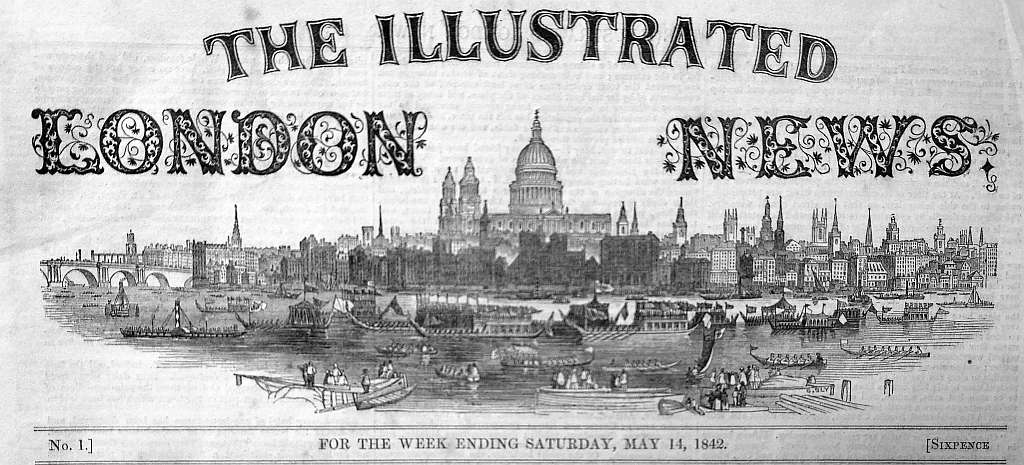
John Weedy's collection of
The Illustrated London News
That’s indeed the traditional definition you’ll find in
many general dictionaries.
However, it’s worth noting that museum definitions have evolved considerably
in recent decades,
especially as new technologies have allowed
“museum-like” experiences to take place outside the traditional
brick-and-mortar model.
A Changing Understanding of “Museum”
-
Historical Perspective: Historically, the word “museum” has been linked to a physical building
or location in which objects of cultural, historical, or scientific interest are held and displayed.
This is why many dictionaries still reflect that earlier emphasis on a physical structure. -
Contemporary Definitions: Organizations such as the International Council of Museums (ICOM)
periodically update their definition to capture the broader purposes of museums.
Today, a museum is no longer solely about “a building” but is recognized as an institution
that “acquires, conserves, researches, communicates and exhibits” tangible
and intangible heritage for the purposes of education, study, and enjoyment.For example, ICOM’s current definition (adopted in 2022)
does not limit the concept to a physical building.
Instead, it emphasizes the role of museums in “society” and the range
of activities they perform, many of which can happen in purely digital spaces.
Why “Virtual Museums” Exist
- Digital-Only Displays: With high-resolution imagery, 3D scanning,
and interactive technologies, it’s possible to document, preserve,
and exhibit cultural and scientific artifacts entirely online. - Accessibility & Inclusion: Virtual museums offer global audiences
an opportunity to experience heritage and art
without travel costs or physical barriers. - Experimental Formats: Digital museums can use VR, AR,
or interactive storytelling to create experiences not possible
in a fixed physical gallery (e.g., going “inside” an artifact via 3D modeling).
Terminology in Flux
Though dictionaries often stick to the traditional notion of a “building,”
museum studies experts, professional associations, and many cultural organizations
now use the term “museum” to include virtual or hybrid institutions.
These online museums still perform key “museum functions”—
collecting (digitally), researching, conserving (in digital formats),
and sharing cultural content—just without a permanent physical gallery.
So while you’re correct that many dictionaries define a museum as “a building,”
the professional field and emerging technology have expanded this concept,
and the language around it is evolving to match today’s reality.