The World of Pantomime since 1842
Pantomime, or "panto," holds a festive tradition in Great Britain, particularly during Christmas.
Originating from ancient Roman and Greek theatre, it took its modern form in the 17th century, blending elements of Commedia dell'arte and masques.
The 18th century introduced the iconic character Harlequin, while the 19th century emphasized fairy-tale themes like "Cinderella" and "Aladdin."
Music hall influences enriched the experience with songs and dances.
In the modern era, pantomimes remain a loved Christmas entertainment, featuring celebrity casts and interactive elements.
This timeless tradition reflects the resilience and adaptability of British cultural heritage. Families continue to attend these performances annually, embracing the festive spirit.
Pantomimes long enchanted British audiences with festive humor, vibrant costumes, and exciting stories
From 1842, The Illustrated London News brought these shows to readers through lavish engravings and later photographs.
Each year’s coverage revealed magical sets, star performers, and evolving tastes.
Even in wartime austerity, the paper upheld this tradition.
Revisiting these features today lets readers rediscover a cultural treasure faithfully recorded by the ILN.
1940
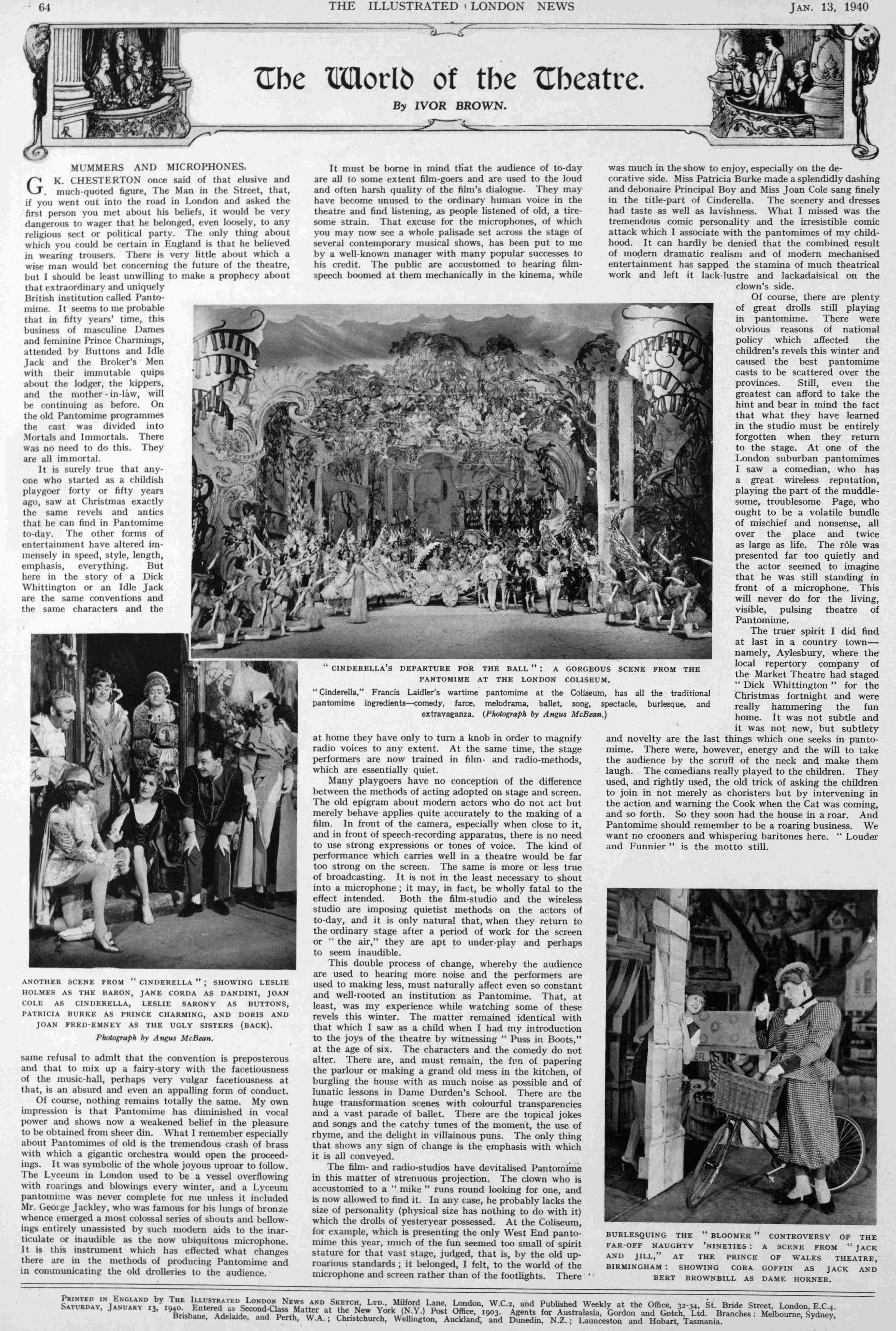

from 1941 to 1948, British pantomime remained alive but greatly diminished in scale and splendor.
The war forced a reduction in theatrical complexity and shifted public and media focus toward more pressing matters.
Pantomime did not vanish—once the immediate hardships eased, it gradually regained popularity—
but the lavish illustrated reporting of Victorian and Edwardian holiday pantomimes that
The Illustrated London News had championed before WWII
largely took a back seat to news of the war effort and, afterward,
to the nation’s slow journey back to peacetime normalcy.
Back to the Top
If you would like to donate
something to
NSPCC
coming soon
Next