The Illustrated London News 1926
In the very first edition of the Illustrated London News - May 14th 1842
During the Industrial Revolution in Great Britain, children as young as five years old were routinely employed in coal and metal mines. Valued for their small size and cheap labor, they worked 10-to-12-hour shifts in dangerous, pitch-black underground conditions until public outrage and government reform drastically changed the law in 1842. [1, 2, 3, 4, 5]
Jobs Performed by Children
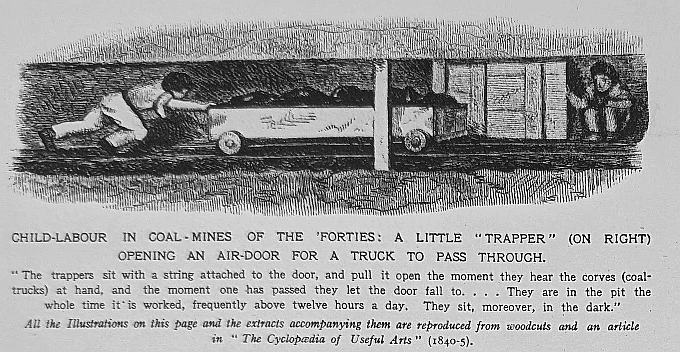
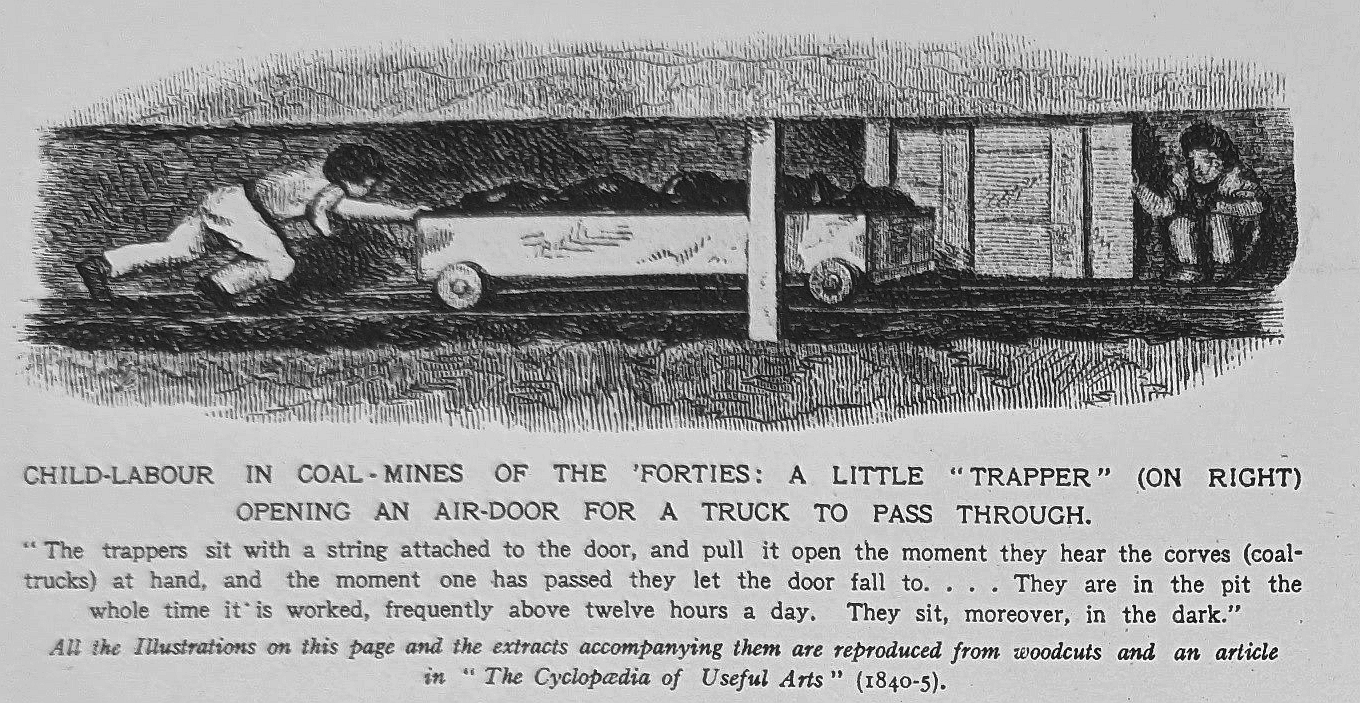
- Trappers (Air-Door Boys): Children aged five to eleven sat alone in total darkness for 12 hours, opening and closing ventilation doors to let coal carts through while maintaining airflow to prevent gas explosions. [1, 2, 3, 4, 5]
- Hurriers and Drawers: Older children pulled or dragged heavy carts filled with coal through low, narrow tunnels often by wearing a heavy chain and leather belt around their waist or between their legs. [1, 2, 3]
- Coal-Bearers: In parts of Scotland, young girls and boys carried heavy baskets of coal on their backs up steep wooden ladders or mine shafts. [1, 2]
Hazards and Living Conditions
- Physical Deformities: Constant crawling in low-height tunnels and heavy pulling caused severe back injuries, stunted growth, and knee and joint damage.
- Constant Danger: Children faced frequent risks of tunnel collapses, flooding, and deadly methane gas explosions (firedamp).
- Health Decline: Thick coal dust filled the air, leading to chronic respiratory issues and early death. [1, 2, 3, 4]
The Turning Point and Reform
- The Huskar Pit Disaster (1838): A severe flood at a colliery in Silkstone drowned 26 children, bringing national attention to the extreme dangers faced by young miners. [1]
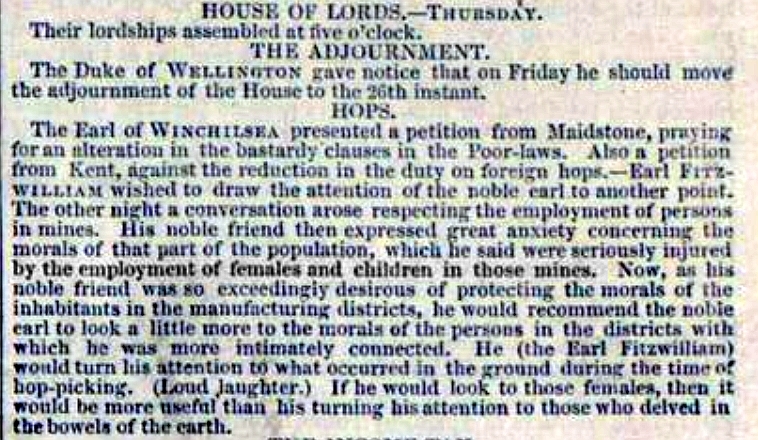
- The Children's Employment Commission (1842): A royal commission published shocking testimonies and graphic illustrations of young children working nude or semi-nude in narrow wet tunnels, sparking profound public dismay. [1, 2, 3, 4, 5]
- The Mines and Collieries Act of 1842: Parliament passed legislation making it illegal for all females and for boys under the age of ten to work underground. Further laws later expanded safety rules and educational requirements, steadily phasing out child labor in British mining. [1, 2, 3, 4, 5]
Transcript
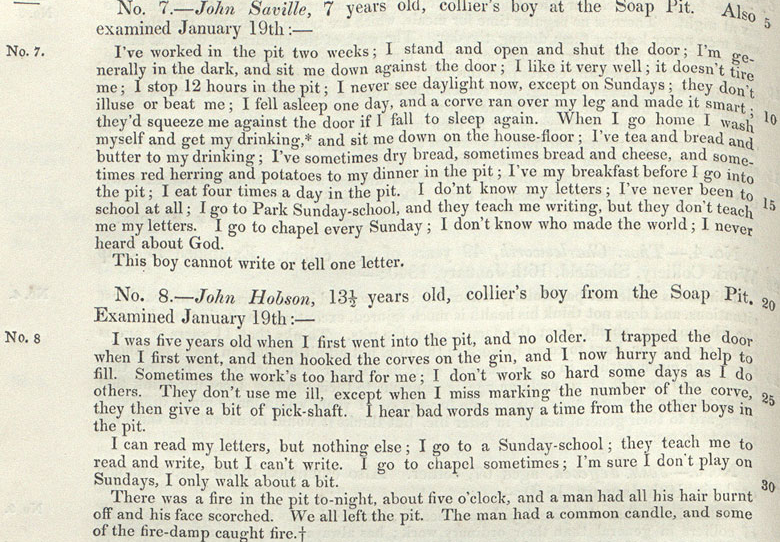
No. 7 — John Saville, 7 years old, collier’s boy at the Soap Pit [Sheffield]
Also examined January 19th:
I have worked in the pit for two weeks; I stand and open and shut the door; I’m generally in the dark, and sit me down against the door; I like it very well, it doesn’t tire me; I stop 12 hours in the pit; I never see daylight now, except on Sundays; they don’t illuse or beat me; I fell asleep one day, and a corve [coal truck] ran over my leg and made it smart; they’d squeeze me against the door if I fall to sleep again. When I go home I wash myself and get my drinking [local word for tea] and sit me down on the house floor; I’ve tea and bread and butter for my drinking; I’ve sometimes dry bread, sometimes bread and cheese, and sometimes red herring and potatoes to my dinner in the pit [coal mine]; I’ve my breakfast before I go into the pit; I eat four times a day in the pit. I don’t know my letters; I’ve never been to school at all; I go to Park Sunday-school, and they teach me writing, but they don’t teach me my letters. I go to chapel every Sunday; I don’t know who made the world; I never heard about God.
This boy cannot write or tell one letter.
No. 8 — John Hobson, 13½ years old, collier’s [coalminer] boy from the Soap Pit.
Examined January 19th:
I was five years old when I first went into the pit, and no older. I trapped [a boy employed to open and shut the trap doors in the mine, to keep the air flowing and stop the build up of gas which could cause fires] the door when I first went, then hooked the corves on the gin [horse powered engine used in to raise the coals to the surface], and I now hurry [a young person who pushed the wagons along inside the pit] and help to fill. Sometimes the work is too hard for me; I don’t work so hard some days as I do others. They don’t use me ill, except when I miss marking the number of the corve [coal truck], they then give a pit of pick-shaft [beat with a wooden stick]. I hear bad words many a time from the other boys in the pit.
I can read my letters, but nothing else; I go to Sunday-school; they teach me to read and write, but I can’t write. I go to chapel sometimes; I’m sure I don’t play on Sundays, I only walk about a bit.
There was a fire in the pit to-night, about five o’clock, and a man had all his hair burnt off and his face was scorched. We all left the pit. The man had a common candle [ ] and some fire-damp [a gas found in coal mines which can explode] caught fire.
The Horrors of Coal Pits in the Days of Disraeli's "Sybil"
Sybil, or The Two Nations is an 1845 novel by Benjamin Disraeli. Published in the same year as Friedrich Engels's The Condition of the Working Class in England in 1844, Sybil traces the plight of the working classes of England.
An article by Walter Shaw Sparrow - June 26th 1926 Illustrated London News
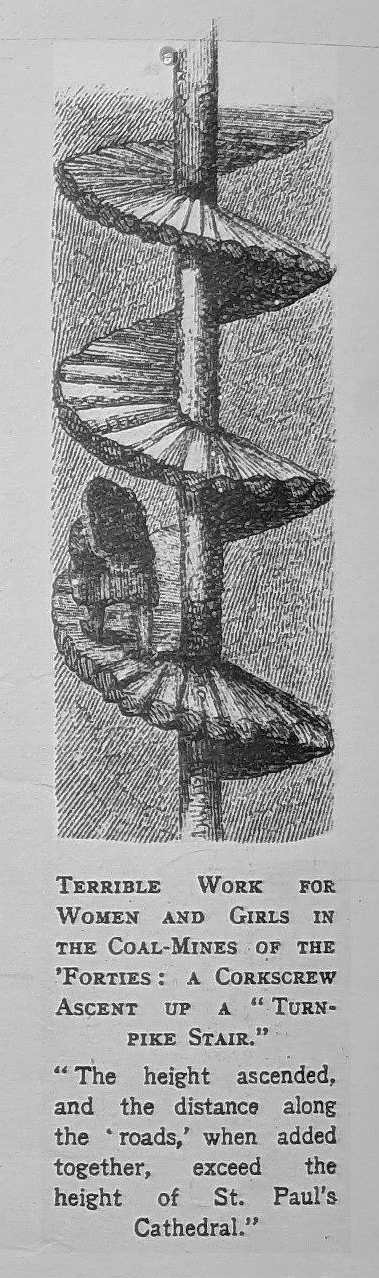
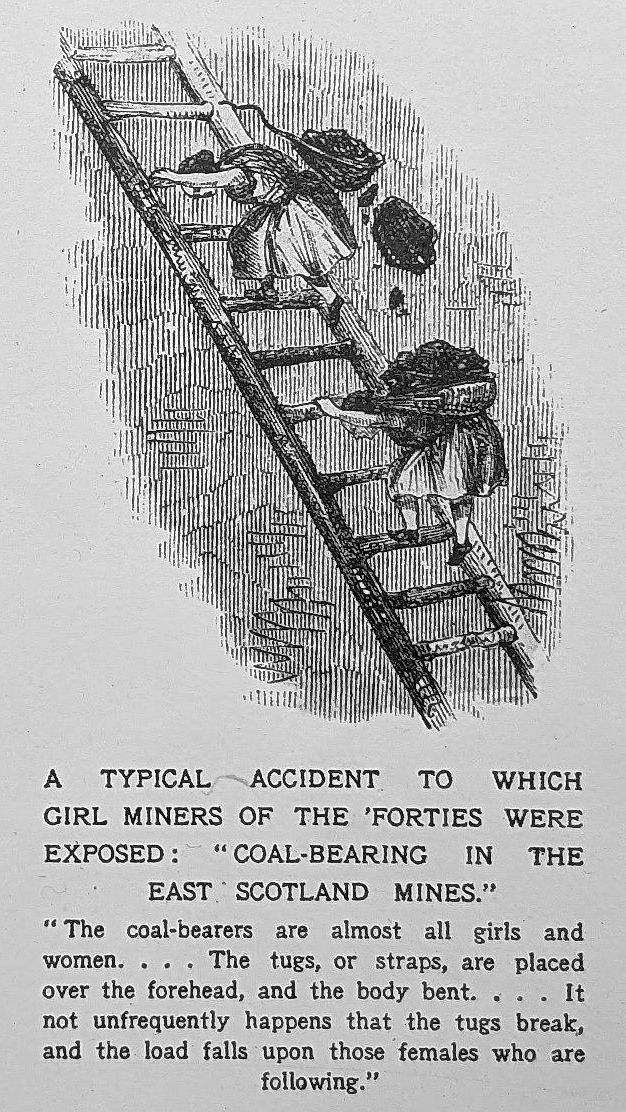
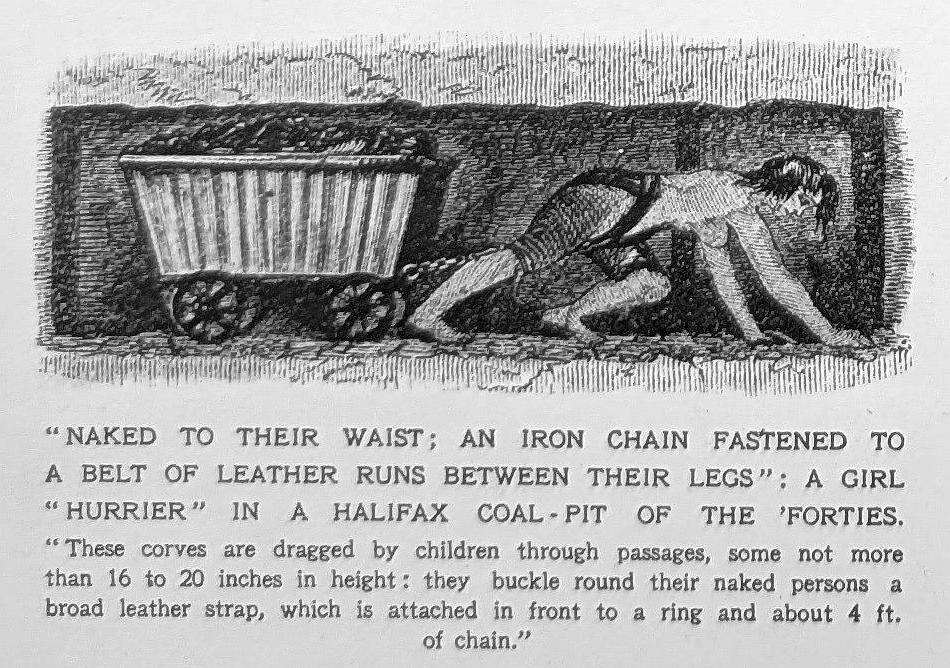
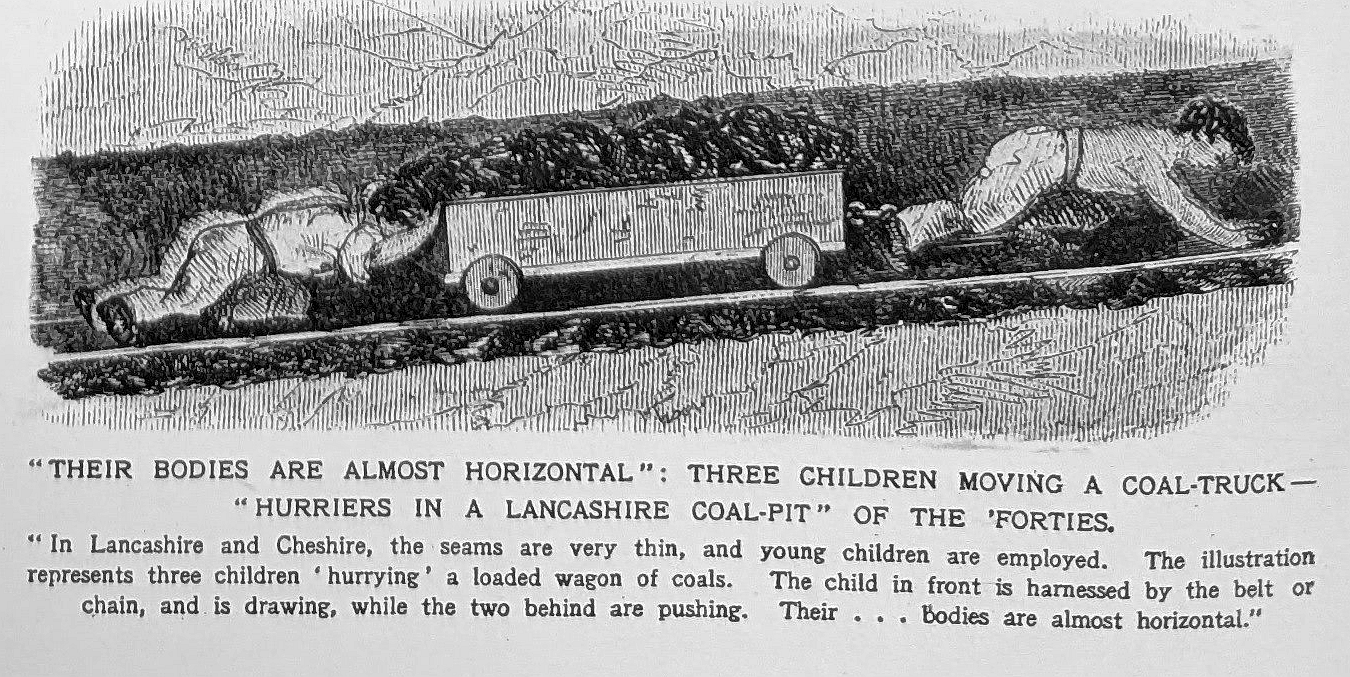
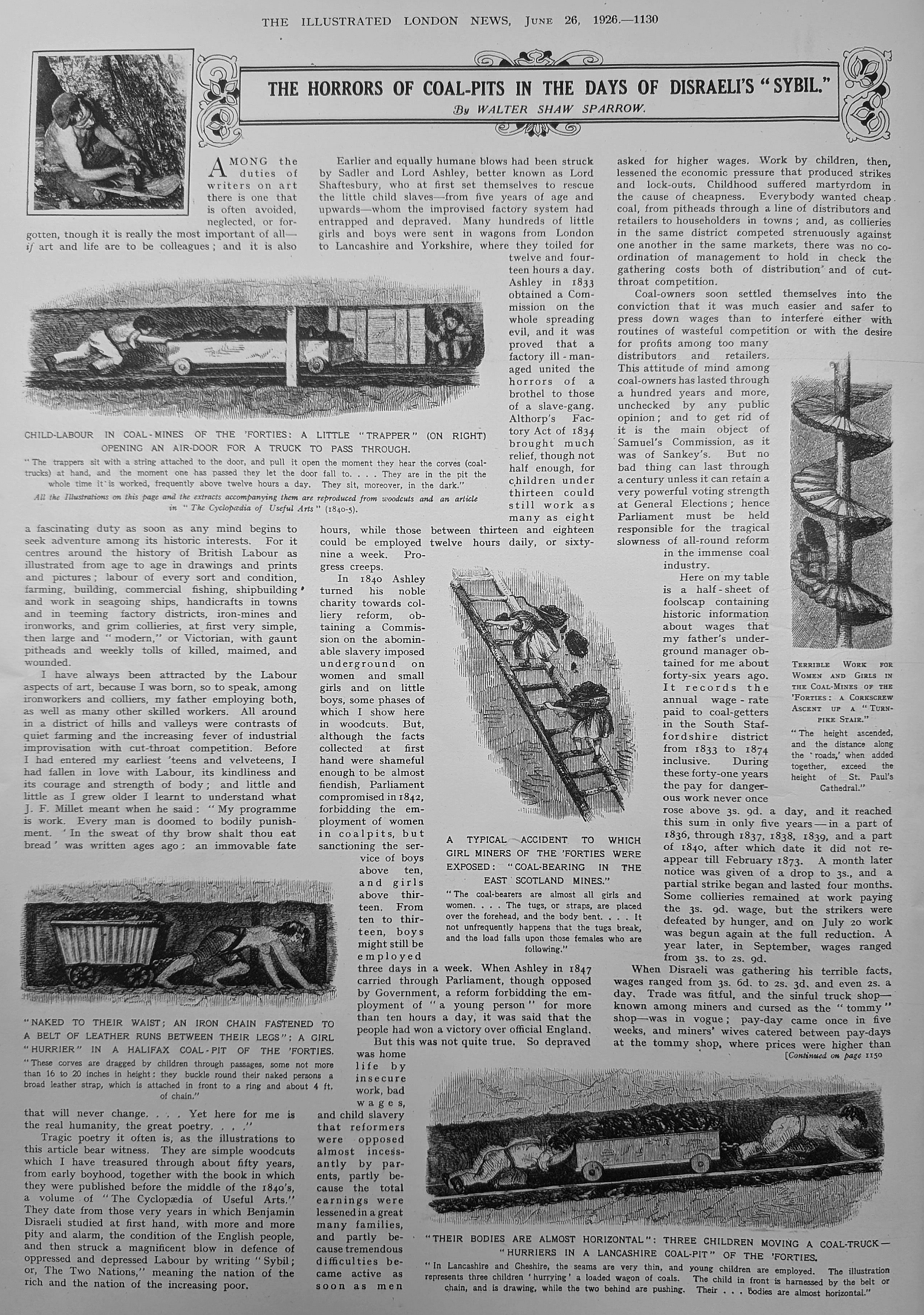
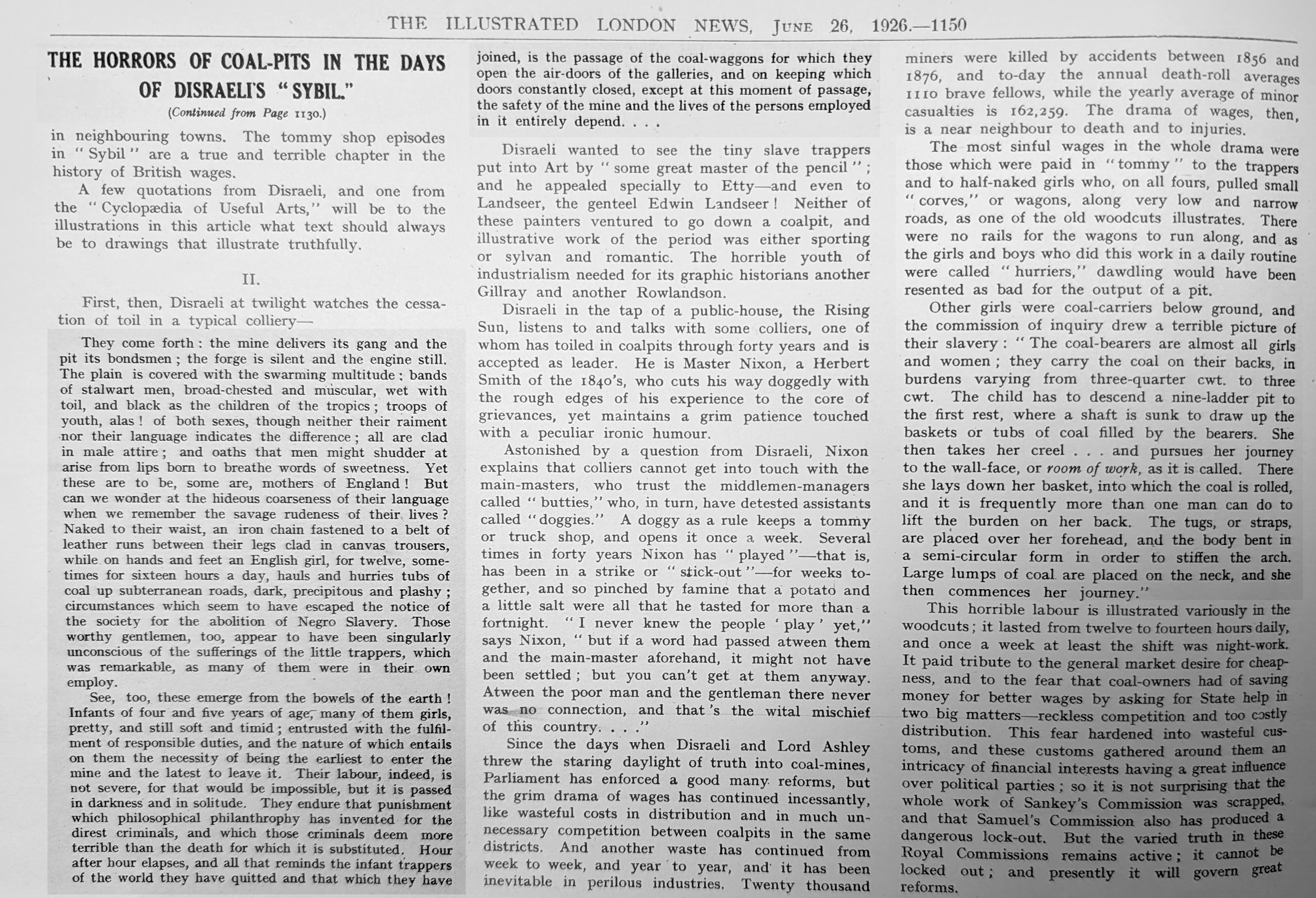
"In the 1840s, the Illustrated London News helped expose the harsh, dangerous conditions faced by working children, helping shock the public into demanding reform. While the law now protects children from factory labor, modern threats like abuse, neglect, and online harm remain. If reading about these historical hardships moved you, please consider supporting the NSPCC as they continue the vital work of keeping today's children safe."
This website is completely free to use—no charges, no subscriptions, no catch.
If you find it helpful or enjoyable, and if it’s within your means, please consider making a donation to the NSPCC to support their work protecting children.
Your generosity is entirely optional—your experience here will remain free no matter what.
You can also fundraise for the NSPCC and get a free pack of tips and materials.
Donate to the NSPCC